
Let’s be honest, you’re not here for a technical manual. You want to know how webcam sites actually work. In plain English, they are live, interactive broadcasting platforms connecting creators (the performers) with a global audience in real time. Viewers use a digital currency, usually called tokens, to tip, make requests, or pay for private one-on-one sessions. The platform itself is the digital middleman, handling the broadcast tech, the money, and the rules.
Think of it as a personal TV studio broadcasting to a live, paying, and very engaged audience.
The Engine Room: Unpacking The Tech and Business
Ever wondered what’s really happening behind the screen? It's less magic and more a clever blend of technology and economics. At its heart, a webcam platform is a sophisticated video distribution network built for live, interactive entertainment. The whole operation boils down to one core challenge: connecting a single camera to potentially thousands of viewers, all at once, without the stream buffering into oblivion.
This involves a few crucial steps. First, the creator's camera and microphone capture the action, which their computer then encodes—a technical term for squishing it into a smaller, more manageable digital format. This compressed stream zips across the internet to the platform's central servers. From there, the platform duplicates and broadcasts it out to viewers around the world, making sure the stream stays stable and in sync for everyone watching.
From Camera To Screen: The Tech Journey
The technical side of things relies heavily on good hardware. In the UK alone, the webcam market hit a value of USD 372.30 million this year and is expected to climb to nearly USD 811.24 million within the next decade. This boom is fuelled by creators investing in powerful webcams to send crystal-clear, high-definition video to platforms equipped to handle it. You can read the full research on webcam market trends for a deeper dive into the hardware market.
This diagram breaks down the journey from the creator's broadcast to the viewer's screen.
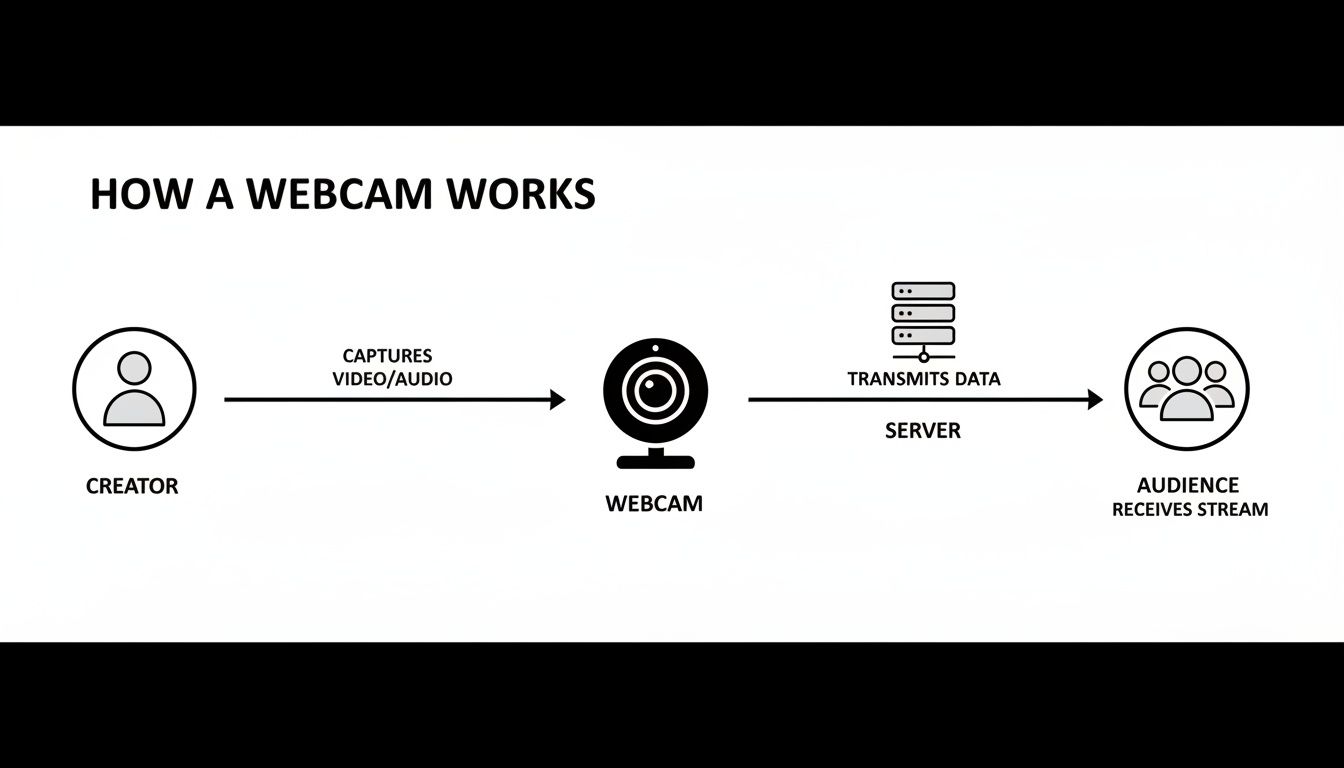
As you can see, the platform's servers are the critical hub in this process, taking on the complex job of getting a single stream out to a mass audience smoothly.
The Business Model Behind The Broadcast
Beyond the tech, it's the business model that truly makes these platforms tick. They aren't just video hosts; they're digital marketplaces, banks, and bouncers all rolled into one. They manage a constant flow of intricate financial transactions built around their own digital currency.
To really grasp how it works, let's look at the key players and the technology that connects them.
Core Components of a Live Webcam Stream
| Component | Role In The Process | Real-World Analogy |
|---|---|---|
| The Creator | The performer broadcasting live content from their own space. They are the 'show'. | A musician or comedian performing on stage. |
| The Platform | Provides the stage, technology, audience, payment system, and rules. Takes a cut for their services. | The concert venue or comedy club owner. |
| The Viewer | The audience member who buys and spends tokens to interact, tip, or access exclusive content. | An audience member buying a ticket and merchandise. |
| Streaming Protocol | The technical 'language' (like RTMP or WebRTC) used to send video from the creator to the server. | The roadie who plugs the guitar into the amplifier. |
| Content Delivery Network (CDN) | A network of servers around the world that delivers the stream to viewers quickly and reliably. | A global distribution network for a touring band's live album. |
This three-way relationship between creator, platform, and viewer is the foundation of the entire ecosystem. While there are many different kinds of adult streaming platforms out there, they all share this fundamental structure. The platform provides the stage, the creator puts on the show, and the viewer pays for their ticket.
Following The Money: Tokens, Tips, And The Inevitable Platform Cut
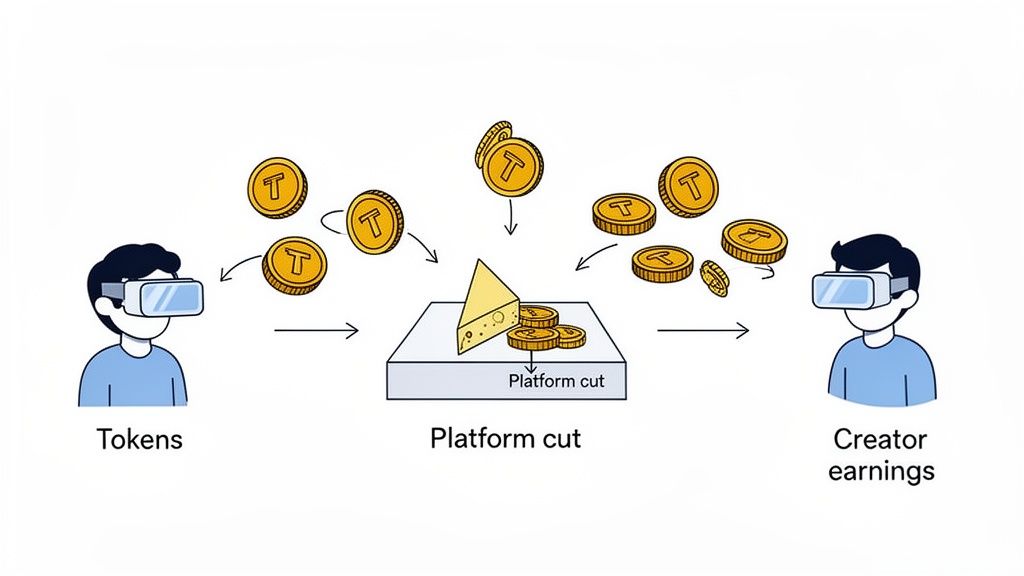
Let's pull back the curtain on how money actually moves around on these platforms. It’s not a simple case of a viewer sending cash to a creator. Instead, the entire system runs on a carefully designed token economy—a kind of digital currency unique to each site. This is the financial engine that fuels every single interaction.
When a viewer wants to spend, they don't send pounds directly. First, they buy a package of tokens (sometimes called credits or coins) using a credit card or another payment service. Think of it like exchanging your cash for chips at a casino; you're converting real money into something you can use inside that specific environment. A common starting point might be £1 for 100 tokens, but sites often dangle better rates for bulk buys to encourage bigger purchases.
Once a viewer has tokens in their digital wallet, they can start spending them in a bunch of different ways. This is the magic for creators, as it opens up several streams of income from a single broadcast.
How Creators Actually Get Paid
From a creator’s point of view, the genius of the token system is its flexibility. Income isn't about waiting for one big paycheque; it’s built from a constant flow of small (and sometimes very large) transactions happening throughout a stream.
Here’s a breakdown of the most common ways creators make money:
- Public Tips: The bread and butter. Viewers tip tokens in the main public chat to show appreciation, make a request, or just get a shout-out. These often fuel "tip goals" that unlock special actions when a target is hit.
- Private Shows: A major earner. This is a one-on-one session where a viewer pays a set rate per minute—say, 60 tokens/minute—for the creator’s exclusive, undivided attention.
- Spy/Voyeur Mode: A clever feature where other viewers can pay a smaller per-minute fee to watch someone else's private show, but without being able to interact. It’s a bit like being a fly on the wall, and it means creators can earn from multiple viewers even during a "private" show.
- Fan Clubs & Subscriptions: Taking a cue from sites like Patreon, viewers can pay a monthly token fee for special perks. This might include access to exclusive content, the ability to send private messages, or a special badge in chat.
- Selling Content: Many platforms double as a marketplace. Creators can sell pre-recorded videos or photo galleries directly from their profile page for a fixed token price.
This mix-and-match approach lets creators run their channel like a small business, blending live performance with other digital content to build a sustainable income.
The Inevitable Platform Cut
Now for the part that often catches newcomers by surprise: the platform takes a significant slice of every single token spent. This isn't just them being greedy; that cut pays for everything that makes the site run. We're talking about the streaming technology, the global marketing to bring in viewers, the payment processing systems, customer support teams, and crucial content moderation.
The platform's cut can be anywhere from 30% to a staggering 70% of a creator's gross earnings. This percentage isn't always fixed; it can vary based on the platform, the creator's performance tier, or even the type of income. For instance, a site might take a bigger percentage from public tips than it does from private show earnings.
To give you a real-world sense of this, let's trace where the money goes when a viewer spends £100.
Anatomy Of A £100 Viewer Spend
This table breaks down how a typical £100 expenditure gets divided up before it ever reaches a creator's bank account.
| Item | Amount (£) | Description |
|---|---|---|
| Viewer's Total Spend | £100.00 | The initial amount the viewer pays the platform. |
| Payment Processing | – £5.00 | Fees charged by credit card companies and payment gateways (average of 2-5%). |
| Platform Cut | – £45.00 | The platform's revenue share for providing the infrastructure (an example 45% cut). |
| Creator's Gross Earn | £50.00 | The amount credited to the creator's account before any of their own fees. |
| Payout Fee | – £2.00 | The fee for the creator to withdraw their earnings to their bank (a typical flat fee). |
| Creator's Payout | £48.00 | The final amount the creator actually receives. |
As you can see, the creator's final take-home pay is substantially less than the total amount a viewer spends. This model is pretty standard across the entire creator economy, not just in the webcam world.
While the top earners can certainly make a fantastic living, it’s vital to understand the financial reality. If you want to see how this compares to other platforms, our guide on the average OnlyFans income offers some useful context. Whether you're a creator or a viewer, knowing how the money flows helps everyone manage expectations and appreciate the real value exchange that's happening on screen.
Getting on Screen: The Sign-Up and Verification Gauntlet
Thinking about becoming a cam performer? It's not as simple as flicking on your camera and starting a stream. Before anyone goes live, they have to get through a surprisingly strict sign-up and identity verification process. This isn't just box-ticking; it’s a non-negotiable legal and safety measure that underpins the entire legitimate industry.
Webcam platforms have an absolute zero-tolerance policy for anyone under the age of 18. This is driven by strong ethical principles and, frankly, immense legal pressure. In the UK, regulations like the Online Safety Act put the responsibility squarely on the platforms to keep minors off their sites—both as performers and viewers. That's why the verification step is so comprehensive. Think of it as the bouncer at a club checking your ID, but for the digital world, and they’re much, much more thorough.
Why All the Paperwork?
At its heart, the process is about proving two things beyond a shadow of a doubt: you are who you claim to be, and you are legally an adult. This protects everyone involved. For creators, it means nobody can steal their identity and stream under their name. For the platforms, it's their main line of defence against facilitating illegal activity. And for the audience, it gives them confidence that they are interacting with a consenting adult who has chosen to be there.
What to Expect When You Sign Up
While the exact sequence might differ slightly from one site to another, the general steps are pretty consistent. It’s definitely more involved than creating a social media account, so have your documents ready.
Here’s what a typical verification process looks like:
-
Step 1: Basic Account Creation
The familiar stuff: choose a unique username, set a strong password, and provide a working email address. -
Step 2: Submitting Your ID
This is the most important part. You’ll need to upload very clear, high-quality photos or scans of a valid, government-issued photo ID. A passport or driving licence is the usual go-to. -
Step 3: The "Selfie" Test
To prove the ID really belongs to you, you'll be asked to take a live photo of yourself holding it. Often, you'll also need to hold up a piece of paper with the platform's name and the current date written on it. This stops people using stolen photos. -
Step 4: Proof of Address
Less common, but some platforms might also request a recent utility bill or bank statement to confirm where you live, especially for payment purposes.
Once you’ve submitted everything, your documents go to a real person on a compliance team for review. This can take anywhere from a few hours to a couple of days. For a closer look at the details, check out our guide to the UK cam site verification process.
This isn't just a platform rule; it's a legal and ethical firewall. The thoroughness of these checks is what separates legitimate, regulated platforms from the murky, unregulated corners of the internet. It’s about building a space founded on consent and safety.
This strict approach really works. Rigorous ID verification is the primary reason that issues with underage performers on major, reputable platforms are incredibly rare. This focus on harm reduction also carries over to the tools provided to performers. Many UK creators use encrypted broadcasting software that includes features to block screen recording and mask their IP addresses, adding extra layers of anonymity.
Viewers play a part in safety, too, often using disposable payment cards, a practice that has been shown to cut down fraud losses significantly. You can discover more insights about the UK webcam market and its approach to safety and regulation.
Navigating The Rules And Staying Safe
Think of every webcam platform as its own little country, complete with its own set of laws. Breaking them doesn't just get you a slap on the wrist; it usually means a swift, permanent banhammer. Understanding the rules is just as vital as knowing how the token system works, because it’s the key to keeping your account active and out of hot water.
Every reputable site has a Terms of Service (ToS) document that spells out exactly what you can and can't do. While the details vary, the core principles are nearly universal. They're in place to shield the platform, the creators, and the viewers from legal trouble, financial scams, and genuine harm.
The Spoken (And Unspoken) Rules Of Engagement
Let's be honest, the full legal document can be a marathon to read. The good news is that the most critical rules usually boil down to a handful of common-sense restrictions. These policies are aggressively enforced because they directly impact the platform's ability to operate legally and, crucially, to process payments.
Here are the big ones you'll find almost everywhere:
- No Off-Platform Communication: This is the cardinal sin. Asking for or sharing personal contact details—emails, social media handles, phone numbers—is an instant red flag. Platforms forbid this to prevent financial scams and protect users from harassment.
- No Soliciting Off-Platform Payments: Trying to sidestep the token system by arranging payments through PayPal, bank transfer, or other services will get you banned. Plain and simple, the platform sees this as theft of their service fees and a massive fraud risk for viewers.
- Strict Content Boundaries: While these platforms are built for adults, they all have lines they won't cross. Forbidden content typically includes anything illegal, non-consensual, involving minors, or certain extreme fetishes that violate payment processor policies.
- Zero Tolerance for Abusive Behaviour: Harassment, hate speech, threats, or stalking directed at anyone is grounds for immediate account termination. The chat is moderated for a reason.
Breaking these rules isn't a grey area. The platforms use a combination of automated systems and human moderators to catch offenders, and they rarely give out second chances.
How Moderation Really Works
So, who's watching the watchers? It’s a common myth that these sites are the Wild West with no oversight. In reality, moderation is a constant, multi-layered operation chugging away behind the scenes to keep things in line with legal and commercial standards.
Think of platform moderation less as censorship and more as risk management. A platform’s survival depends on keeping payment providers like Visa and Mastercard happy, and that means strictly policing content to ensure it meets their acceptable use policies.
Here’s a look at how it's typically handled:
- AI and Keyword Flagging: First, you have the bots. These automated systems constantly scan chats and streams for forbidden words, phrases, or patterns of behaviour. If a user types "my Skype is…" or a creator mentions a payment app, the system will likely flag it instantly.
- User Reporting: Both creators and viewers have tools to report bad behaviour. When someone hits the report button, it sends the incident into a queue for a real person to review.
- Human Moderators: Ultimately, a team of real people makes the final call. They review flagged incidents, assess the context, and decide whether to issue a warning, a temporary suspension, or a permanent ban. They are the final arbiters of the platform’s rules.
This system isn't perfect—context can be lost—but it’s a necessary part of how these sites operate at scale.
A Harm-Reduction Checklist For Everyone
Whether you’re a creator or a viewer, staying safe is ultimately your own responsibility. Relying solely on the platform to protect you is a mistake. Taking a few proactive steps can go a long way in protecting your privacy, your finances, and your peace of mind.
Here’s a practical checklist to keep you safe:
- Check Your Background: For creators, make sure nothing in your streaming space can identify you. That means no mail with your address visible, no family photos, and no unique artwork that could be traced back to you.
- Use Geoblocking: Most platforms allow creators to block entire countries or specific regions from viewing their streams. It’s a simple but incredibly powerful tool for preventing people from your personal life from stumbling across your profile.
- Don't Recycle Usernames: Never use a username that you’ve used on any other social media or gaming site. A unique handle is your first line of digital defence.
- Beware of "Sob Stories": A classic scam involves users or even fake creators building a rapport before asking for money for a personal emergency. Never send money off-platform, no matter how convincing the story.
- Trust Your Gut: If a user or creator is pressuring you to break the rules, move too fast, or do something that makes you uncomfortable, just disengage. Block, report, and move on.
Protecting Your Privacy As A Creator And Viewer
When your work involves live performance and digital connection, privacy stops being a preference and becomes a professional necessity. For creators and viewers alike, knowing how to protect your identity is the foundation for using webcam platforms safely and for the long haul.
It’s time to move past the generic "use a strong password" advice. Let's get into the practical, real-world steps that actually keep you safe. This isn't about paranoia; it's about professionalism. You need to build a thick, unbreachable wall between your online persona and your real-life identity. Forgetting that is how mistakes happen.
Creator Privacy: A Digital Defence Checklist
For creators, safeguarding your identity is your number one job—right up there with putting on a great show. Once personal information gets out, you can never truly pull it back.
Here’s a non-negotiable checklist for building your digital fortress:
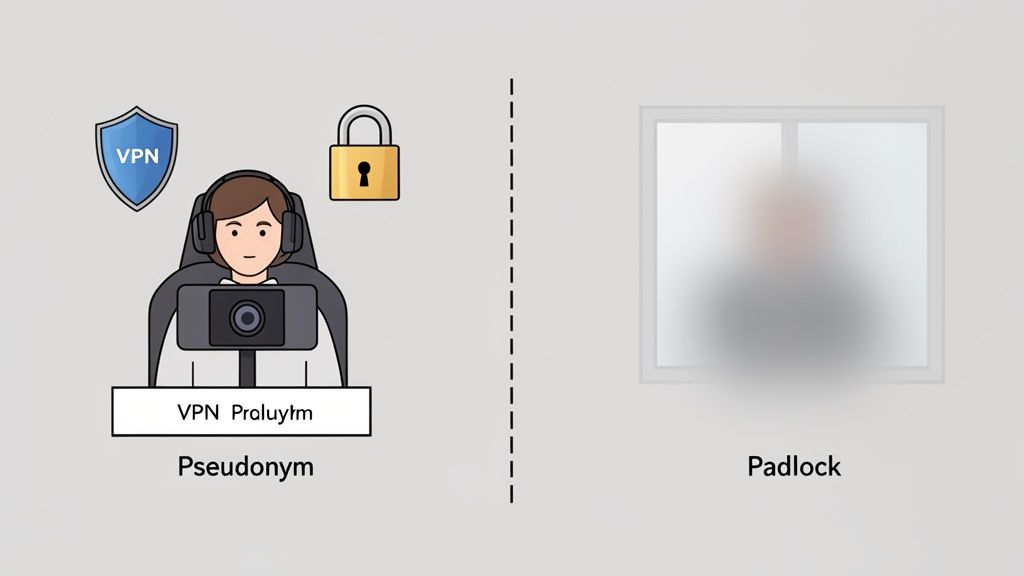
- Choose a Unique Pseudonym: Never, ever use your real name or anything close to it. Your stage name should be completely unique and have no connection to any of your personal social media or email accounts.
- Sterilise Your Streaming Space: Your background is a goldmine of data for anyone looking closely. Before going live, scan for anything that could give you away: family photos, mail showing your address, certificates on the wall, or even a window view that could be pinpointed on a map. A plain wall or a dedicated backdrop is always the safest bet.
- Use a VPN (Virtual Private Network): A VPN is an absolutely essential tool. It works by masking your computer's IP address, which can reveal your general location. This adds a critical layer of technical anonymity, making it significantly harder for anyone to trace where you’re broadcasting from.
- Geoblocking Is Your Best Friend: Nearly every platform has a feature that lets you block entire countries or specific regions from viewing your stream. Use it. Blocking the city or county where you live is a simple but incredibly effective way to reduce the chances of someone you know stumbling across your channel.
The most successful creators treat their privacy like a business asset. They understand that their anonymity is what gives them the freedom to perform confidently and safely, creating a clear separation between their work and their life.
Viewer Privacy: Staying Anonymous in the Audience
Privacy is a two-way street. As a viewer, protecting your own identity is just as important. The goal is simple: support creators and enjoy their content without leaving a trail of digital breadcrumbs back to your real life.
Think of it this way: you are a guest in someone else's space. Just as you expect them to be a consenting adult, they expect you to be a respectful and anonymous member of the audience.
Smart Habits For Viewers
Staying private as a viewer is pretty straightforward once you build good habits. A little bit of digital hygiene goes a long way in keeping your interactions secure.
Stick to these simple rules to stay safe:
- Unique Username and Email: Just like creators, you should use a username and a dedicated email address that have zero connection to your real name or your other online profiles.
- Secure Payment Methods: Try to avoid linking your main bank account or credit card. Instead, look into prepaid cards, disposable virtual cards offered by services like Revolut, or other privacy-focused payment options. This isolates your spending from your main financial identity.
- Don't Share Personal Details: This might sound obvious, but in the middle of a friendly chat, it can be easy to let small details about your life slip. Don’t do it. Keep conversations focused on the stream and avoid revealing anything that could identify you.
- Resist Off-Platform Contact: If a creator or another user tries to lure you onto a different app for a "private" chat or payment, it's almost certainly a scam. Keep all your interactions on the platform itself, where you have at least some level of protection.
Ultimately, understanding how webcam sites work means knowing how to work them safely. By taking these practical steps, both creators and viewers can help build a more secure and sustainable environment for everyone involved.
The Final Step: Cashing Out Your Earnings
Seeing your token balance climb is a great feeling, but those are just numbers on a screen until they land in your bank account. This final part of the puzzle—the payout process—is where your digital earnings become real-world cash. Getting your head around how this works is absolutely essential for managing your finances as a creator.
Every platform handles withdrawals slightly differently, but the underlying mechanics are pretty much universal. You don't just get paid at the end of the month like a normal job. First, you usually have to hit a minimum payout threshold, which might be anywhere from £25 to £100. Think of it as a minimum order value for your own money. Once your earnings cross that line, you can pop over to the payout section of your dashboard and formally request a withdrawal.
Requesting Your Withdrawal
The process feels a bit like sending an invoice. You simply tell the platform you're ready to get paid, choose your preferred payment method, and confirm how much you want to take out. Once you hit submit, your request joins a processing queue.
It’s almost never instant, so don't expect the money to appear in seconds. Platforms tend to run on set payout schedules, maybe once a week or every fortnight. On top of that, there's usually a short waiting period for the actual transaction to clear. This isn't them holding onto your money for fun; it’s a necessary buffer for fraud checks and to make sure all the token transactions have been properly settled on their end.
Don't panic if the money isn't in your account the next day. A standard waiting period of 3-7 business days is completely normal. It’s just the time it takes for different banking systems to communicate with each other.
Comparing Common Payout Methods
If you're based in the UK, you’ll typically have a few different ways to get your hands on your money. Each one has its own upsides, downsides, and, of course, fees. The best choice for you really depends on how fast you need the cash and what you’re comfortable paying for the convenience.
- Direct Bank Transfer (BACS/SEPA): This is often the most straightforward route. The money lands directly in your UK bank account, plain and simple. The trade-off is that it can sometimes be the slowest method.
- E-Wallets (like Paxum): These are incredibly popular in the industry for a reason. Digital wallets act as a buffer, adding a layer of privacy between the platform and your personal bank account. They're generally quicker than bank transfers but have their own fee structures to consider.
- Cryptocurrency: While less common, this is a growing option for tech-savvy creators. Getting paid in something like Bitcoin can be fast and private, but it comes with the big caveat of market volatility. You also need to know what you’re doing.
A Quick Word On HMRC
Finally, and this is the bit you really can't afford to ignore: all your earnings are taxable income. As a self-employed creator in the UK, you are legally responsible for declaring everything you earn to HMRC. That means filling out a Self Assessment tax return each year. Keeping spotless records of your income and putting money aside for your tax bill isn't just a smart move—it’s a legal requirement.
Frequently Asked Questions
Still got questions? It’s completely normal. This part of the internet can feel a bit overwhelming at first, so let's clear up some of the most common things people ask.
Do I Have To Show My Face To Be A Creator?
Not at all. In fact, many successful creators build a huge following without ever showing their face. It’s a really common way to protect your privacy.
They get creative with camera angles, wear masks, or build a strong persona in other ways. Your connection with the audience is what truly matters, not whether they see your face.
Are Webcam Sites Legal In The UK?
Yes, for consenting adults aged 18 and over, using and working on these platforms is legal in the UK. The industry is regulated, and sites are required by law, such as the Online Safety Act, to have strict age verification systems in place.
For creators, it's important to remember that any money you earn is taxable income and must be declared to HMRC. It all comes down to consent, age, and making sure the content itself doesn't break any UK laws.
The legality is clear-cut: as long as everyone involved is a consenting adult over 18 and all activities comply with UK law, these platforms operate within a regulated framework. The non-negotiable part is the rigorous age verification for both creators and viewers.
How Much Equipment Do I Really Need To Start?
Honestly, you can get started with just a decent webcam and a solid internet connection. It’s easy to look at professional setups with fancy lighting and expensive mics and feel intimidated, but most people start simple—often with just their laptop camera or a reliable external webcam like a Logitech C920.
The single most important thing isn't your camera, though; it's your internet connection. A good upload speed is absolutely essential for a smooth, high-quality stream that keeps your audience watching.
What Are The Biggest Risks For Viewers?
The main things to watch out for are scams and your own privacy. A classic scam is someone trying to convince you to make payments off the platform, where you have no protection if they simply take your money and disappear. Phishing links, designed to steal your login or payment details, are another common threat.
Protecting yourself is straightforward if you stick to a few golden rules:
- Keep everything on the platform. Only ever use the site's official payment system. No exceptions.
- Never share personal details. This means your real name, financial info, email address—anything that can identify you.
- Use a unique username. Don't use the same name you have on Instagram or Twitter.
Ultimately, your best defence is sticking to well-known, reputable sites that have a vested interest in keeping their users safe.