

Let's get straight to it: using a cam site means handing over data. Whether you're a creator building a business or a viewer kicking back, you're leaving a digital trail. This isn't just about your username; it's a comprehensive fingerprint covering who you are, what you watch, how you pay, and the device you use to do it all.
Understanding this trade-off is the key to navigating this world smartly.
Before signing up anywhere, remember that data collection can differ between simply browsing and creating an account. You can browse girls on cam from the main page and use the privacy guidance below to make informed choices.
The Digital Price of Admission
First things first: adult streaming platforms are businesses, and like any online business, they run on data. This information isn't collected just to be nosy; it’s the engine for everything from legal compliance and payment processing to making sure the right creators pop up on your homepage.
Think of it as the price of admission. To create an account, you provide some basic details. To perform, you prove you're an adult. To tip, you share financial information. Every action is a data transaction.
Creators vs. Viewers: A Tale of Two Data Sets
The sheer depth of data collection varies massively depending on which side of the screen you're on. Creators, for obvious legal and financial reasons, face a much more intense vetting process. Viewers can often keep a higher degree of anonymity, but they aren't invisible ghosts in the machine.
Here’s a practical breakdown of what data cam sites collect and why:
- For Creators: The data requirements are hefty. Think government-issued ID, proof of address, bank details for payouts, and sometimes a live video verification to prove you're a real person holding that ID. This is non-negotiable, driven by KYC (Know Your Customer) laws designed to prevent fraud and, most importantly, ensure everyone performing is of legal age.
- For Viewers: The data footprint is lighter but still significant. It starts with your email, username, and IP address, and extends to payment details if you buy tokens. Your viewing habits—what you search for, who you follow, how long you watch—are meticulously tracked to personalise your experience and feed the recommendation algorithm.
The core difference is this: creators must prove their real-world identity to operate legally and get paid. Viewers provide data primarily to use the site and pay for things.
Understanding this distinction is crucial for navigating these platforms safely. Both parties are exchanging information, but the nature and sensitivity of that info are worlds apart. Before we dig into the nitty-gritty of ID checks and payment trails, the table below gives a no-nonsense summary.
Data Collection at a Glance: Creator vs. Viewer
| Data Category | Examples of Data Collected | Who It's Collected From (Creator/Viewer) | Primary Purpose |
|---|---|---|---|
| Personal ID | Government-issued ID, full name, address, date of birth, biometric data (live verification) | Creator (mandatory) | Age and identity verification, legal compliance (KYC/AML), fraud prevention |
| Contact Info | Email address, username, phone number | Both | Account creation, communication, security alerts, password recovery |
| Payment Info | Bank account details, credit card numbers, e-wallet info, transaction history | Both | Processing payouts (Creators), processing payments for tokens/subscriptions (Viewers) |
| Technical Data | IP address, device type, operating system, browser information, cookies | Both | Platform functionality, security, analytics, fraud detection, location-based services |
| Content | Live stream video/audio, private messages, public chat logs, profile media | Creator (primarily) | Providing the core service, content moderation, platform records |
| Behavioural | Viewing history, followed models, session duration, search terms, tipping patterns | Viewer (primarily) | Personalised recommendations, user experience optimisation, platform analytics |
As you can see, the burden of proof falls squarely on the creator. Now, let's explore exactly what that looks like.
Proving Who You Are: The Verification Deep Dive
If you plan on earning money as a creator, there’s one step you absolutely cannot skip: proving you are who you say you are. This isn't a quirky house rule; it's a serious legal requirement known as Know Your Customer (KYC). Don't even think about trying to get around it. Think of it as the digital version of a bouncer checking your ID at the door, only they're a lot more thorough.
For any aspiring creator, this is by far the most personal data you'll hand over. You’ll be asked for crystal-clear images of a government-issued ID (like a passport or driving licence), a recent utility bill to confirm your address, and the bit that often feels the most awkward: a selfie of you holding your ID right next to your face, sometimes with a handwritten note showing the current date.
So, why all the rigmarole? It all comes down to liability. Platforms are legally bound to make sure every single performer is over 18 and is who they claim to be. This whole process is their main line of defence against underage activity, identity fraud, and even money laundering. They're not just being nosy; they're covering their own backsides.
For Creators: What Does Verification Involve?
The information you provide at this stage is some of the most sensitive data you own. It creates a direct, undeniable link between your online persona and your real-world identity.
A typical verification process for a creator will ask for:
- Government ID Scan: A high-resolution copy of your passport or driving licence.
- Proof of Address: A recent bank statement or utility bill where your name and address are easy to read.
- Live Verification: The infamous ID-and-face selfie. Some platforms are switching this out for a short, live video call with a verification agent.
- Signed Performer Agreement: This is a legally binding contract, often called a 'model release', where you confirm you're over 18 and give your consent to broadcast.
This data isn't usually just dumped into a folder on the platform's main server. It's typically handled by specialised third-party verification services. However, it's crucial to remember that a data breach at either the platform or its verification partner could expose this highly sensitive information—a significant risk all creators have to accept. For a really detailed walkthrough, you can explore our guide on the UK cam site verification process.
For Viewers: The Age Check Spectrum
Viewers have a much lower hurdle to clear, but the principle is the same: the site needs to have a reasonable belief that you're old enough to be there. The methods they use, however, vary wildly in how effective they are and how much data they collect.
Think of viewer age verification as a sliding scale. On one end, you have the simple "Are you over 18?" checkbox—legally flimsy and based purely on trust. On the other, you have robust checks that leave a clear data footprint.
Most reputable platforms rely on credit card age verification. When you add a card to buy tokens, the payment processor checks that the cardholder is of legal age. This doesn't mean the cam site gets your full credit card number, but it does get a confirmation that you've passed an age check tied to a financial instrument. This method is far more reliable for the platform, which explains why totally free-to-view sites with no payment options often have much looser, or even non-existent, verification.
Following the Money: The Financial Data Trail
Every time a token is tipped or a payout lands in a bank account, it creates a financial record. This is where the digital world of streaming meets the very real world of banking. Tracking this flow of money reveals a critical layer of data collection, one that involves not just the cam platform, but a whole network of payment processors and financial institutions.
For viewers, buying tokens is designed to be smooth and discreet. When you pull out your card, you're usually not handing your details directly to the cam site. Instead, you’re dealing with a third-party payment gateway—a specialist company whose entire job is to handle transactions securely. This is a very deliberate and important separation.
The cam platform simply gets a notification that your payment went through and knows how many tokens to add to your account. Critically, it almost never sees or stores your full credit card number. This is all down to a set of stringent rules called PCI DSS (Payment Card Industry Data Security Standard), designed to keep your financial details under lock and key.
What Viewers' Payment Data Looks Like
Even though the platform doesn't hold your full card details, it still needs to log some information about the transaction. Typically, this includes:
- Transaction ID: A unique reference number for that specific purchase.
- Payment Method: A note of whether you used Visa, Mastercard, or a particular e-wallet.
- Partial Card Details: Usually just the last four digits of your card number and its expiry date.
- Billing Information: Your name and billing address, which are crucial for preventing fraud.
This approach is smart because it massively reduces the risk for the platform. If they ever get hacked, the attackers won't find a goldmine of usable credit card numbers—because the site never had them in the first place. That highly sensitive data stays with the payment processor, a company built like a fortress to protect it.
Payouts and the Creator's Paper Trail
For creators, the money flows in the opposite direction, and the data collection is far more direct and detailed. To actually get paid, you have to give the platform very clear instructions on where to send your earnings. This means handing over some seriously sensitive financial and personal details.
A creator’s relationship with a platform is, at its core, a business one. The platform is essentially a client paying a contractor. That requires all the standard financial paperwork you’d expect, creating a clear and permanent record.
Unlike viewer payments, this isn't kept at arm's length. The platform has to know exactly who it's paying to meet its own legal and financial obligations, especially when it comes to reporting for tax purposes.
To get your money, you'll almost always need to provide:
- Bank Account Details: Your IBAN, SWIFT/BIC code, and the exact name on the account.
- Tax Information: In the UK, this would be your National Insurance number, or an equivalent tax ID elsewhere.
- Full Legal Name and Address: This has to perfectly match your verification documents and bank records.
This is a fundamental part of how cam models get paid, forging a direct link between your on-screen persona and your real-world financial identity. It's a necessary part of the business, but it also means your most sensitive data is held by the platform itself. This makes their security measures incredibly important.
The flowchart below shows the identity verification process, which is the first step before any money can change hands.
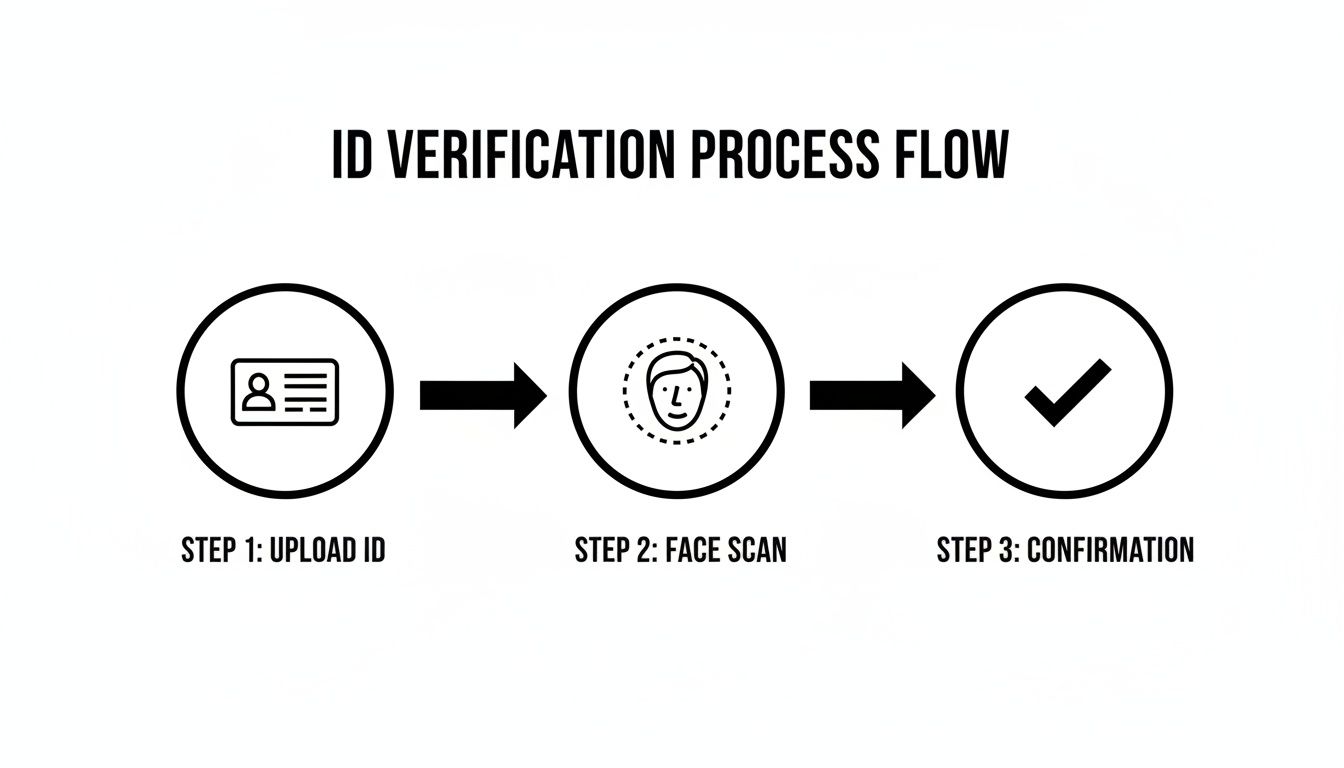
This simple, three-step process—uploading an ID, completing a biometric face scan, and getting confirmed—is the gateway to both performing and getting paid. It firmly establishes the legal identity that every single financial transaction will be tied to, highlighting just how crucial this initial data exchange really is.
What Your Clicks and Taps Reveal
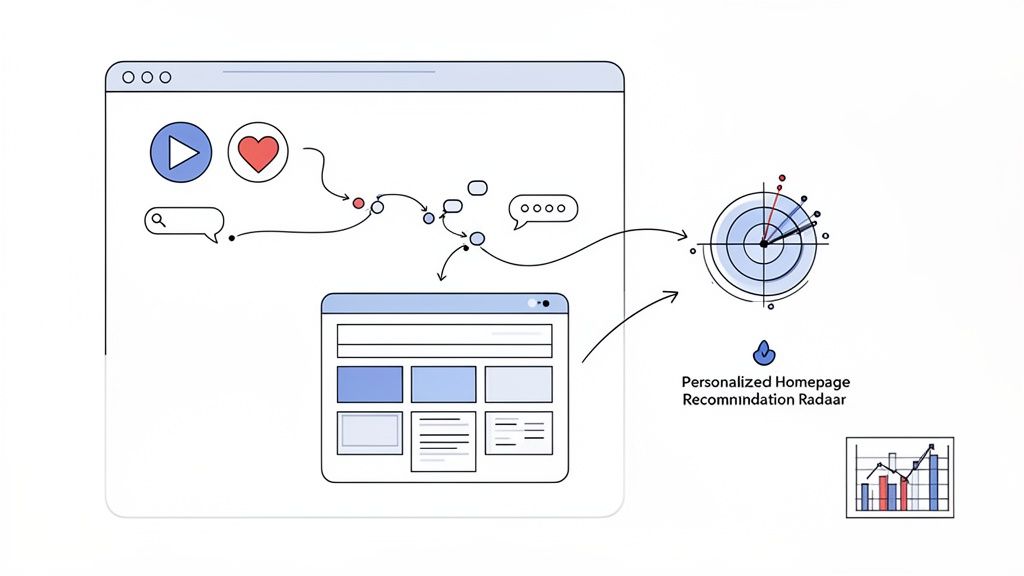
Every single tap, scroll, and click on a webcam site is a whisper to the platform's algorithm. It’s far more than just a fleeting moment of entertainment; it's a valuable data point that helps the site decide exactly what you’ll see next. This constant, quiet tracking of your behaviour is the engine that predicts your next favourite model.
For viewers, this means the creators you follow, the tags you search for, and even the messages you send in a chat all sculpt your future feed. For creators, it's a different game. Every minute you stream, every tip you receive, and every viewer who joins your room is tallied up, influencing your rank and how easily you can be discovered. In this system, almost nothing goes unnoticed—even private messages are often scanned by moderation bots.
The result is a homepage that feels uniquely yours, constantly shifting to match your tastes. But behind this seamless personalisation is a trade-off, and the currency is your privacy.
- Models Followed: Directly influences the next wave of recommendations.
- Search Tags: Pushes you towards specific niches and content styles.
- Session Length: A key indicator of your interest, used to keep you on the site for longer.
- Chat Logs: Provides context for moderation and can inform future suggestions.
- Watch Frequency: Highlights how often you return to a particular creator.
How Viewer Behaviour Is Tracked
Platforms build a surprisingly detailed profile of you from a collection of seemingly small interactions. If you search for “roleplay,” for instance, you can bet that similar streams will start popping up more frequently. Before you know it, your homepage becomes a mirror reflecting your past clicks.
It’s a common misconception that browsing anonymously means you’re browsing privately. That’s rarely the case. These sites typically link your behaviour back to your account ID, even if you’re trying to be discreet. That’s how they measure things like session duration, how often you return, and your tipping habits.
By studying each click, platforms paint a clearer picture of what you want.
How Creator Engagement Is Measured
Creators are under the microscope, too. Every broadcast is logged with incredible detail. Platforms capture start and end times, chat engagement rates, and how quickly tips are coming in—all to calculate a creator's ranking.
In this world, numbers are king. If you stream for 4 hours, maintain an average of 200 concurrent viewers, and earn 150 tokens in tips, you’ll start climbing the visibility ladder. Better metrics mean you’re more likely to land a spot in the coveted “featured” sections, which can lead to a serious boost in earnings.
Creators can use this data to their advantage, fine-tuning their schedules and content. A simplified version of how an algorithm might score a stream looks something like this:
- Log the stream’s total length.
- Tally the number of unique viewers.
- Calculate the tip rate per minute.
- Adjust the creator’s overall ranking score.
- Allocate a better spot on the homepage.
How This Data Is Stored and Shared
All this behavioural data is stored on the platform's servers, often right alongside your personal and payment details. While they don't share your specific click history, platforms do share anonymised trend data with advertisers and may use it when negotiating deals with other companies.
Interestingly, you won't find much about this in mainstream reports. General studies on UK internet usage tend to skim over the specifics of adult streaming, leaving a significant knowledge gap. While reports like the Digital 2025 UK provide broad privacy stats, they rarely dig into the data collection practices of cam sites. You can discover more insights about UK digital usage on DataReportal.
- Data Retention Periods: These vary wildly from one platform to another.
- Sharing with Law Enforcement: This happens when they receive a formal request.
- Aggregated Metrics: This data is gold for A/B testing user interface tweaks.
Practical Tips to Manage Tracking
Knowing what’s collected is half the battle; doing something about it is the other. If you’re looking to rein in the tracking, here are a few practical steps you can take.
| Action | Effect on Tracking | Difficulty |
|---|---|---|
| Use a Secondary Profile | Keeps niche interests separate from your main account. | Easy |
| Clear Cookies Regularly | Resets some of the behavioural flags the site uses. | Medium |
| Use Incognito Mode | Minimises how much data is stored locally on your device. | Easy |
| Adjust Notification Settings | Reduces data from prompt-driven engagement. | Easy |
Beyond these, always opt out of non-essential cookies and spend a few minutes looking through your account’s privacy settings. It’s surprising what you can control. Combining these tactics can give you a real sense of control without ruining your experience.
Finding the Balance Between Experience and Privacy
Ultimately, the data these sites collect isn't just a privacy issue—it’s the fuel that powers the entire ecosystem. Smart use of engagement metrics can lead to a better experience for viewers and higher earnings for creators. The danger lies in unchecked data harvesting, which can slowly erode trust.
The best defence is to be proactive. Make a habit of reviewing your account settings. Stay curious, and always stay vigilant.
The Invisible Data Your Devices Broadcast
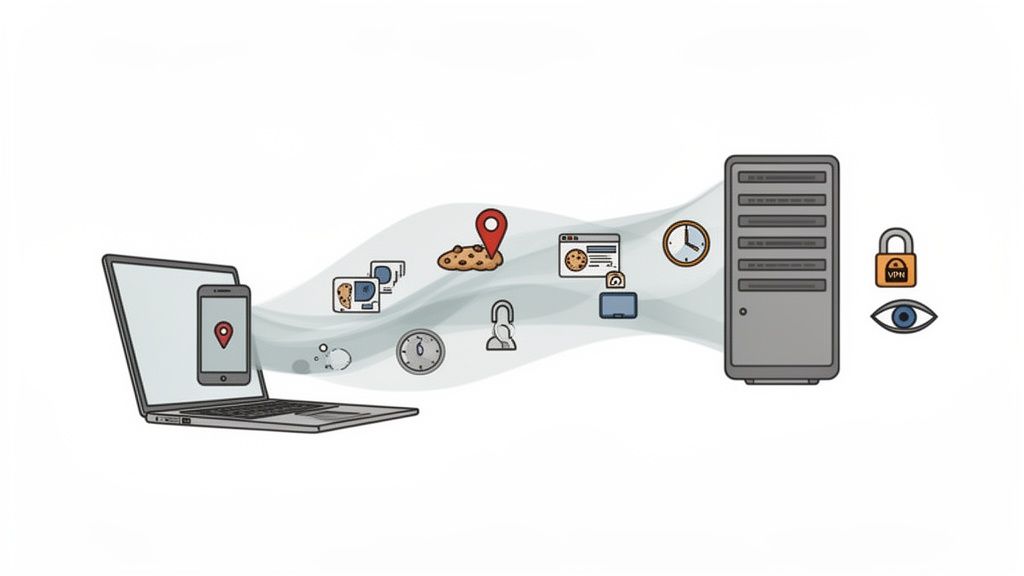
It’s not just about the clicks you make or the profiles you favourite. There's a whole other layer of data collection happening silently in the background every single time you visit a cam site. Your device is constantly broadcasting a stream of technical information without you lifting a finger.
Think of it as your digital body language. You might not be actively saying anything, but your very presence gives off signals that websites are designed to read. This invisible exchange is fundamental to how the modern internet works—it's what allows a site to remember you, protect your account from dodgy login attempts, and make sure the video stream actually plays on your screen. But this same information can also be used to build a surprisingly detailed picture of you and your habits.
Your IP Address Is Your Digital Postcode
One of the most significant pieces of technical data you share is your IP (Internet Protocol) address. It's a unique string of numbers assigned to your network, acting a bit like a rough digital postcode for your internet connection.
Now, it won't reveal your exact house number, but it does pinpoint your general geographical area—often down to the city or town. Platforms use this for several perfectly legitimate reasons:
- Security: If you normally log in from London and an attempt suddenly comes from another country, the system can flag it as suspicious and block it to protect your account.
- Content Localisation: Some sites might use your location to show you models who speak your language or are popular in your region.
- Legal Compliance: It helps platforms restrict access from countries where their service might be banned.
So while it's essential for security, your IP address is a core piece of what data do cam sites collect to understand their user base on a geographical level.
Browser Fingerprinting and Cookies
Your device and browser also offer up a wealth of other details. When all these little bits of information are combined, they create a "fingerprint" that is often completely unique to you. We're not just talking about whether you're using Chrome or Safari; it's far more granular than that.
A device fingerprint is like a bartender who not only remembers your favourite drink but also the type of glass you prefer, the brand of your coat, and the time you usually arrive. It’s a collection of small details that, together, make you recognisable.
This fingerprint is built from various data points your browser freely shares with any website it visits:
- Operating System: Are you on Windows, macOS, or Android?
- Browser Version: This helps make sure the site displays correctly.
- Screen Resolution: Again, this is used for optimising the user interface.
- Installed Fonts and Plugins: These details add tiny, specific brushstrokes to your unique digital signature.
Alongside fingerprinting, platforms use cookies. These are just tiny text files stored on your device that help the site remember you between visits. They’re the reason you stay logged in and why the site might recall your volume preferences. But while many cookies are there for basic functionality, others are designed to track your activity across different sessions to learn your habits. If you're curious about the mechanics behind all this, our guide on how webcam sites work offers a much deeper dive.
This potent mix of your IP address, device fingerprint, and cookies is what allows these platforms to connect the dots. It’s the invisible glue holding your user profile together, ensuring a seamless experience while quietly logging the technical specifics of every single visit.
Taking Back Control: How to Protect Your Privacy
Knowing what data cam sites collect is one thing. Actually doing something about it is what matters. The good news is, you're not just a passenger here; you have rights and tools you can use to build a much stronger wall around your digital identity.
For anyone in the UK and EU, the General Data Protection Regulation (GDPR) is a powerful ally. It gives you concrete rights over your data, including the crucial 'right to be forgotten' (also known as the right to erasure). This lets you formally demand a platform deletes your personal data, and in most cases, they legally have to. It's more than just a way to close an old account—it's a fundamental lever for controlling your digital footprint.
Your Practical Privacy Checklist
Taking back control really starts with building good habits. Think of it as a form of digital self-defence. A few simple, consistent measures can dramatically lower your exposure and make it much harder for your data to fall into the wrong hands.
Here’s a simple checklist that works for both viewers and creators:
- Use a Unique Email Address: This is a big one. Never, ever use your personal or work email. Set up a brand new email address you use only for cam sites. This creates a firewall, so if one platform gets breached, the problem doesn't spill over into the rest of your digital life.
- Strong, Unique Passwords Are Non-Negotiable: Reusing passwords is like using the same key for your house, car, and office. It’s a terrible idea. Get a password manager to create and remember complex, unique passwords for every single site.
- Always Enable Two-Factor Authentication (2FA): If you only do one thing from this list, make it this. 2FA adds a second layer of security, usually a code from an app on your phone, before you can log in. It stops anyone who has managed to get your password dead in their tracks.
Think of 2FA as a deadbolt on your digital front door. A stolen key (your password) is useless if the deadbolt is locked. It’s a tiny inconvenience that delivers a massive security upgrade.
Advanced Steps for Extra Protection
Once you’ve got the basics down, you can start adding more sophisticated layers to your setup. These steps are especially important if you place a high value on your anonymity online.
A Virtual Private Network (VPN) is a popular starting point. It works by sending your internet traffic through a secure, encrypted tunnel, which masks your real IP address from the websites you visit. This makes it much harder for a platform to figure out your general physical location. Just be mindful that while the cam site can't see your IP, your VPN provider can, so picking a reputable service with a strict no-logs policy is absolutely vital.
Viewers who are more concerned about identity than creator-side data can also read our guide to watching cams anonymously.
Essential Tips for Creators
If you're a creator, protecting your privacy isn't just a preference—it's central to your personal safety and your career. Your data is your business, and you need to guard it fiercely.
- Watermark Your Content: Always put a clear watermark of your screen name on your streams and any photos or clips you share. This doesn't stop theft entirely, but it makes it much more difficult for people to steal your videos and re-upload them as their own.
- Manage Your Digital Footprint: Be hyper-aware of what's visible in your background. A piece of mail showing your address, a family photo, or even a distinctive window view could be used to identify you. The more separation you create between your on-screen persona and your real-world life, the safer you will be.
Common Questions About Cam Site Data
We’ve covered a lot of ground, but a few questions always come up. Let's tackle some of the most common queries people have about what these platforms know and how it affects them.
Can a Cam Site See My Real Name if I Use a Credit Card?
Not directly, no, but they will see the name tied to your billing info. When you make a payment, the platform gets a confirmation that includes the name and address you entered. This is a standard part of preventing fraud, so it's unavoidable.
The good news is that the platform itself almost never sees or stores your full credit card number. That critical information is handled by a specialised, secure payment processor. This seriously cuts down the risk of your financial data leaking if the cam site itself ever gets hacked.
Are Private Shows Recorded by the Platform?
This is a bit of a grey area, and it all comes down to the platform's terms of service – which you really should read. The short answer is: often, yes. Many platforms record private shows for their own internal use, mainly for moderation and to stay on the right side of the law.
These recordings are a safety net. They're used to sort out disputes, like if a user demands a refund, or to investigate when someone breaks the site's rules.
It's safest to assume that anything you do on a platform, whether it's labelled "private" or not, could be logged or recorded by site administrators. True privacy from the platform itself is practically an illusion.
While these recordings aren't meant for public eyes, they are still sitting on a company server somewhere.
How Do I Request My Data from a Site Under GDPR?
If you live in the UK or the EU, you have a legal right to ask any company for a copy of the personal data they hold on you. This is known as a Subject Access Request (SAR). The best place to start is the platform’s privacy policy, where you should find a specific email or form for data requests.
When you get in touch, be direct. State clearly that you're making a SAR under Article 15 of the GDPR. They are legally required to get back to you within one month and give you access to the data they’ve collected.
Is Using Cryptocurrency for Payments Truly Anonymous?
Not completely, no. While paying with crypto means you don't have to provide your legal name or bank details in the same way you would with a credit card, it's a mistake to think it's totally anonymous. Most blockchain transactions are public and can be traced.
The moment your crypto wallet is linked to your real identity – say, through a crypto exchange where you had to verify who you are – that connection can potentially be uncovered. Think of it as pseudonymous rather than anonymous. It creates a solid layer of separation, but it isn't a magic invisibility cloak.