

Ever wondered how the money actually moves on a cam site or a fan platform? Forget the myths; it all boils down to three things: tokens, tips, and subscriptions.
Think of them like this. Tokens are the arcade coins of the show, used for in-the-moment fun. Tips are a direct, spontaneous 'thank you' for a performance you're enjoying. And subscriptions? That's your VIP pass to an exclusive fan club. Get your head around these three, and you've cracked the code to how this whole world works.
The Three Pillars of Creator Income
Let's break down the three main ways creators earn their living. On the surface, they might look similar—after all, it's just viewers sending money to a performer. But dig a little deeper, and you'll see they each play a very different role in the creator-viewer dynamic, shaping the relationship in unique ways.
It's rare to see a successful creator rely on just one. The real pros master the art of blending these income streams. They use the instant buzz from tokens and tips to keep the show lively and engaging, while building a foundation of reliable income with subscriptions. For viewers, knowing the difference means you can interact in a way that feels right for you, whether you're just dropping in for a bit of fun or you're looking to become a long-term supporter.
Tokens vs Tips vs Subscriptions at a Glance
To make this crystal clear, let's put these three methods side-by-side. This table gives you a quick snapshot of what each one is, what it’s best for, and how it feels to use it.
| Method | What It Represents | Best For | Typical Viewer Experience |
|---|---|---|---|
| Tokens | On-platform digital currency (like arcade coins) | Gamified, in-show interactions, specific requests, and activating goals. | Buying a pack of tokens, then spending them during the stream to make things happen. |
| Tips | A direct, one-off cash payment (like a busker's hat) | Spontaneous appreciation, showing support, and getting a performer's attention. | Sending a direct monetary amount through the platform to say "great job!" without an agenda. |
| Subscriptions | A recurring membership fee (like a fan club) | Building a loyal community, providing exclusive content, and stable income. | Paying a monthly fee for special access to private content, messaging, and other perks. |
As you can see, each method offers a different flavour of interaction, catering to different moments and motivations.
How Each Method Works in Practice
So, what does this look like during a live show or on a creator's page? Let's get into the nitty-gritty.
-
Tokens (The In-Show Currency): This is the bread and butter of most live cam platforms. As a viewer, you buy a bundle of the site’s special currency—the tokens—which you then use during a performance. You might spend a few to make a toy vibrate, put in a request from a creator's menu, or chip in to fill a goal bar that unlocks a special part of the show. It turns the whole experience into a fun, interactive game.
-
Tips (The Direct Thank You): A tip is as simple as it sounds—it's a direct cash payment to show your appreciation. It’s the digital equivalent of dropping a few quid into a street performer’s guitar case. While tokens are usually tied to a specific action, a tip is often just a spontaneous gesture that says, "I'm really enjoying this, keep it up."
-
Subscriptions (The Fan Club): This model, made famous by platforms like Patreon and OnlyFans, is all about creating a dedicated community. A viewer pays a set fee each month to unlock a creator's exclusive content, get access to private chats, or receive other special perks. It builds a much more stable, predictable income for the creator and fosters a closer connection with their biggest fans.
For a creator, the real skill isn't just performing well on camera; it’s learning how to weave these three income streams into a cohesive strategy. A lively public chat buzzing with token spenders draws in new people. Some of those newcomers will become regular tippers, and a handful of those will eventually become loyal monthly subscribers.
Truly understanding how cam models get paid means seeing how these different systems work together. The journey from being a casual viewer spending a few tokens to becoming a dedicated subscriber is the financial engine that powers the whole industry.
How Platform Tokens Really Work
Ever wondered what happens to your money after you buy tokens on a streaming site? Let's follow the cash. Tokens are the lifeblood of most platforms, the universal currency that keeps the whole show running. Think of them as digital poker chips you buy with real money. This isn't an accident; it's by design.
When a viewer buys a token package for, say, £20, they’re stepping into the platform's world. Spending 200 tokens just feels different from spending £20 in cash, a psychological quirk that often encourages more frequent, smaller interactions. It gamifies the whole experience, making tipping for a specific action feel less like a transaction and more like you're playing a game.
This process, known as tokenization, cleverly creates a bit of distance between your wallet and the creator's performance. It's a smart system that keeps the energy high and the tips flowing. But what’s happening on the other side of the screen? How do those digital coins actually turn into rent money for the creator?
From Viewer Wallet to Creator Payout
The journey from a viewer’s credit card to a creator’s bank account is where things get interesting—and often, a little murky. That £20 token purchase doesn't just teleport into the creator's account. It goes on a journey, with several hands taking a slice of the pie along the way.
The whole process involves a few key stages, and each one has financial implications. Getting your head around this is vital if you want to understand the real economics of streaming.
Here’s a simplified breakdown of the general income flow.
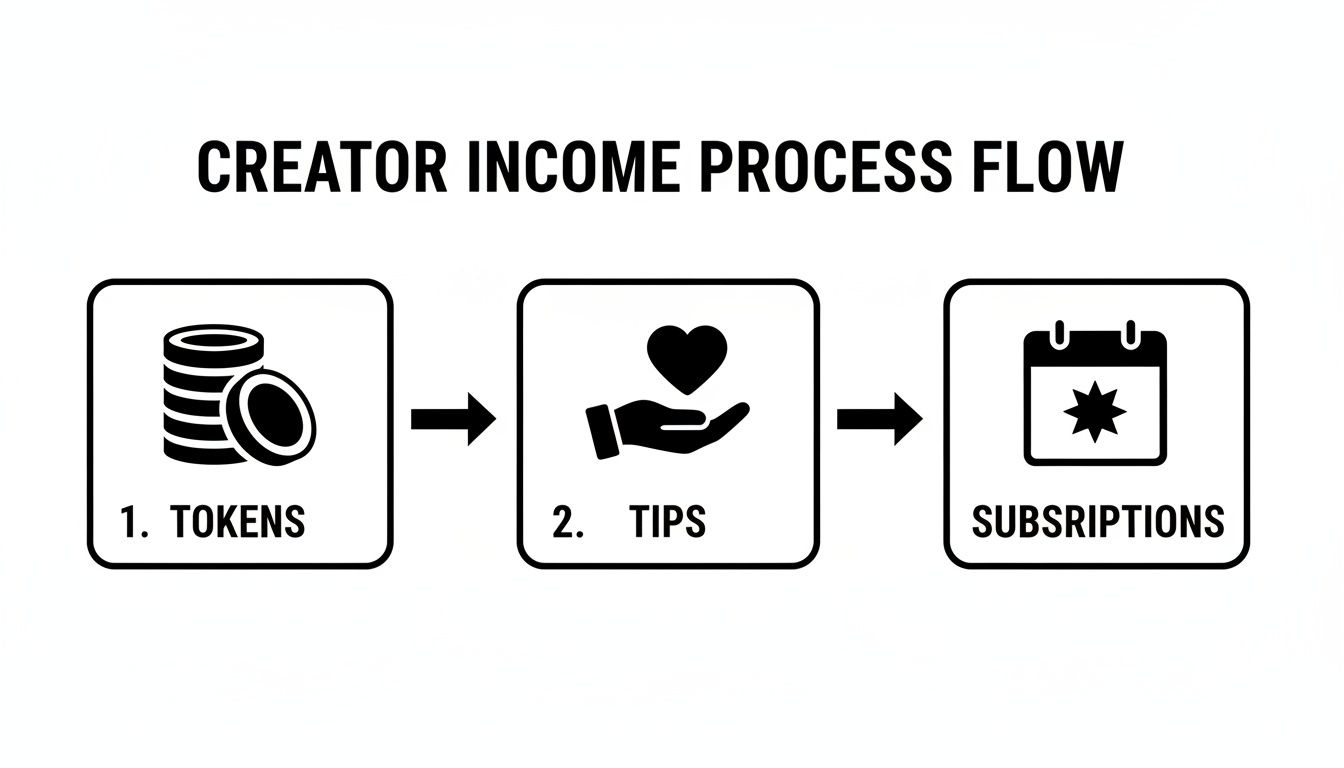
As you can see, tokens, tips, and subscriptions all start with the viewer, but they follow different routes and face various deductions before finally landing with the creator.
The platform itself is the biggest player here. They provide the stage, the audience, and the payment systems, and they take a hefty cut for their services. This commission, often just called a platform fee, can be anywhere from 20% to as high as 50% or more, depending on the site.
It's the most critical number for any creator to understand. A 50% platform fee means that for every 200 tokens a viewer spends, the creator is only credited with the value of 100 before any other costs are even considered.
Following a £20 Token Purchase
Let's trace that £20 token purchase to see where every penny actually goes. It's a sobering but crucial lesson for anyone involved in the creator economy.
- The Viewer's Purchase: A fan decides to buy a 2,000-token pack for £20. The platform receives the £20 from the viewer.
- Payment Processing Fees: Before the platform even touches the money, payment processors like Visa or Mastercard take their cut. This is usually around 2-3%, so let’s say £0.60 vanishes instantly. The platform is left with £19.40.
- The Platform's Cut: Now, the platform applies its commission. Assuming a fairly standard 40% fee, they take £7.76 (£19.40 x 0.40). This leaves £11.64 for the creator.
- Creator Payout Thresholds: The creator's account is credited with £11.64, but they can't withdraw it just yet. Most platforms have a minimum payout threshold, often £50 or £100, so the money sits there until they earn enough to cash out.
- Withdrawal & Conversion Fees: When they finally request a payout, there might be more fees, like bank transfer charges or currency conversion costs if they're not in the UK.
So, from that initial, enthusiastic £20 purchase, the creator might only pocket around £11 in the end—and only after they've earned enough from other viewers to hit the payout minimum. It’s a stark look at the financial reality behind the screen and clarifies exactly how cam platforms make money for themselves. As they say, the house always gets its cut.
The Art of Tipping and Direct Support
If tokens are the currency of the in-stream economy, think of tips as a more direct and personal gesture. It’s the digital version of sliding a tenner to a busker who just played your favourite song. A tip is spontaneous, a straightforward "thank you" that goes beyond the gamified interactions of the show.
This is where the exchange feels less like a transaction and more like a genuine connection. When a viewer sends a tip, they aren't just buying a pre-programmed action; they're showing direct appreciation for the streamer's personality, skill, or the specific vibe they've created in that moment. For many creators, this can feel far more meaningful than token spend.
Unlike tokens, which viewers often buy in advance as a bundle, tips are usually a one-off payment made directly through a button on the creator’s page. It's a simple, immediate way to show support that cuts through the platform's own currency system.
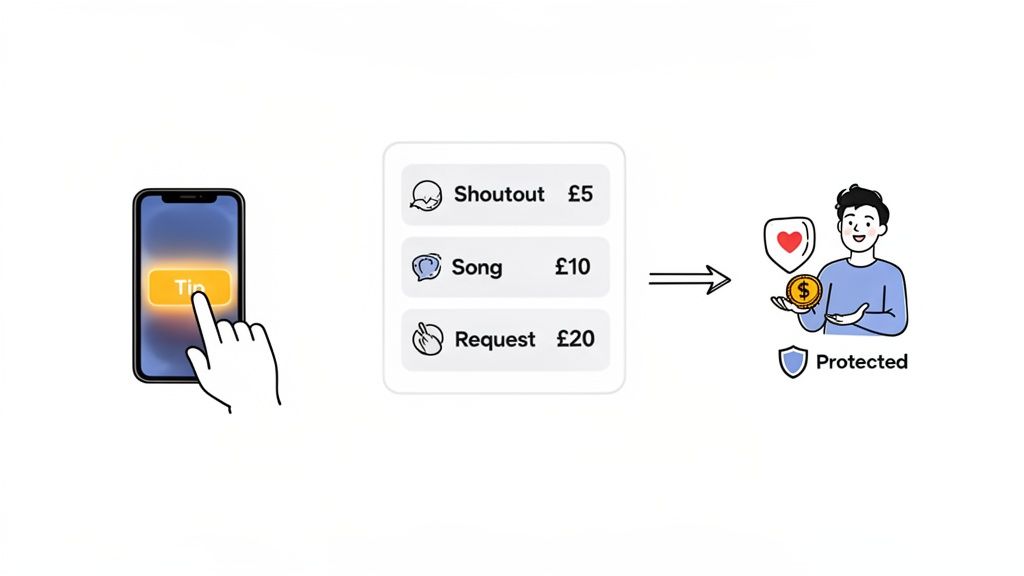
From Simple Thanks to Tip Menus
The culture around tipping has grown far beyond just a simple thank you. Many streamers now use a tip menu—a clear list of actions, requests, or personal interactions available for a set tip amount. This adds a fantastic interactive layer to direct support.
A typical tip menu might offer things like:
- Shoutouts and Personal Attention: A simple name mention or a personal message on screen.
- Specific Actions: This could be anything from changing an outfit to performing a particular dance.
- Content Control: Letting a generous viewer choose the next song or the topic of conversation.
This approach gives the audience a clear roadmap for how to interact, while also making sure the creator is fairly compensated for their time and effort. It’s an ingenious way to encourage support without having to constantly ask, effectively turning the stream into a collaborative experience funded by its biggest fans.
Following the Money on a Tip
So, how does that tip actually get from a viewer's wallet to the creator's pocket? The path is similar to a token purchase, but there are some key differences to be aware of.
While the platform processes both, the fees on direct tips can sometimes be higher or calculated differently. That’s because processing a single, one-off credit card payment often costs the platform more than handling a larger, pre-paid token bundle.
The platform always acts as the secure go-between. This is absolutely critical for everyone’s privacy. The creator never sees the viewer’s real name or their payment details, and the viewer never sees the creator's. The platform is essentially a financial firewall, keeping both sides protected.
When you check your bank statement, the charge will almost always show up under the platform’s name, not the individual creator's. This discretion is a cornerstone of how these sites operate, providing a layer of anonymity that is vital for both performers and their audience.
Tipping in the Broader Creator Economy
While tips are a massive part of the live webcamming world, their importance can change depending on the platform's business model. On sites that are built around subscriptions, for example, direct tipping often takes a back seat.
The numbers bear this out. On some major subscription-focused platforms, paid content can make up around 95% of a creator's total earnings. In these cases, direct payments like tips and live stream donations only account for the remaining 5%. You can learn more about these creator earning statistics to see just how much the models can differ.
It really highlights how a creator's income streams are shaped by the platform they choose and the kind of community they build.
Subscriptions and the Quest for Predictable Income
If tokens and tips are the adrenaline rush of a live show, subscriptions are the bedrock of a stable career. For any serious creator, this is the goal: a reliable, predictable income that irons out the financial ups and downs of a notoriously volatile industry. It’s the difference between earning show-by-show and building a sustainable business.
The subscription model completely changes the relationship between a creator and their audience. Instead of a one-off payment for a specific action, a viewer becomes a paying member. They commit to a recurring monthly fee in exchange for exclusive access, turning casual fans into a loyal, dedicated community.
This shift allows creators to stop chasing fleeting tips and start focusing on delivering consistent, high-quality content for their biggest supporters. It’s a business model built on genuine connection and loyalty, not just momentary attention.
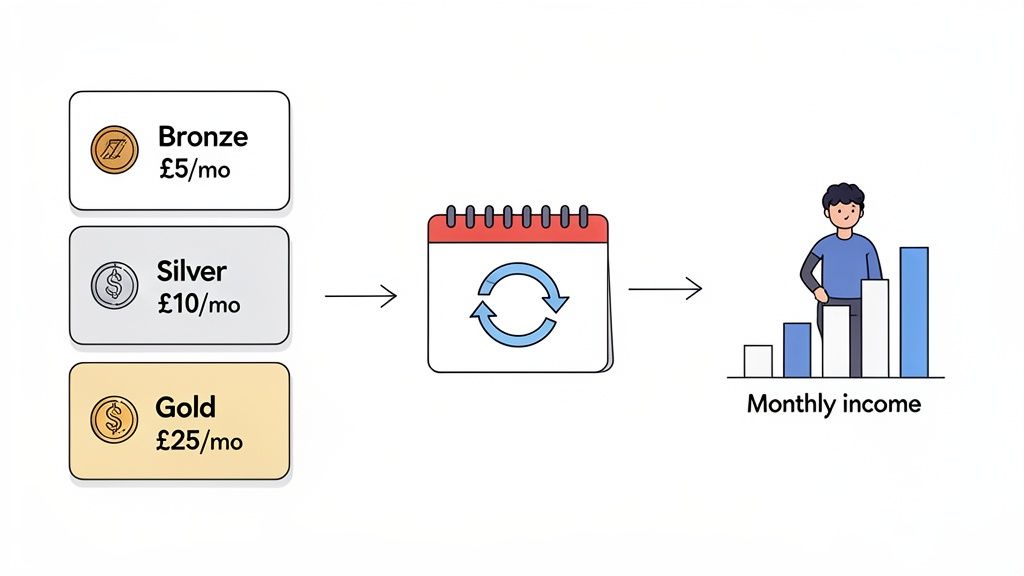
Building the Tiers: What Do Fans Actually Get?
So, what makes someone commit to a monthly fee? It all comes down to value and exclusivity. Most creators structure their subscriptions into tiers—think Bronze, Silver, and Gold—with each level unlocking more perks and deeper access.
A successful subscription strategy is built on offering things fans genuinely want and can't get for free anywhere else. Common perks include:
- Exclusive Content: This is the heart of any subscription. It could be anything from behind-the-scenes photo galleries and pre-recorded videos to access to a private blog or social media feed.
- Direct Communication: Many top creators offer private messaging or an invitation to a dedicated Discord or Telegram group exclusively for subscribers. This fosters a powerful sense of community.
- Ad-Free Viewing: A simple but highly effective perk is removing all platform advertising from your stream and content for paying members.
- Early Access: Giving subscribers a sneak peek at new videos or content before it goes public is a great way to make them feel special.
The real trick is creating a clear value proposition. A fan needs to look at a £10 per month subscription and immediately see that it's worth it. For viewers, the process is simple; payments are handled securely through the platform, and the charge will typically appear discreetly under the platform’s brand name on their bank statement.
The real art of the subscription model isn’t just creating great content; it's creating a compelling reason for someone to commit to paying for it month after month. It's about building a club that people genuinely want to be a part of.
The Winner-Take-All Reality Check
Now for a dose of cold, hard reality. The media loves sensational stories about the incredible earnings of top-tier creators. The growth of the UK's creator economy is undeniable, and some individuals have found phenomenal success. You’ll see headlines about UK creators like Gemma McCourt, reportedly earning around £2.3 million per month, or Dannii Harwood, pulling in an estimated £1.4 million monthly. These figures paint a picture of a digital gold rush. You can read more about these top UK creator earnings to get a sense of just how high the ceiling can be.
However, these stories represent the absolute pinnacle—the 0.1%. While the potential is huge, the subscription economy operates on a stark, winner-take-all dynamic where a tiny fraction of creators captures the vast majority of the revenue.
Let's look at what the income distribution really looks like for most people.
Creator Income Distribution Reality Check
| Creator Tier | Approximate Monthly Earnings (GBP) | Percentage of All Creators |
|---|---|---|
| The Top 1% | £7,500 – £2.3M+ | ~1% |
| The Top 10% | £750 – £7,500 | ~9% |
| The Average Creator | £115 – £150 | ~50% |
| The Bottom 40% | Less than £75 | ~40% |
As the table shows, for every millionaire creator, there are thousands earning very little. Building a subscriber base is a slow, difficult grind. It demands not just on-camera talent but also sharp marketing skills, dedicated community management, and relentless consistency.
This isn't meant to be discouraging, but to ground expectations in reality. Success is absolutely possible, but it rarely, if ever, happens overnight. Understanding that this journey is a marathon, not a sprint, is crucial. The stability of a recurring income is a powerful reward, but it’s one that is earned through serious hard work and dedication.
Understanding Fees, Payouts, and the Financial Realities
Making money is one thing, but actually getting it into your bank account can feel like a completely different battle. The journey from a viewer’s tip to cash in hand is often a winding path of platform commissions, processing fees, and minimum payout rules. Let's pull back the curtain on the financial side of things.
The first, and usually biggest, slice of the pie the platform takes is its commission. This can vary wildly, from a fairly standard 20% on some sites to a hefty 50% on others. Why such a big difference? It often boils down to what the platform offers in return. Sites with huge audiences, better promotional tools, or more robust moderation systems tend to charge a premium for access.
Think of it like paying rent for a shop on the high street. A spot with loads of footfall costs more, but it also brings a lot more potential customers past your window.
The Hidden Costs That Can Chip Away at Your Earnings
Beyond that main commission, a whole host of smaller, easily overlooked costs can nibble away at your final payout. These are the "hidden" fees where new creators often get caught out, leaving them wondering why their bank deposit is so much lower than what they saw on screen.
Getting your head around these deductions is vital if you want a realistic picture of your actual take-home pay.
Here are the common costs to look out for:
- Payment Processing Fees: Before the platform even touches the money, payment processors like Visa or Stripe take their cut. This is usually around 2-3% of every single transaction.
- Chargeback Risks: If a viewer disputes a charge with their bank (known as a "chargeback"), the platform often passes the financial hit—and sometimes an extra penalty fee—straight onto you.
- Currency Conversion Charges: As a UK creator with an international audience, you'll be paid in various currencies. Converting those dollars or euros into pounds will nearly always come with a fee from the payment processor or your bank.
Those small percentages might not seem like much on their own, but they add up incredibly fast. A 3% processing fee on top of a 40% platform commission means nearly half of every pound earned is gone before it even gets to you.
Getting Paid: The Practical Steps
Once you've navigated the fees, the next hurdle is actually getting your money out. This requires a bit of admin, but it’s crucial to get it right from day one. Mess it up, and you could be facing serious delays, which we cover in our guide on how to avoid payout delays on cam sites.
Most platforms have a straightforward but strict process for setting up payouts. You'll usually need to:
- Complete Identity Verification: This is a legal must-do. You'll need to provide a government-issued photo ID (like a passport or driving licence) and often a proof of address.
- Set Up a Payout Method: This usually means linking your bank account or a third-party payment service. Double- and triple-check that every detail is entered perfectly.
- Meet the Payout Threshold: You can't just withdraw a few quid here and there. Most sites have a minimum amount you must earn—often between £50 and £100—before you can request a payment.
The Grounding Reality of Creator Income
While the headlines are full of stories about top earners making millions, the financial reality for the vast majority of creators is far more modest. The way earnings are distributed on these platforms is incredibly top-heavy. Data from major subscription sites shows that while the average creator earns between £150 to £180 per month, that number is misleading.
The truth is, over 50% of creators make less than £100 a month, and the median monthly earning for those with fewer than 50 followers is just £20. You can dig deeper into the real distribution of creator earnings on ofstats.net.
This isn’t meant to put you off, but to give you a dose of realism. Success in this industry is a marathon, not a sprint, and understanding the financial nuts and bolts is the first step toward building something that can actually last.
Staying Safe in the Creator Economy
In the world of online content, thinking about privacy and security isn't just a box-ticking exercise; it’s fundamental. Whether you're a creator building your community or a viewer showing your support, you need to know how to keep your personal information under lock and key. This isn't about being paranoid—it's about taking smart, practical steps so everyone can relax and enjoy the experience.
Let's be honest: the internet has its share of bad actors looking for an easy target. Protecting yourself is all about building a solid wall between who you are online and who you are in the real world. The good news? Taking control of your safety is more straightforward than you might think.
For Viewers: Protecting Your Privacy
As a viewer, your main priorities are keeping your payment details secure and maintaining your anonymity. A few simple habits can make a huge difference, ensuring that your support for your favourite creators remains a private and safe activity.
Here’s what really matters:
- Use Secure Payment Methods: Think about using prepaid debit cards or payment services designed to hide your real financial details. This puts a protective layer between your bank account and the transaction, meaning neither the platform nor the creator ever sees your core financial info.
- Master Your Passwords: Seriously, never reuse passwords. Get a good password manager to generate and remember unique, strong passwords for every single site you use. It's a game-changer.
- Switch on Two-Factor Authentication (2FA): This is probably the single best thing you can do to protect your account. 2FA adds a second step to logging in, usually a code from your phone, which stops someone from getting in even if they manage to steal your password.
- Learn to Spot a Scam: Be incredibly cautious if a creator or another user asks you to pay them directly, away from the platform's official channels. If someone is trying to get you onto another app or pushing for personal details, that’s a massive red flag.
Think of the platform's payment system as your bodyguard. When you stay within it, your real name and financial data are kept completely separate from the creator. The moment you step outside for a "private deal," you're on your own without any of those protections.
For Creators: Guarding Your Identity
For creators, the stakes are even higher. One small mistake can lead to doxxing, harassment, or even unwanted real-world contact. Protecting your identity isn't just a good idea; it’s a non-negotiable part of the job that demands constant awareness.
Your professional safety checklist should look something like this:
- Use a Pseudonym: Your real name has no business being on your streaming profile. Pick a unique online handle and stick to it for everything related to your work.
- Scrub Your Background: Before you ever go live, do a sweep of what’s visible behind you. A stray piece of mail, a family photo, a diploma on the wall, or even a window showing a recognisable local landmark can give away far too much.
- Use a VPN: A Virtual Private Network (VPN) is absolutely essential. It hides your real IP address, which can otherwise be used to get a surprisingly accurate idea of your physical location.
- Separate Your Digital Lives: Create a whole new digital identity for your creator work. That means a separate email address, different social media profiles, and even a different web browser from what you use for your personal life. This keeps things compartmentalised, so a problem in one area doesn't spill over and compromise the other.
At the end of the day, safety in the creator economy is a shared responsibility. By taking these simple precautions, both viewers and creators can foster a more secure and respectful space, keeping the focus right where it should be: on the content and the community, not on personal risk.
Got Questions? We’ve Got Answers
Let's clear up some of the most common questions people have about how money works on these platforms. Here are some quick, straightforward answers for both streamers and their supporters.
Do I Have to Pay Tax on My Webcam Earnings in the UK?
Yes, without a doubt. HMRC views any money you make from tokens, tips, or subscriptions as income from self-employment. That means you absolutely have to declare it on a Self Assessment tax return each year.
The best advice? Start as you mean to go on. Keep detailed records of everything you earn and any legitimate business expenses you have. Ignoring your tax obligations can lead to some nasty fines and a lot of stress, so treat it like a proper business right from the start.
How Can I Cancel a Subscription to a Streamer?
You'll always handle cancellations directly on the platform itself, not by contacting the creator. Dive into your user profile and look for a section labelled something like "My Account," "Billing," or "Manage Subscriptions." From there, you should see a list of your active memberships with a clear option to cancel.
A word of warning: just deleting your account won't necessarily stop the payments. Make sure you find the specific subscription management page and formally cancel the recurring charge to avoid being billed again.
Can a Streamer See My Real Name or Credit Card Details?
No, they can't. The platform's main job is to be a secure middleman. When you send a tip or subscribe, the site handles the entire transaction. All the creator sees is your username and how much you sent – never your real name, card number, or any other personal financial information.
This setup is there to protect everyone's privacy. But remember, this protection only works if you stick to the official payment system. The moment you pay a creator "off-platform," you're on your own and lose all those safety guarantees.