Navigating the world of online content creation, especially in the adult streaming space, isn't just about what you watch or create. It's about how money moves. From a supporter's privacy to a creator's payout, the transaction is where the digital meets the real world. This isn't your standard fintech blog post; we are diving deep into the methods of paying online with a specific focus on what actually matters in the webcam and creator economy.
This guide breaks down the most common payment systems with a practical, no-nonsense lens. We'll cover everything from the ubiquitous credit card to the anonymity of cryptocurrency, looking at each through the prism of the streaming world. For creators, this means understanding chargeback risks, payout speeds, and which options leave you less vulnerable. For supporters, it’s about knowing how to maintain your privacy, avoid awkward billing descriptions, and ensure your money actually reaches the person you intend to support.
We'll dissect the pros and cons of ten distinct payment methods, including digital wallets, e-money services like Skrill, platform-specific tokens, and traditional bank transfers. Each section is designed to give you actionable insights, covering the crucial details: fees, speed, anonymity levels, Know Your Customer (KYC) requirements, and suitability for different platforms. Forget generic advice. This is a real-world look at the financial mechanics of the creator economy, equipping you with the knowledge to manage your money safely and effectively, whether you’re behind the camera or in the chat.
1. Credit and Debit Cards
Despite the rise of digital wallets and crypto, the humble credit or debit card remains the undisputed king of online payments. It's the most universally accepted and straightforward of all the methods of paying online, forming the backbone of transactions on nearly every major webcam platform. For viewers, it’s the default way to buy tokens, tip a creator, or subscribe to a fan club.
The process is simple: you enter your card details, and a payment gateway like Stripe or a platform’s bespoke processor handles the transaction. These gateways are crucial as they tokenise your data, meaning the platform itself doesn't store your raw card number, which adds a vital layer of security. This direct, bank-to-merchant model is what makes it so reliable and widespread.
Why Use Cards? The Pros and Cons
For Supporters, the primary benefit is convenience. It’s fast, familiar, and protected by bank-level security and fraud protection. However, the main drawback is privacy. The transaction description on your bank statement can sometimes be revealing, although many platforms use discreet billing descriptors.
For Creators, card payments are reliable and integrated directly into platform payout systems. The biggest risk is chargebacks, where a user disputes a charge with their bank. While platforms have systems to fight fraudulent chargebacks, they can still lead to revenue loss and potential account penalties if they happen too often.
Best Practices for Supporters
To balance convenience with privacy and security, consider these actionable tips:
- Compartmentalise Your Spending: Use a dedicated debit or credit card solely for adult entertainment purchases. This keeps these transactions separate from your main accounts and makes it easier to track spending.
- Use Virtual Cards: Services like Revolut or privacy-focused card providers allow you to create single-use or merchant-locked virtual card numbers. This is an excellent way to shield your real card details from potential data breaches.
- Stay Alert: Always enable transaction alerts with your bank. A real-time notification for every payment helps you spot unauthorised charges immediately.
- Check Your Statements: Don't just rely on alerts. Regularly review your bank statements to understand billing descriptors and ensure everything lines up.
2. Digital Wallets (Apple Pay, Google Pay, Samsung Pay)
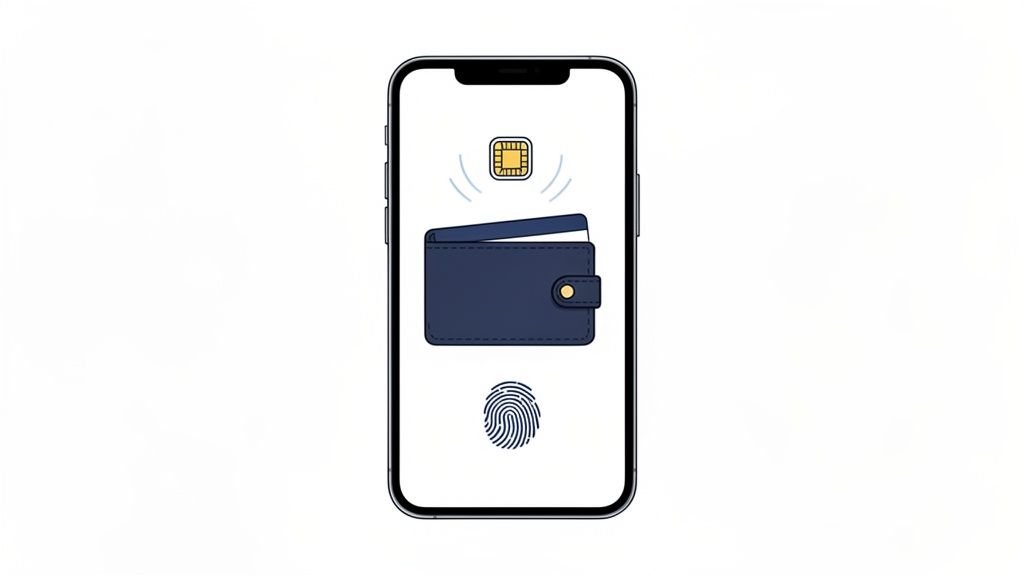
As a slicker, more privacy-conscious alternative to manually entering card details, digital wallets are becoming a go-to for savvy viewers. Services like Apple Pay, Google Pay, and Samsung Pay act as a secure intermediary, storing your payment information on your smartphone and enabling quick, often biometric-secured, transactions. They are one of the most convenient and secure methods of paying online.
The real magic is in the technology. When you use a digital wallet, it doesn't send your actual card number to the webcam platform. Instead, it uses a process called tokenisation to generate a unique, one-time code for that specific transaction. This means your core financial data is never exposed, adding a powerful layer of security between your bank account and the website you're on.
Why Use Digital Wallets? The Pros and Cons
For Supporters, the key advantages are enhanced privacy and speed. There’s no need to repeatedly type in your card number, and the tokenisation keeps your details shielded. On the downside, not every platform has integrated them yet, and your bank statement will still show a transaction, although the tokenised payment might offer a slightly more generic billing descriptor.
For Creators, digital wallets are a win. They often lead to higher conversion rates because the payment process is so frictionless for users, especially on mobile. The chargeback risk is also generally lower, as transactions are often authenticated with a fingerprint or face scan, making "I didn't authorise this" a much harder claim for a fraudulent user to make.
Best Practices for Supporters
To get the most out of digital wallets while staying secure, follow these simple steps:
- Layer Your Security: Secure your device and wallet with strong biometrics (fingerprint or face ID) and a complex passcode. This is your first and most important line of defence.
- Enable Instant Notifications: Turn on transaction alerts within your wallet app and your banking app. You’ll get an immediate notification the second a payment is made.
- Use for Subscriptions: Digital wallets are perfect for managing recurring payments, like fan club subscriptions, as they streamline the process and keep your card details off the platform's direct billing system.
- Review Regularly: Make a habit of checking your transaction history within the wallet app. It provides a clear, consolidated view of your spending across different platforms.
3. PayPal and PayPal Credit
As one of the original digital wallets, PayPal has established itself as a household name among methods of paying online. It functions as a secure intermediary, allowing you to send and receive money without exposing your underlying bank or card details to the merchant. For many, it’s the go-to for everything from eBay purchases to tipping independent creators.
The process involves linking your bank account or cards to your PayPal account. When you pay, PayPal debits your chosen funding source, but the platform you’re paying only ever sees your PayPal account information. This adds a significant layer of privacy, making it a popular choice for both creators managing their earnings and supporters who prefer to keep their primary financial details private.
Why Use PayPal? The Pros and Cons
For Supporters, the key advantage is anonymity and control. The transaction appears as "PayPal" on your bank statement, offering a degree of discretion that direct card payments may not. However, PayPal has notoriously strict (and often unpredictable) policies regarding adult content, and accounts can be frozen or closed with little warning if their terms are violated.
For Creators, PayPal is often used for receiving direct payments off-platform or for payouts from certain affiliate programmes. The main risk is its instability within the adult industry. A sudden account limitation can lock up your funds for months, making it a precarious primary income method unless you are certain the platform has a stable, long-term agreement with PayPal.
Best Practices for Supporters
To use PayPal more safely and effectively when supporting creators, consider these tips:
- Use a Dedicated PayPal Account: Create a separate PayPal account used exclusively for entertainment and creator support. Link it to a separate bank account or card to fully compartmentalise your spending.
- Understand Its Policies: Before using PayPal on any platform, do a quick search to understand its current stance on adult entertainment. Policies change, and what was allowed last year might not be today.
- Never Use "Friends and Family": When paying for tokens or services, always use the "Goods and Services" option. This provides you with purchase protection, which is voided if you send money as a gift.
- Keep Records: Take screenshots of your purchases and save any email confirmations. This documentation is invaluable if you ever need to dispute a transaction with PayPal or the platform.
4. Cryptocurrency Payments (Bitcoin, Ethereum, Stablecoins)
As one of the most private and borderless methods of paying online, cryptocurrency offers a decentralised alternative to traditional finance. It enables direct, peer-to-peer payments using blockchain technology, sidestepping banks and payment processors entirely. For webcam platforms, especially independent ones, crypto provides a pathway for transactions free from the moral clauses and high fees of conventional financial institutions.
The process involves sending digital assets like Bitcoin, Ethereum, or stablecoins (like USDC and USDT) from a viewer’s digital wallet to the platform's or creator’s wallet address. This method is particularly valuable for international supporters and creators, or for anyone who prioritises near-total pseudonymity in their transactions. It represents the cutting edge of financial privacy in the creator economy.
Why Use Crypto? The Pros and Cons
For Supporters, the main draw is anonymity. Crypto transactions aren't linked to your real-world identity or bank account, offering a powerful layer of privacy. However, the learning curve is steep, transactions are irreversible, and the value of assets like Bitcoin can be extremely volatile, meaning the cost of a tip could change dramatically in minutes.
For Creators, crypto opens up a global audience and often comes with lower transaction fees. More importantly, it is censorship-resistant, meaning payments cannot be blocked by financial institutions that may disapprove of adult content. The primary downsides are this same volatility and the complexity of managing digital assets and converting them to traditional currency for daily use.
Best Practices for Supporters
To use crypto safely and effectively, a different mindset is required. Follow these tips to protect your assets:
- Start with Stablecoins: If you are new to crypto, use stablecoins like USDC or USDT. Their value is pegged to a traditional currency like the US dollar, which removes the risk of price volatility.
- Verify Addresses Carefully: Blockchain transactions are final. Always double-check, or even triple-check, the recipient's wallet address before sending funds. A single wrong character means your funds are lost forever.
- Use a Reputable Wallet: Don't leave significant funds on an exchange. Use a non-custodial software wallet (like MetaMask) or a hardware wallet (like Ledger or Trezor) for better security.
- Keep Meticulous Records: Crypto is not a tax-free zone. Keep detailed records of your transactions for tax purposes, as tax authorities are increasingly scrutinising digital assets.
5. Bank Transfers and ACH Payments
While less common for instant viewer-to-creator tipping, direct bank transfers are the workhorse for platform payouts. This method, encompassing ACH in the US, SEPA in Europe, and Faster Payments in the UK, allows money to move directly from a platform's account to a creator's bank account. It is the fundamental mechanism that turns digital tokens and tips into tangible earnings.
For supporters, using a direct bank transfer to pay a creator is a less common but highly direct way to offer support, usually reserved for established relationships and off-platform arrangements. It cuts out the middleman but introduces a higher level of trust and manual effort compared to integrated payment methods. These are foundational methods of paying online that prioritise directness over speed.
Why Use Bank Transfers? The Pros and Cons
For Supporters, the main advantage is the absence of platform fees, meaning more of your money goes directly to the creator. However, this comes at a significant cost to privacy and convenience. Sharing bank details requires immense trust, and the process is slower and more cumbersome than a simple click-to-tip button.
For Creators, this is the gold standard for receiving payouts. It's reliable, secure, and deposits funds directly where you need them. The downside is the payout schedule; transfers aren't instant and are often processed in weekly or bi-weekly batches by the platform. Relying on this for direct fan payments also carries the risk of exposing personal banking information if not handled carefully.
Best Practices for Supporters and Creators
To use bank transfers safely and effectively, follow these key practices:
- Creators: Use Transfers for Payouts Only: Stick to using bank transfers for receiving your official earnings from platforms. Avoid accepting direct bank transfers from viewers unless you have a separate business account to protect your personal financial details.
- Verify All Details: Whether you're a creator setting up payouts or a supporter making a direct payment, triple-check all account and routing numbers. A single typo can send funds into the void or cause significant delays.
- Keep Meticulous Records: Unlike platform-based payments that are automatically tracked, you are responsible for your own bookkeeping with direct transfers. Keep a clear record of all transactions for tax and financial planning purposes.
- Understand Timetables: Be aware of transfer processing times. UK Faster Payments can be near-instant, but international SEPA or ACH transfers can take several business days. Plan your finances accordingly and don't rely on funds arriving immediately.
6. E-money and Prepaid Services (Skrill, Neteller, Wise)
E-money services like Skrill, Neteller, and Wise act as digital middlemen, sitting between your bank account and the webcam platform. You top up your e-money account with funds, and then use that balance to pay for tokens or subscriptions. This creates a valuable layer of separation, as the platform only sees the details of your e-money provider, not your primary bank or card.
These services are particularly popular for international transactions, with platforms like Wise offering excellent currency conversion rates. While historically favoured in online gaming and gambling circles, their utility has made them a solid choice for adult entertainment, where financial discretion is a high priority. They function as a secure, reloadable wallet for your online activities.
Why Use E-money? The Pros and Cons
For Supporters, the key advantage is enhanced privacy. Your bank statement will show a transaction to Skrill or Wise, not to a specific cam platform, which is a significant benefit for discretion. The main downside can be the extra steps and fees; you have to fund the e-money account first, and there may be charges for deposits or withdrawals.
For Creators, these platforms can be a reliable payout method, especially for those outside major banking regions. They offer a way to receive funds without directly linking a personal bank account to the platform. However, some e-money services have fluctuating policies on adult content, which can create a risk of account suspension if their terms of service change.
Best Practices for Supporters
To use these methods of paying online effectively and safely, follow these guidelines:
- Verify Adult Content Policies: Before signing up, check the service's current terms and conditions regarding adult entertainment. These policies can and do change, so it pays to be informed.
- Use for Transfers, Not Storage: Treat these accounts as a pass-through service. Move money in, make your payment, and avoid leaving a large balance sitting in the account long-term.
- Leverage Currency Conversion: For international platforms, use a service like Wise to pay in the creator’s local currency. This can save you a significant amount on hidden bank conversion fees.
- Enable All Security Alerts: Turn on every possible notification for logins and transactions. This ensures you are immediately aware of any unauthorised activity on your e-money account.
7. Tokens and Platform-Specific Credits
Instead of direct cash transactions, the vast majority of webcam platforms operate on a proprietary token or credit system. This is one of the most fundamental methods of paying online within this ecosystem, creating a platform-specific currency that viewers purchase with real money and then spend to tip, unlock content, or enter private shows. This model, pioneered by sites like Chaturbate, is now standard across the industry.
This system effectively creates a buffer between the supporter's bank and the creator's actions. You buy a bundle of tokens from the platform, and the platform then pays the creator their share. This insulates creators from direct payment disputes and gives the platform total control over its internal economy, from setting token prices to managing payouts.
Why Use Tokens? The Pros and Cons
For Supporters, tokens gamify the experience and can feel less like spending real money, encouraging more interaction. Bulk purchases often come with discounts, offering better value. The main downside is the abstraction; it can be difficult to track real-world spending when you're just clicking a "tip" button, and token values can fluctuate or be subject to hefty platform fees.
For Creators, this system is a lifeline. It standardises earnings and protects them from the chargeback risks associated with direct payments. However, they are entirely dependent on the platform’s exchange rate and payout policies, which can change. To understand the financial mechanics behind this, you can learn more about how cam models get paid and how these token systems translate into actual income.
Best Practices for Supporters
To make the most of token-based systems without overspending, adopt these habits:
- Do the Maths: Before buying a large package, calculate the true cost per token after any platform fees. A "bonus" might not be as generous as it first appears.
- Embrace Bulk Buys (Wisely): If you are a regular supporter of a specific platform, buying tokens in bulk is almost always more cost-effective. Just be sure you'll actually use them.
- Set a Hard Limit: Decide on a budget before you purchase tokens. It’s easy to get caught up in the moment and tip more than you intended, so having a pre-set limit is crucial for responsible spending.
- Check for Expiry Dates: Some platforms have policies where unused credits or tokens expire after a certain period of inactivity. Use them or lose them.
8. Subscription Services and Recurring Billing
Beyond one-off tips, subscriptions represent a more committed relationship between a supporter and a creator. This model, popularised by platforms like Patreon and OnlyFans, allows viewers to set up recurring payments for continuous access to exclusive content or perks. It has become a cornerstone of the creator economy, offering a predictable revenue stream that complements the more dynamic income from live camming.
The process involves authorising a platform to charge your payment method, usually monthly, in exchange for benefits defined by the creator. These benefits can range from access to a private social media feed and exclusive videos to personalised interactions. This recurring billing system automates the support process, turning casual viewers into dedicated patrons and solidifying one of the most stable methods of paying online.
Why Use Subscriptions? The Pros and Cons
For Supporters, the main advantage is value and access. Subscriptions often provide a large volume of content for a flat monthly fee, delivering more bang for your buck than individual purchases. The downside is the commitment; it’s easy to forget about recurring charges, and the value can diminish if a creator's output slows down.
For Creators, this model provides income stability. A solid subscriber base creates a reliable financial floor, reducing pressure to be live constantly. However, managing subscriber expectations and consistently producing high-quality exclusive content requires significant effort. It also introduces the risk of "subscribe-and-chargeback" scams, where users consume content and then fraudulently dispute the charge.
Best Practices for Supporters
To make the most of subscriptions while protecting your finances and privacy, follow these tips:
- Review Terms Carefully: Before hitting 'subscribe', understand what you're getting, the renewal date, and the cancellation policy. Some platforms make it intentionally difficult to cancel.
- Use a Subscription Manager: Employ an app or a simple calendar reminder to track all your recurring payments. This helps prevent surprise renewals for services you no longer use.
- Start with Shorter Terms: Opt for a monthly subscription before committing to a discounted quarterly or annual plan. Test the waters to ensure the creator's content is a good fit for you.
- Check Billing Descriptors: Keep an eye on your bank statements to ensure the charges are what you expect and to familiarise yourself with the discreet billing name the platform uses.
9. Gift Cards and Third-Party Vouchers
For those prioritising privacy above all else, gift cards and third-party vouchers represent one of the smartest methods of paying online. This approach creates a crucial air gap between your personal bank account and the platform. You purchase a voucher from a mainstream retailer like Tesco or Amazon and then redeem its code to add funds to your platform account, effectively anonymising the source of the money.
This method is especially popular for making in-app purchases on mobile devices. For instance, you can use an iTunes or Google Play gift card to load credit onto your Apple or Google account, then spend that balance within a platform's app. The platform only ever sees the transaction coming from Apple or Google, completely obscuring your direct payment details and creating a discreet funding trail.
Why Use Vouchers? The Pros and Cons
For Supporters, the overwhelming advantage is anonymity. The purchase appears on your bank statement as "Amazon" or "Google Play," not the adult platform's name. The main downside is the extra effort involved; you have to physically or digitally buy the card first, and not all platforms accept this indirect payment method for all services.
For Creators, payments funded this way are generally secure and not subject to traditional chargebacks, as the transaction is with a major third-party like Apple, not the user's bank. However, payouts from these app store transactions often come with higher platform fees, typically around 30%, which can significantly reduce a creator's final earnings compared to direct card payments.
Best Practices for Supporters
To use this method effectively while maximising security, follow these tips:
- Check Compatibility First: Before you buy a £50 Amazon voucher, double-check the platform's payment options to ensure it’s accepted. Nothing is more frustrating than a gift card you can't use.
- Buy and Redeem Promptly: Purchase a voucher for the amount you intend to spend and redeem it on the platform shortly after. This prevents you from losing the code or forgetting you have a balance.
- Use Official Retailers: Only buy gift cards from reputable sources like major supermarkets, the brand's official website, or trusted digital resellers to avoid scams and invalid codes.
- Manage Your Codes: If you buy digital codes, store them securely in a password manager. Treat the code like cash; once it's used or lost, it's gone.
10. Two-Factor Authentication and Secure Payment Verification
This isn't a payment method in itself, but a critical security layer that sits on top of all your existing ones. Think of Two-Factor Authentication (2FA) as the digital bouncer for your financial accounts. It's a mandatory step beyond just a password, ensuring that only you can authorise payments or access your sensitive information on webcam platforms and payment processors.
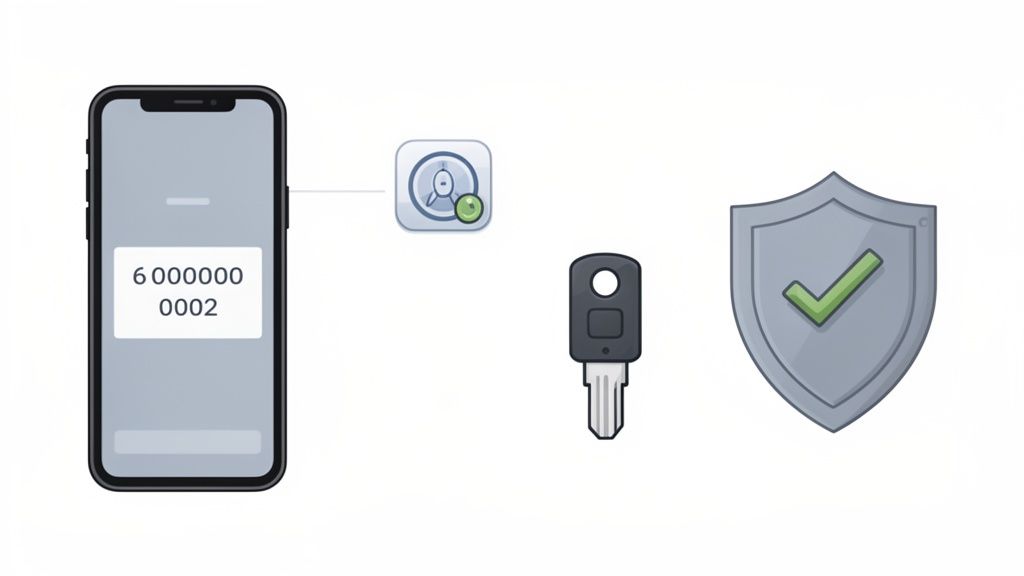
When you log in or make a payment, 2FA requires a second piece of evidence to prove it’s really you. This usually comes in the form of a one-time code sent to your phone via SMS, a code generated by an authenticator app like Google Authenticator or Authy, or by using a physical hardware key. This simple step makes it exponentially harder for unauthorised users to access your accounts, even if they manage to steal your password.
Why Use 2FA? The Pros and Cons
For Supporters, the primary advantage is account security. It prevents someone from hijacking your platform account and spending your tokens or saved payment details. The only real con is a minor inconvenience: the extra few seconds it takes to enter a code. It's a tiny price to pay for significant peace of mind.
For Creators, 2FA is non-negotiable for protecting your earnings. It safeguards your payout methods, preventing fraudsters from redirecting your funds to their own accounts. The biggest risk is not using it. A compromised account can lead to devastating financial loss, and it's a key step to take for anyone wondering how to avoid payout delays on cam sites, as security issues are a common cause of holds.
Best Practices for Supporters and Creators
To properly secure your online payment methods, integrating 2FA is essential:
- Prioritise Authenticator Apps: While SMS codes are better than nothing, they are vulnerable to "SIM-swapping" attacks. Apps like Authy or Google Authenticator are more secure as the codes are generated directly on your device.
- Enable 2FA Everywhere: Activate 2FA on your webcam platform account, your email address associated with the account, and any payment services you use (like PayPal or your online banking).
- Store Backup Codes Securely: When you set up 2FA, you'll be given backup codes. Store these offline in a safe place, like a locked file or a secure password manager. They are your lifeline if you lose access to your primary 2FA device.
- Consider a Hardware Key: For ultimate security, a physical key like a YubiKey is the gold standard. It requires physical possession to approve a login, making remote hacking nearly impossible.
10-Point Comparison: Online Payment Methods
| Payment Method | 🔄 Implementation Complexity | 💡 Resource & Setup Requirements | ⚡ Speed / Efficiency | 📊 Expected Outcomes / Impact | ⭐ Ideal Use Cases & Key Advantages |
|---|---|---|---|---|---|
| Credit & Debit Cards | Medium — gateway + PCI considerations | Merchant account, fraud tools, fee management | ⚡ Instant confirmation for users | 📊 Wide acceptance; steady conversion; chargeback exposure | ⭐ Universal acceptance; good for tips, subscriptions, pay‑per‑view |
| Digital Wallets (Apple/Google/Samsung Pay) | Low–Medium — SDKs / tokenization | Compatible devices, platform support, tokenization | ⚡ Very fast one‑tap checkout | 📊 Higher conversion and privacy; reduced fraud risk | ⭐ Quick UX; biometric security; ideal for mobile users |
| PayPal & PayPal Credit | Low — account-based integration | PayPal account(s), awareness of policy restrictions | ⚡ Fast account transfers; withdrawals may vary | 📊 Adds privacy layer; buyer/seller protections; risk of holds | ⭐ Flexible funding sources; good for international and invoices |
| Cryptocurrency (BTC/ETH/Stablecoins) | Medium–High — wallet & blockchain integration | Wallets, exchange access, key management, tax tracking | ⚡ Variable (depends on network); stablecoins often fast | 📊 High privacy/pseudonymity; low chargebacks; volatility risk | ⭐ Privacy‑focused, cross‑border payments, creator control of funds |
| Bank Transfers / ACH / SEPA | Low — banking integration / payout flows | Bank accounts, KYC, routing details | ⚡ Slow (1–3 business days); instant rails possible | 📊 Low fees for large sums; traceable records | ⭐ Payouts to creators; large transfers; reduced processing fees |
| E‑money & Prepaid Services (Skrill, Wise) | Low–Medium — API / account verification | E‑wallet accounts, ID verification, linked funding | ⚡ Generally fast, efficient FX (Wise) | 📊 Good international value; added privacy; account limits | ⭐ International transfers, currency conversion, privacy layer |
| Tokens & Platform Credits | Low for users; medium for platforms | User purchases tokens; platform handles processing | ⚡ Immediate in‑platform use | 📊 Core tipping mechanic; platform takes significant cut | ⭐ Standardized tipping; low chargeback risk; incentivizes spending |
| Subscription / Recurring Billing | Medium — recurring billing infrastructure | Payment processor, subscription management, content ops | ⚡ Automated renewals; initial setup required | 📊 Predictable revenue; higher lifetime value; churn risk | ⭐ Stable creator income; ideal for exclusive content models |
| Gift Cards & Third‑Party Vouchers | Low — redeem flow only | Purchase from retailers; keep codes secure | ⚡ Immediate redemption; purchase may be offline | 📊 High anonymity; inflexible denominations; possible markups | ⭐ Maximum privacy; good for users without direct payment methods |
| Two‑Factor Authentication & Secure Verification | Medium — account security integration | Authenticator apps, SMS/hardware keys, backup codes | ⚡ Adds minor friction to access | 📊 Strongly reduces unauthorized access and fraud | ⭐ Essential security layer for all payment accounts and creators |
Making the Right Choice for Your Situation
Navigating the landscape of online payments can feel like a strategic game, especially in the creator economy where privacy, speed, and reliability are paramount. As we have explored, the various methods of paying online each come with their own distinct set of rules, risks, and rewards. There is no magic bullet, no single 'best' option that suits every creator and every supporter in every situation. The real power lies in understanding the trade-offs and building a payment strategy that aligns with your personal and professional goals.
For supporters, the primary calculus often balances convenience against anonymity. While reaching for your standard credit card is the path of least resistance, it also leaves the clearest digital footprint. Layering your payment methods, for instance, by using a privacy-focused prepaid card to fund a digital wallet like Apple Pay or Google Pay, creates a valuable buffer. This simple step can help keep your viewing habits separate from your primary banking records, offering peace of mind without sacrificing the ability to support the creators you admire.
For creators, the stakes are even higher. Your income, financial stability, and operational security depend on making savvy choices. Relying on a single payment gateway, especially one known for being unfriendly to adult content creators like PayPal, is a high-risk strategy. Diversification is your most powerful tool for building a resilient business.
Key Takeaways and Actionable Next Steps
To distil our deep dive into actionable intelligence, consider these final points as you refine your approach to online payments:
For Supporters: Define Your Privacy Threshold.
- Low Concern: Direct credit card payments and services like PayPal are convenient if you are not concerned about the transaction appearing on your statements.
- Moderate Concern: Use digital wallets (Apple Pay, Google Pay) linked to a dedicated card. This masks your direct card details from the payment processor or platform.
- High Concern: Opt for platform-specific tokens purchased with a prepaid voucher or gift card. For maximum anonymity, cryptocurrency remains the gold standard, provided you understand the technical requirements and volatility risks.
For Creators: Build a Diversified Payout Ecosystem.
- Primary Payout: Choose a reliable, SWI-friendly service like a direct bank transfer (if offered) or a specialised e-money service as your main withdrawal method.
- Secondary Options: Keep alternatives like crypto wallets (especially for stablecoins like USDC) or other e-money providers active. This ensures that if one service freezes your account or changes its policies, your entire business is not paralysed.
- Regularly Review Policies: Set a calendar reminder every quarter to check the terms of service for your payment processors. Policies change, and what was a safe bet six months ago might be a liability today.
The Bigger Picture: Financial Literacy is Your Best Defence
Ultimately, mastering the various methods of paying online is about more than just moving money from point A to point B. It is a fundamental aspect of digital safety, personal security, and professional sustainability. For creators, it is the bedrock of your enterprise. Understanding the nuances of chargeback risks, KYC requirements, and transaction finality allows you to protect your earnings and build a long-term, viable career. For supporters, it is about engaging with content responsibly and protecting your own digital identity.
The online world is constantly evolving, and the payment technologies that underpin it are no different. By being deliberate, asking the right questions, and refusing to settle for the default option, you empower yourself. You move from being a passive user to an informed participant, capable of navigating this complex ecosystem with confidence. Make the choice that protects you, supports your goals, and lets you operate with clarity and control.