
At their core, adult streaming platforms are less like websites and more like interactive virtual stages. They're digital marketplaces that connect performers directly with their audience in real-time. This isn't a simple one-way broadcast; it's a complex ecosystem built on specific technologies, varied business models, and a very real understanding of what makes people connect.
How Adult Streaming Platforms Actually Work
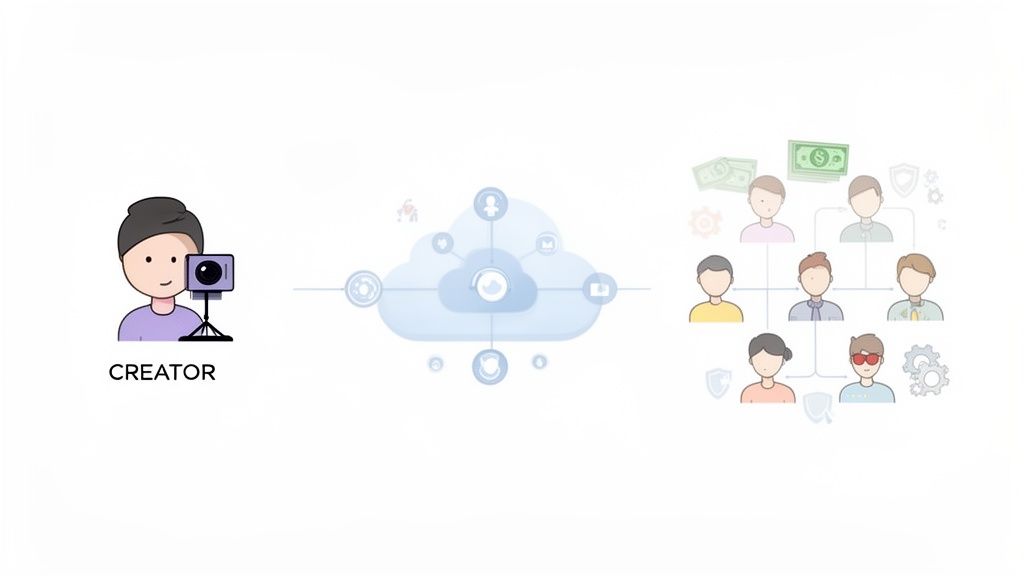
Let's cut through the myths. The world of adult streaming isn't just a case of pointing a camera and hoping for the best. It's a genuine business, one driven by a blend of sophisticated technology and raw human interaction, with clear rules of engagement for everyone involved.
The entire system works as a value exchange. Viewers purchase a platform's unique currency—usually called 'tokens' or 'credits'—which they then spend to interact with the creators they follow. This could be anything from sending a small tip as a sign of appreciation to unlocking exclusive content or paying for a one-on-one private show.
The Basic Transaction Loop
Behind all the features and flashing lights, the whole ecosystem runs on a simple, repeating cycle:
- A viewer buys virtual currency directly from the platform.
- The creator performs, chats, or shares content, and receives that currency as tips or payments from their audience.
- The platform acts as the middleman, processing the transaction and taking a percentage (their fee) before paying out the creator's share.
This model creates a direct, monetised relationship between the performer and their fans. But the reality is far more nuanced. Different platforms encourage different styles of interaction and payment, so understanding the landscape is key. Even your choice of gear makes a difference, which is why we put together a guide on finding the best camera for live streaming.
Common Misconceptions vs Reality
Many people dipping their toes in for the first time, whether as creators or viewers, have a few misconceptions about how it all works. Let’s set the record straight.
| Common Misconception | The Grounded Reality |
|---|---|
| Creators keep all the money they earn. | Platforms take a significant cut, often anywhere from 30-50% of a creator's total earnings, to cover their costs. |
| Streaming is easy, "fast money." | Building a loyal audience takes real skill, consistent marketing, and a huge time investment. It's a proper creator-led business. |
| It’s completely anonymous for everyone. | Viewers can maintain a high degree of privacy, but creators must provide legal ID and banking details for age verification and payouts. |
| All platforms are the same. | Each site has its own distinct culture, audience, and way of making money—from busy "freemium" sites to exclusive subscription-based communities. |
Understanding How Creators Get Paid
So, how does the money actually work? The financial side of adult streaming can look like a complicated mess of weird terms, but once you break it down, it's actually quite straightforward. For creators, success isn't about one big payday; it's about building several different streams of income that all work together.
The most successful people in this game rarely just stick to one thing. They get creative, blending different earning methods to build a steady, reliable income. Knowing how each of these works is vital, whether you're a performer looking to maximise your earnings or a viewer who wants to support your favourites in the best way possible.
The Building Blocks of a Creator's Income
At its core, every adult platform has a mini-economy built on a handful of key transaction types. Each one serves a different purpose and encourages a different kind of interaction from the audience.
Here’s a look at the most common ways money moves around:
- Tokens/Tips: This is the lifeblood of most "freemium" cam sites. Viewers buy the site's virtual currency (usually called tokens) and then 'tip' performers during their live shows. These tips are a direct payment, sure, but they’re also a very public way to show appreciation, which often gets other viewers tipping too. A single tip might be small, but thousands of them can add up very quickly.
- Private Sessions: This is the premium, VIP experience. A viewer pays a set rate per minute to take a creator into a one-on-one video chat, away from the prying eyes of the public room. This is often where cam models make the most money, but it demands their full attention, so they can't be earning from anyone else during that time.
- Subscriptions: Made famous by platforms like OnlyFans, this model is all about recurring payments. Viewers pay a monthly fee to get access to a creator's exclusive feed of photos and videos. It gives creators a much more predictable, stable income, but it's on them to keep producing fresh content to make sure subscribers stick around.
- Pay-Per-View (PPV) Content: Creators can also sell individual bits of content—a particular video, a photo gallery, or even a custom-made message—for a one-off payment. This is a brilliant add-on to a subscription model, letting them offer something extra special to their biggest fans.
The smartest strategy is almost always a mix-and-match approach. A creator might use a free-to-watch cam show to pull in new followers, direct them to subscribe for regular content, and then sell exclusive PPV videos and private shows to their top supporters.
Comparing Common Monetization Models
To really get your head around it all, let’s put these models side-by-side. Each has a totally different feel and comes with its own set of expectations for both the creator and the viewer. The table below breaks down the key differences.
| Monetization Model | How It Works for Viewers | How It Works for Creators | Key Consideration |
|---|---|---|---|
| Tokens & Tipping | Buy virtual currency in bundles, then spend small amounts during a live show to make requests or show support. | Earn a continuous flow of small payments from lots of viewers at once. Income is live and very dynamic. | High-energy and interactive. Perfect for busy public streams but less predictable than subs. |
| Subscriptions | Pay a recurring monthly fee for access to a creator's private content feed, like joining a fan club. | Build a base of reliable, recurring monthly revenue, which offers great financial stability. | Fosters a real sense of community. Earnings are steadier but can take time to build up. |
| Private Shows | Pay a premium per-minute rate for an exclusive, one-on-one video session with the creator. | Make a high rate from a single person for a fixed amount of time. It's private and very personal. | The highest potential hourly rate, but you have to dedicate 100% of your time to one person. |
| PPV Sales | Buy a specific video, photo set, or another piece of content for a single, one-time payment. | Sell individual pieces of high-quality content to supplement tipping or subscription income. | A great way to earn from pre-recorded content, creating passive income over time. |
What works for one creator might not work for another. It’s all about finding the right balance that suits your personality and your audience.
The Platform's Cut and Getting Paid
Let's be clear: no platform is a charity. In return for the technology, the audience, and the payment processing, every platform takes a percentage of what a creator earns. This cut, the platform fee, is usually somewhere between 20% and 50%, depending on the site and the type of earning.
This fee covers all the background stuff—servers, staff, fraud protection, and content moderation. So, for example, if a creator earns £100 in tips, they might actually see £60-£70 land in their account after the platform takes its share. Payouts are then typically sent out weekly or every two weeks, as long as the creator has hit a minimum balance (often around £50).
It can feel like a big chunk, but it’s a standard part of the creator economy. Understanding these numbers is essential, as many guides on the average OnlyFans income will tell you. At the end of the day, the platform is your business partner, and their fee is the price of admission.
Comparing Different Types of Platforms
Not all adult streaming platforms are cut from the same cloth. In fact, the difference between a sprawling, high-traffic ‘freemium’ cam site and a curated, exclusive subscription platform is like the difference between a bustling public market and a private members' club. Each has its own unique culture, audience expectations, and set of unwritten rules.
Choosing the right type of platform—whether you're a creator or a viewer—is less about which one is "best" and more about which one fits your personality, goals, and comfort level. The chaotic, fast-paced energy of a token site might be perfect for one person, while the slow-burn community-building of a subscription service is ideal for another.
A Head-to-Head Look at the Two Main Models
At the highest level, the world of adult streaming is split into two main operational models. While there's plenty of overlap and hybrid approaches these days, understanding the core philosophy of each is crucial. Let’s break down the fundamental differences.
Freemium 'Token' Platforms
Think of these as the high street of adult streaming. The digital doors are wide open, and the main show is free for anyone to watch. This model is built on volume, attracting massive numbers of viewers who can lurk, watch, and chat without spending a penny.
- How they work: Creators stream live to a public chat room. Viewers buy platform-specific "tokens" and use them to tip the creator. The action is driven by these tips; the more tips that come in, the more engaging the show becomes. It's a very direct, real-time transaction.
- The vibe: Energetic, competitive, and fast. Success often hinges on a creator's ability to engage a large crowd simultaneously and keep the energy high. It’s a constant performance designed to encourage a steady flow of small payments from many different people.
- Discoverability: High. These platforms are designed like search engines, making it relatively easy for new creators to be seen by thousands of potential viewers browsing through categories.
This model is all about capturing immediate attention and converting it into instant tips.
Subscription-Based 'Fan Club' Platforms
These platforms operate on an entirely different principle: exclusivity. Here, the best content is kept behind a paywall. Viewers pay a recurring monthly fee for access to a creator's private feed, which might include photos, pre-recorded videos, and direct messaging.
- How they work: Creators build a library of content for their paying subscribers. While they might use other social media to promote themselves, the core product is the exclusive content hub they manage. Live streaming is often an added bonus rather than the main event.
- The vibe: More personal, curated, and community-focused. The dynamic is less about a public performance and more about building a loyal fanbase that values ongoing connection and consistent content drops.
- Discoverability: Low. Most subscription platforms have very poor internal discovery features. Creators are almost entirely responsible for marketing themselves elsewhere (e.g., on Twitter, Reddit, or TikTok) and driving their own traffic to their page.
This diagram shows how creators typically blend their income streams across these models.
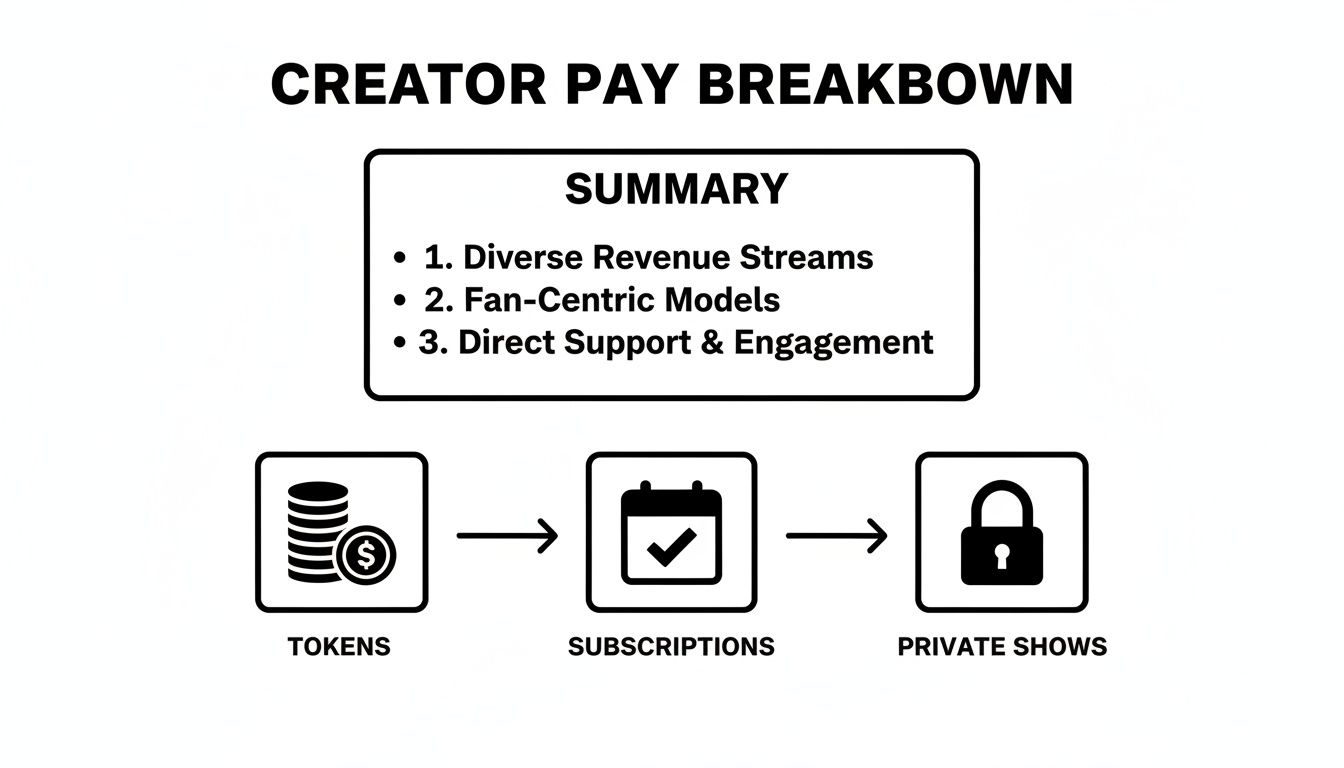
It really illustrates that successful creators rarely rely on a single income source. Instead, they learn to combine live tips, recurring subscriptions, and high-value private sessions to build a stable career.
Key Differences at a Glance
So, which environment is right for you? It really boils down to your personal style, business savvy, and what you want out of the experience. The table below highlights the crucial trade-offs.
| Feature | Freemium 'Token' Platforms | Subscription-Based 'Fan Club' Platforms |
|---|---|---|
| Audience Dynamic | Public, transient, and high-volume. Many casual viewers. | Private, loyal, and community-driven. Fewer, but more invested fans. |
| Income Style | Unpredictable and performance-based. High peaks and low troughs. | More stable and predictable. Relies on recurring monthly payments. |
| Creator Autonomy | Less control over who enters the room. Subject to public gaze. | High control over content and community. You build your own space. |
| Marketing Burden | Lower. The platform provides a built-in audience to perform for. | Higher. You are responsible for almost all of your own marketing. |
| Core Skill Required | Live performance and crowd engagement. Charisma is key. | Content creation, marketing, and community management. |
The biggest mistake newcomers make is assuming one model is inherently more profitable than the other. The truth is, top earners exist on both types of platforms. Success isn't about the platform's model; it's about matching your personal strengths to the right environment.
A performer who thrives on live interaction and audience feedback will likely do better on a token site. In contrast, a creator who is a brilliant marketer and enjoys producing polished video content might find more success building a subscription empire. Understanding this fundamental difference is the first step toward making an informed choice in the world of adult streaming platforms.
Verification, Moderation, and UK Legal Realities
Let’s talk about the rules of the road. While the front end of a cam site looks like pure entertainment, behind the scenes, it’s a serious operation. Everything is governed by strict rules on verification, content moderation, and legal compliance—these aren't just bureaucratic hoops to jump through; they’re the systems keeping everyone safe and the entire ecosystem lawful.
For anyone based in the UK, this landscape is getting a major overhaul. The days of lax oversight are numbered, so getting your head around these non-negotiable processes is vital, whether you're a creator or a viewer.
The Why and How of Identity Verification
Before a single stream can go live, every single creator has to prove who they are. This isn’t optional. Platforms will ask for official, government-issued photo ID like a passport or driving licence, and usually a live photo to match against it.
This process is absolutely critical for two reasons:
- Age Confirmation: It’s the primary way platforms can be legally certain that every performer is over the age of 18. This is the bedrock of their legal compliance.
- Payment Legitimacy: It connects a real person to a bank account, making sure earnings go to the right individual and helping to stamp out fraud and money laundering.
For viewers, things have traditionally been simpler, often just needing a valid credit card. That’s all changing. Right now, it’s a known fact that over 80% of UK internet users have never had to go through age verification on adult sites. This is the exact gap the UK's upcoming Online Safety Act is set to close by 2025, bringing in mandatory, robust age checks for all users. You can explore more on how this might reshape viewer habits in this detailed report.
Content Moderation: What Is and Isn't Allowed
Every platform has its own detailed Terms of Service—think of it as the rulebook for what you can and can't show. While the fine print varies, the list of forbidden content is pretty standard across the industry and is enforced by a mix of AI tools and human moderators.
Commonly prohibited content includes anything depicting:
- Non-consensual activity
- Underage individuals
- Extreme violence or harm
- Hate speech or harassment
- Public indecency (e.g., streaming from a public park)
One of the biggest myths is that "anything goes" in a private show. That’s completely false. The same core platform rules apply everywhere, public or private. Violating them can get both the creator and the viewer hit with an instant, permanent ban.
Moderation isn’t just about catching rule-breakers. It's also there to shield creators from harassment and protect viewers from illegal content. AI filters are constantly scanning streams for certain keywords and visual cues, flagging potential problems for a human to review. The system isn't perfect, but it's an essential layer of protection. You can get a much deeper understanding by reading our guide on how cam platforms moderate content.
The UK's Online Safety Act and What It Means
The incoming Online Safety Act is poised to be the most significant piece of legislation to hit UK adult streaming in a generation. Its main goal is to make the internet safer, especially for children, by placing a much stronger 'duty of care' on platforms.
For adult streaming sites, two massive changes are on the horizon:
- Mandatory Age Verification for All Users: Platforms will be legally required to have solid systems in place to verify that all their UK-based users—creators and viewers—are over 18. This will almost certainly mean proper digital ID checks, not just credit card details.
- Stricter Content Moderation: Platforms are going to face huge fines if they fail to proactively find and remove illegal content or protect users from harmful material.
The real-world impact could be huge. While these measures will definitely improve safety, some analysts worry that mandatory age checks might put off casual viewers. In fact, some studies suggest up to 55% of users would rather leave a site than go through a verification process. This could, in turn, hit creator earnings if audience numbers fall. It's a classic trade-off between privacy, safety, and the commercial realities of the industry—a balancing act that will define the future of adult streaming in the UK.
A Practical Guide to Privacy and Security
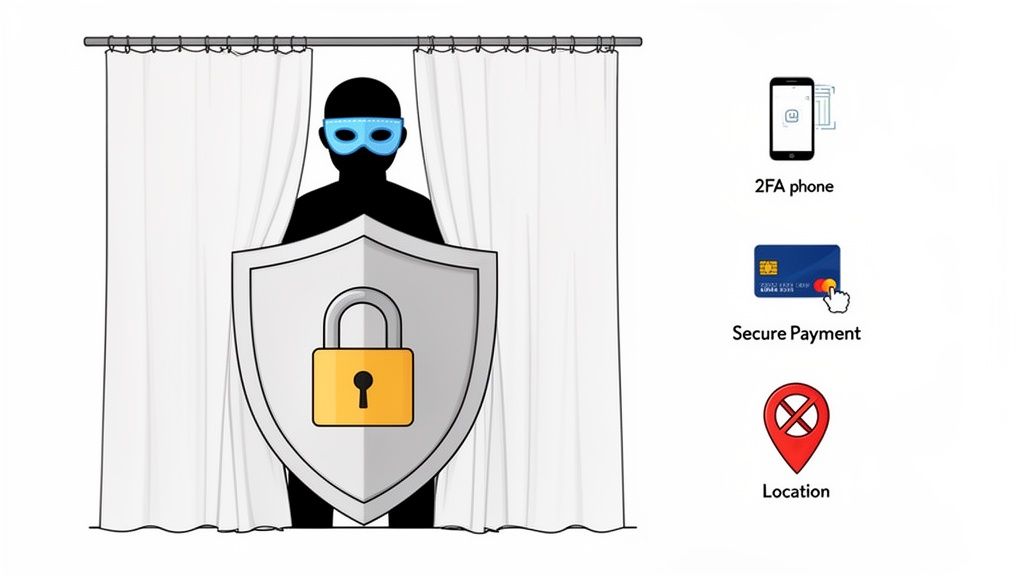
Let’s be blunt: your digital safety is non-negotiable. Whether you're creating content or just watching, the line between your online persona and your real life can get dangerously thin if you're not paying attention. This isn't about scaremongering; it's about being smart and staying in control from day one.
By putting a few straightforward habits into practice, everyone involved with adult streaming platforms can seriously lower their risks and engage with a lot more confidence. Let's walk through the essential checks for both creators and viewers.
Privacy and Security Checklist for Creators
As a creator, your privacy is your most precious asset. Protecting it means building a deliberate wall between your performer identity and your personal one. Think of it as your digital firewall.
- Create a Solid Online Persona: Use a unique stage name, a completely separate email address, and dedicated social media accounts just for your work. Never, ever reuse passwords or personal details from your everyday life.
- Secure Your Streaming Space: Your background is a treasure map for anyone trying to dox you. Get rid of personal photos, post, unique furniture, or anything with a brand logo. Be paranoid about what’s visible through your window—a recognisable landmark or even a distinctive tree can be enough to pinpoint your location.
- Scrub Your Metadata: Digital photos and videos contain hidden data (called EXIF data) that can include the exact GPS coordinates of where they were taken. You absolutely must use a tool to strip this information before you upload anything.
- Use a VPN: A Virtual Private Network (VPN) is essential kit. It hides your real IP address, making it infinitely harder for anyone to trace your physical location through your internet connection.
The goal isn't just to hide your name; it's to create a completely separate, non-linkable identity. If someone can connect your performer account to a personal Facebook profile via a single shared detail, your entire privacy wall comes tumbling down.
Key Considerations for Your Setup
Beyond the obvious, it's the subtle ways your identity can leak that you need to worry about. These are the small details that people almost always overlook.
Geolocation Risks
Lots of platforms and social media apps have location-tagging features baked in. Turn them off. All of them. This applies to your phone, your camera, and any apps you use for promotion. A single accidental location tag can undo months of careful privacy work in an instant.
Financial Anonymity
While you have to give the platform your legal details for payouts, you can still add layers of separation. It's a smart move to set up a business bank account that isn’t directly linked to your personal current account. This helps to properly compartmentalise your finances and professional identity.
Privacy and Security Checklist for Viewers
As a viewer, your main worries are financial security and data leaks. Protecting yourself boils down to good digital hygiene and knowing how to spot common scams.
- Use Secure and Discreet Payment Methods: Never use a debit card tied directly to your main bank account. Credit cards offer much better fraud protection. Better yet, consider using prepaid cards or trusted third-party payment services if they're available. This creates a vital buffer between the platform and your core finances.
- Enable Two-Factor Authentication (2FA): If a platform offers 2FA, use it. No excuses. This adds a crucial second layer of security to your account, usually a code sent to your phone, making it much harder for someone to get in even if they steal your password.
- Watch Out for Common Scams: Be deeply sceptical of any private messages asking for money, personal information, or trying to push you to off-platform payment sites. Scammers often pretend to be creators or platform staff to trick users. Always stick to the official, on-site payment systems.
- Manage Your Digital Footprint: Use a unique username and a dedicated email address for these platforms. Avoid any username that could be traced back to your real name or other social media profiles.
At the end of the day, strong security is a shared responsibility. By taking these practical steps, both creators and viewers can help build a safer, more respectful environment on these platforms. It’s all about being proactive, not reactive.
Choosing the Right Platform for Your Goals
Picking the right adult streaming platform is one of the most important decisions you'll make, whether you're a creator or a viewer. It’s not about finding the one "best" site, because that simply doesn't exist. It's about finding the right fit for you—your goals, your style, and your personal boundaries.
Forget those generic top-ten lists you see everywhere. The first and most crucial step is a bit of honest self-reflection. Before you even start comparing features, you need a clear picture of what you want to achieve and what you're willing to put in to get there.
Key Questions for Creators
If you’re thinking about creating content, the platform you choose will fundamentally shape your entire experience. What’s a perfect setup for a high-energy, public-facing performer will be a disaster for someone who needs to protect their privacy and focus on curated content. So, grab a notepad and give these questions some serious thought.
-
What’s my ideal work style? Do I feed off the energy of a live, interactive audience? If so, a 'freemium' token site might be the ticket. Or do I prefer to create polished, pre-recorded videos on my own schedule? That points more towards a subscription model like OnlyFans or Fansly.
-
What are my income goals and risk tolerance? Am I looking for a steady, more predictable income from a loyal base of subscribers? Or am I happy to chase the high-risk, high-reward rush that can come from a massive public show on a site like Chaturbate?
-
How vital is my anonymity? Am I okay with being more public-facing, or is keeping a strict wall between my real life and my online persona an absolute deal-breaker? This decision will dictate everything from the content you make to how you promote yourself.
Your answers will guide you to the right type of platform much better than any generic review ever could. For instance, a creator who wants a stable income and a strong community should probably be looking at subscription platforms, even though it means more work marketing themselves. On the flip side, a performer who really shines with live engagement could make far more on a busy token site.
Think of the platform as your business partner, not just a tool. A bad match in culture or business model will lead to burnout and frustration. You need to pick a partner whose priorities match your own.
Key Questions for Viewers
For viewers, the decision is just as personal. The platform you use affects your privacy, your spending, and the kind of connections you can make.
-
What’s my budget like? Am I looking for a casual, low-spend experience where I can tip a few quid here and there? Or am I prepared to pay a premium monthly fee for exclusive access to one or two creators I really like?
-
How much do I care about privacy? Am I happy with the standard security on a major platform, or do I need to find sites that offer more robust privacy features and discreet billing?
-
What kind of interaction am I after? Do I enjoy being part of a big, bustling public audience, or do I prefer the more direct and personal connection that comes from a subscription community or a one-on-one private show?
At the end of the day, picking the right platform is all about matching your own needs with the right online environment. By asking these questions first, both creators and viewers can make choices that are safer, more rewarding, and far more likely to give them the experience they’re actually looking for.
Frequently Asked Questions
Let's tackle some of the practical questions that often come up when you're getting started with adult streaming platforms in the UK.
How Are My Earnings from Adult Streaming Taxed in the UK?
Put simply, any money you make from webcamming or selling content in the UK is treated as self-employment income. You’re effectively running your own business as a sole trader, which means you're responsible for reporting everything to HMRC.
You'll need to file a Self Assessment tax return annually. It’s absolutely vital to keep a detailed record of every penny you earn from all platforms, alongside any valid business expenses you incur. Things like new cameras, lighting, software subscriptions, or even marketing costs can often be deducted, which helps lower your overall tax bill. I always advise people to register as self-employed with HMRC the moment they start earning and seriously consider chatting with an accountant who understands the digital creator space. They can save you a lot of headaches and make sure you stay on the right side of the law.
What’s the Difference Between a Chargeback and a Refund?
These two sound similar but are worlds apart for a creator. A refund is pretty straightforward; it's when the platform (or you) returns money to a customer, usually because of a tech issue or as a simple goodwill gesture.
A chargeback, however, is a real pain. This is a forced reversal that comes directly from the viewer's bank or credit card company, usually because they've claimed the charge was fraudulent or they didn't authorise it. For creators, this is a major problem. Platforms nearly always pull the disputed money from your earnings right away and might even slap you with a penalty fee, even if you did absolutely nothing wrong.
Can I Stream Completely Anonymously As a Creator?
Achieving 100% true anonymity is incredibly difficult, but you can get very close by taking smart precautions to protect your real-world identity. The goal is to build a strong separation between your online persona and your private life. This means using a stage name, a dedicated email address, a reliable VPN to hide your IP address, and being obsessive about clearing your background of anything personally identifiable.
That said, you can never be anonymous to the platform itself. You will always have to provide your real, government-issued ID for verification. They are legally obligated to know who you are for payment and compliance reasons, but this information is confidential and should never be shared publicly.