

Ever wondered how platforms really police live streams? Let's be honest, it's not a simple switch being flicked. How cam platforms moderate content is a messy, real-time balancing act between automated AI, human moderators, and the viewers themselves. Think of it as a three-part system, each piece with its own job, strengths, and spectacular weaknesses.
The Three Pillars of Cam Platform Moderation
Imagine the moderation team as security at a massive, chaotic festival. It’s not one person at the gate; it’s a multi-layered operation designed to enforce the rules, keep everyone safe, and handle trouble as it pops up. Each layer has a specific job, and they all have to work together to manage the beautiful mess of live, user-generated content.
This structure exists for a few crucial reasons. First, the sheer volume of streams makes it impossible for humans to watch everything at once. Second, technology still isn't smart enough to grasp the nuances of human interaction, sarcasm, or context. And finally, the community itself—the viewers—plays a vital role in flagging behaviour that automated systems might just miss.
A Hybrid Approach to Keeping Order
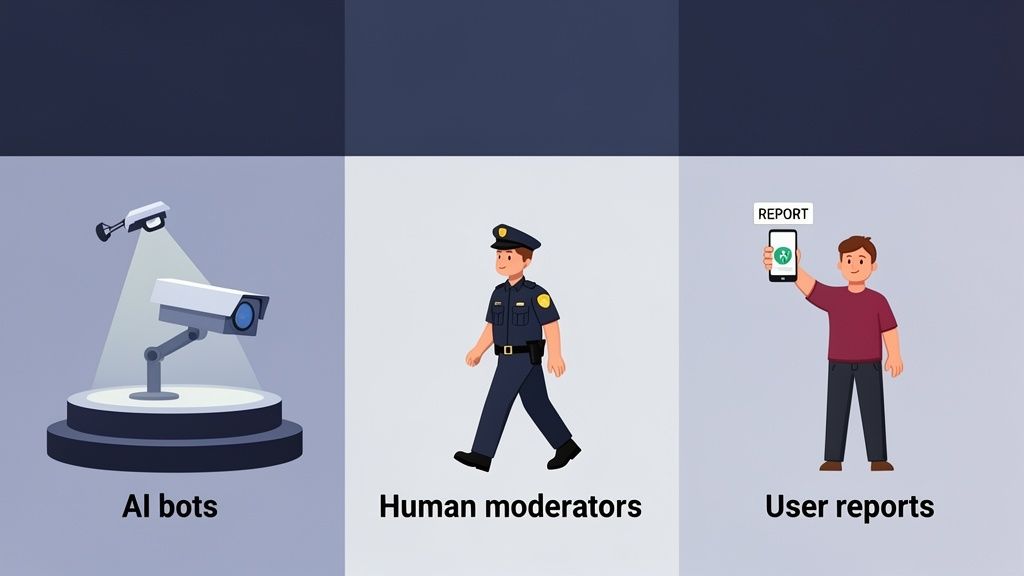
At the very foundation, you have automated tools. These are the tireless digital bouncers, constantly scanning for obvious, black-and-white rule violations. They’re programmed to spot specific banned keywords in chat, recognise visual patterns associated with forbidden activities, or flag accounts that suddenly start behaving like spambots. Their whole purpose is speed and scale.
When a situation is too subtle for a bot, it gets escalated to the next level: human moderators. These are the people who can actually interpret context, understand in-jokes, and make tough judgement calls on those tricky grey-area situations. They review streams flagged by the AI and also handle appeals from creators who feel they've been unfairly penalised.
Finally, you have user reports. This is the "see something, say something" part of the equation. This crowd-sourced policing is essential for catching things that both the AI and the busy human moderators might have missed in the moment.
This quick table breaks down how each part of the system works.
The Three Pillars of Cam Platform Moderation
| Moderation Method | What It Does | Common Triggers |
|---|---|---|
| Automated AI | Scans streams and chats 24/7 for clear rule violations. | Banned keywords, visual indicators of prohibited acts, spammy behaviour. |
| Human Moderators | Reviews flagged content, makes nuanced decisions, and handles appeals. | AI-flagged streams needing review, complex user reports, policy grey areas. |
| User Reports | Allows viewers to flag content that violates platform policies. | Rule-breaking behaviour missed by AI, subtle policy violations, user safety concerns. |
This tiered system shows how platforms triage issues, starting with broad automated sweeps and funnelling the more complex cases to human decision-makers.
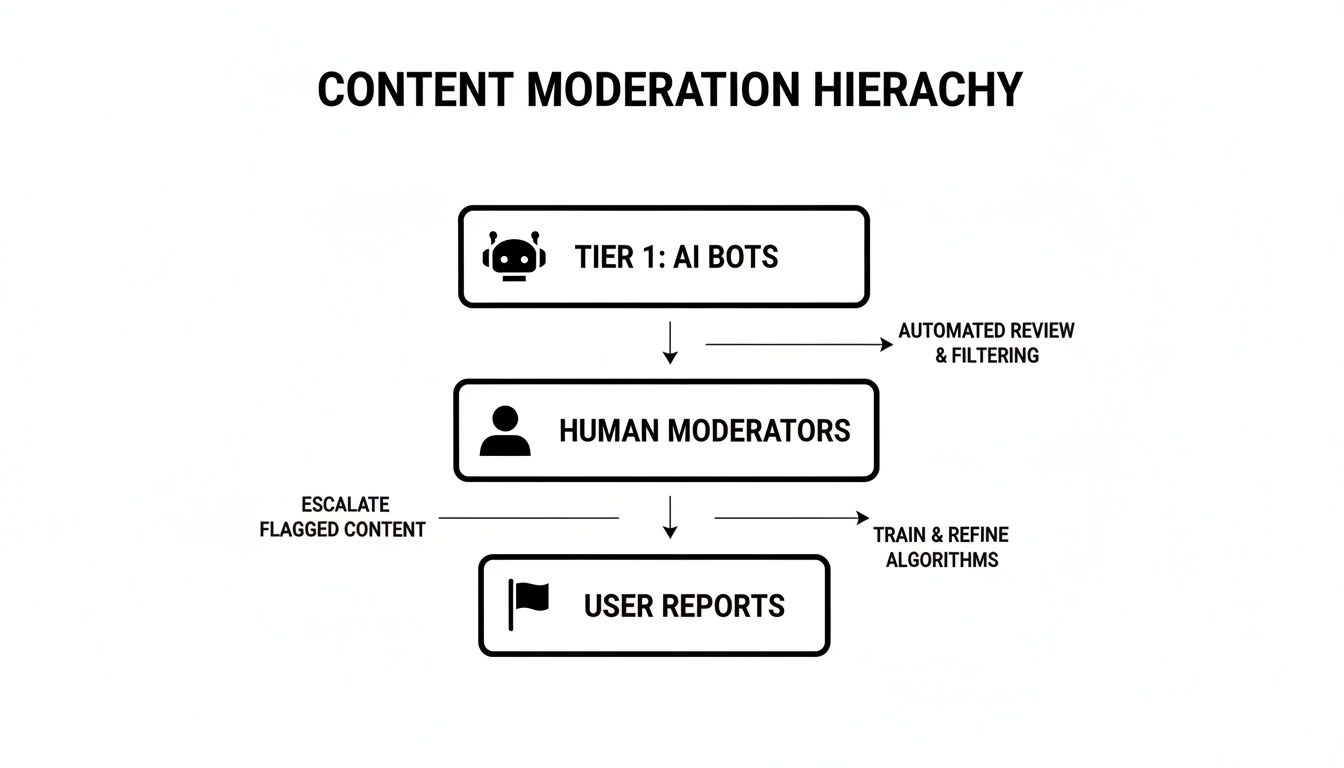
Getting to grips with this process is key to successfully navigating any platform's rules, as we cover in our broader guides on how cam sites work. It’s not some secret panel making arbitrary calls, but a hybrid system constantly trying to balance safety, legality, and business needs in real-time.
The Automated First Line of Defence: The AI Bouncers
Long before a human moderator ever sees your stream, the bots are already at work. Think of them as the digital bouncers at a club's velvet rope—tireless, lightning-fast, and programmed to spot trouble before it starts. These automated systems are the first and most immediate layer of moderation, acting as a high-tech tripwire for anything that breaks the rules.
These algorithms aren't just looking for one thing; they're constantly cross-referencing multiple data points. This might involve scanning the chat for banned keywords, analysing the video feed for patterns that match prohibited activities, or flagging unusual account behaviour like a sudden flurry of login attempts. Their main job is triage: deal with the obvious stuff instantly and pass the more complex cases up the chain.
When a bot spots a potential problem, it can trigger a whole range of actions, depending on the severity and the platform’s rules.
What Happens When a Bot Flags You
- A Gentle Nudge: For a minor slip-up, like using a borderline word in your stream title, the system might just send an automated pop-up warning.
- "Let Me Get My Manager": If the AI sees something ambiguous—maybe a pose that could be a rule violation but isn't clear-cut—it flags the stream. This kicks it into a queue for a human to review and make the final call.
- The 'Sin Bin' (Temporary Suspension): For more serious offences, or if you keep repeating the same mistake, the system can automatically issue a temporary ban, which could last anywhere from 24 hours to a week.
- Instant Takedown: For the most severe violations, like content that appears to involve minors or depict extreme violence, the AI is programmed to be decisive. It will take the stream offline immediately and lock the account while a human team investigates.
As you can see, moderation isn't a simple on/off switch. It’s a complex, multi-stage process that involves everything from upfront checks (like age verification) to reactive measures (like takedowns).
When Good Bots Go Bad
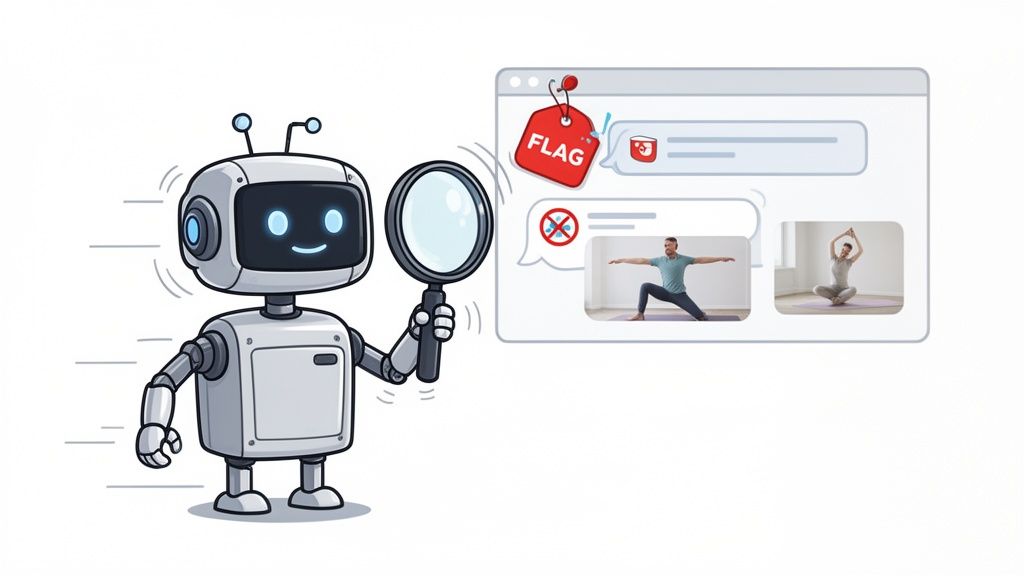
Of course, AI is a long way from perfect. For many creators, the most maddening part of this system is the dreaded 'false positive'. This is what happens when an algorithm completely misreads innocent content and flags it as a violation.
Think of a creator doing an advanced yoga pose that the AI mistakes for a prohibited sexual act. Or a dancer having an accidental wardrobe malfunction that triggers the nudity filter, leading to an instant, baffling suspension.
These errors get to the heart of the technology's biggest weakness: it has zero understanding of context. An AI can’t tell the difference between a malicious act and an honest mistake, which is exactly why the human touch is still so essential.
And we’re only going to see more reliance on these systems. Pushed by new regulations and the sheer volume of online content, the content moderation market is booming. The industry is expected to grow at a rate of 13.284% annually between 2025 and 2033, a sign of just how much demand there is for powerful AI. You can find more insights on the growing role of AI in online safety in recent market analysis.
At the end of the day, these AI bouncers are a necessary evil for moderating at scale. They're good at catching the low-hanging fruit, but their blunt-force approach means creators can easily get caught in the crossfire, left waiting for a human to step in and clean up the mess.
Meet the Human Moderators Making the Tough Calls
When the automated systems get it spectacularly wrong, or a situation is just too nuanced for an algorithm to grasp, a real person gets the call. Human moderators are the ultimate arbiters in the often-chaotic world of live streaming, stepping in where technology falls short.
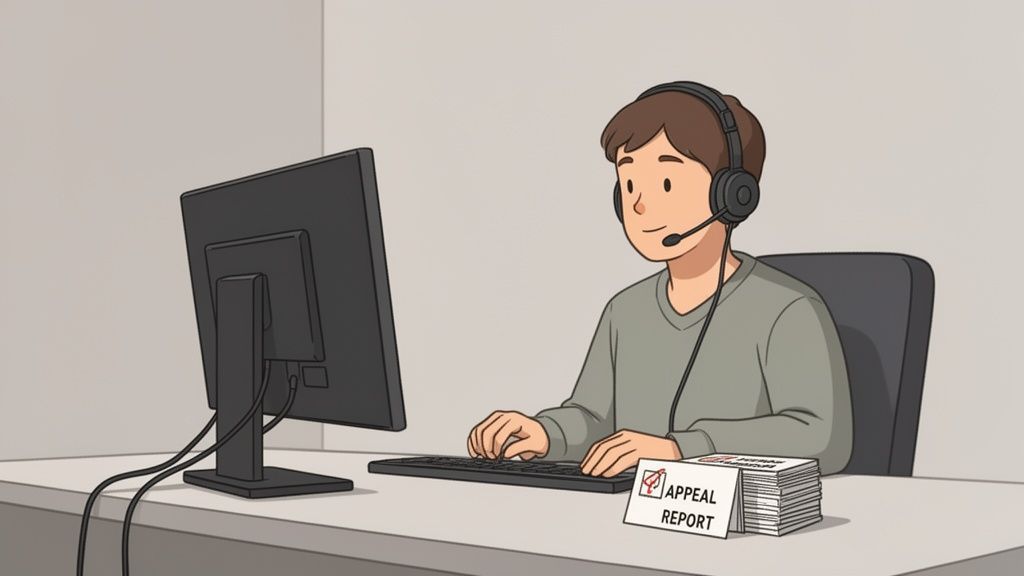
Their primary role is to review what the machines can't handle. This means digging into flagged streams, sifting through user reports, and making the final decision on appeals from creators who've been hit with an automated ban. It’s their job to navigate the grey areas.
They are tasked with interpreting policies that can feel frustratingly vague—deciding where a performance crosses the invisible line from ‘suggestive’ to ‘explicit’, or from ‘artistic’ to ‘prohibited’. This requires a deep understanding not just of the platform's rulebook, but also of the unwritten norms within online adult communities.
These teams also act as the final word in disputes. When a conflict between a creator and a viewer escalates beyond a simple chat block, it's the human moderators who investigate and decide if further action is needed.
The Unseen Challenges of the Role
The work of a human moderator is a far cry from a simple box-ticking exercise. It's a high-pressure, often gruelling job with a unique set of challenges. The sheer volume of content they have to review each day is staggering, creating a constant battle between speed and accuracy.
One of the biggest hurdles is keeping decisions consistent. A moderator in one time zone has to interpret a rule in exactly the same way as their colleague halfway across the world. This is meant to ensure enforcement is fair, but it’s incredibly difficult to achieve at scale and is a major source of frustration for creators who feel they see double standards in action.
The psychological toll is another huge, often underestimated, factor. Moderators are routinely exposed to the most extreme content the platform sees—from abusive users to deeply disturbing and illegal material—all while under immense pressure to make the right call, every single time.
This responsibility touches on a broader societal puzzle. A global survey from the University of Oxford found that while most people want harmful content restricted, there's no clear consensus on who should have the final say. The study revealed that 35% of people think platform operators should be responsible, while 31% point to individual citizens and 30% believe it should be governments. This split shows the contradictory expectations placed on these moderation teams. You can explore more about public opinion on content moderation in the full study.
The Moderation Workflow in Practice
So, what does a typical case look like from a moderator's desk? It usually starts with a ticket popping up in their queue, which tends to fall into one of three categories:
- An AI-Flagged Stream: The bot has spotted a potential violation but isn't confident enough to act. The moderator's job is to watch the flagged clip, understand the context, and either clear the flag or apply the right penalty.
- A User Report: A viewer has flagged a creator for breaking a specific rule. The moderator has to review the evidence, which might include chat logs or stream recordings, to figure out if the report is legitimate or malicious.
- A Creator Appeal: A creator is convinced their suspension was a mistake. Here, the moderator has to review the original incident, read the creator’s appeal, and decide whether to uphold or overturn the initial decision.
Ultimately, these human teams are the final safety net. They provide the essential—if imperfect—human element needed to interpret the nuances that technology simply cannot, making the tough calls that shape the experience for everyone on the platform.
Why Verification and Compliance Are Non-Negotiable
Behind every content policy and moderation decision lies a tangled web of legal obligations that platforms ignore at their peril. It might feel like just more bureaucratic box-ticking, but the verification and compliance rules governing these spaces aren’t optional extras. They are the absolute bedrock on which a platform’s right to operate is built.
These measures aren't just about enforcing a platform's internal guidelines; they're about obeying the law. From payment processing regulations to data protection and online safety legislation, every aspect of a platform's operation is scrutinised by external authorities. Breaking these rules doesn't just risk a fine—it can lead to payment processors pulling out or the entire service being shut down for good.
The Legal Framework Dictating the Rules
Here in the UK, the landscape has been completely reshaped by laws like the Online Safety Act. This legislation places a direct legal duty on platforms to protect users, especially children, from harmful content. It's a key reason why age and identity verification processes have become so incredibly stringent.
This isn’t a platform being needlessly invasive; it’s a legal necessity. They must be able to prove to regulators that they have taken robust steps to ensure every single creator on their site is a consenting adult. That classic "photo of you holding your ID next to your face" routine? It’s the most direct way for them to do this.
This verification process is a direct line of defence against illegal activity. It ensures that the person on camera is who they say they are, is of legal age, and has consented to be there. For the platform, it’s non-negotiable proof of due diligence.
Failure to enforce this properly could result in catastrophic legal consequences, which is precisely why platforms are so utterly ruthless about it. When it comes to age and identity, there is zero wiggle room.
More Than Just Age Checks
Beyond preventing underage activity, platforms are bound by a whole host of other complex legal duties that directly influence how cam platforms moderate content. These rules are in place to protect both creators and viewers, even if they sometimes feel inconvenient.
- Payment Processing Compliance: Financial partners like Visa and Mastercard have their own strict codes of conduct. They will flat-out refuse to process payments for any platform that can't demonstrate rigorous moderation and compliance, effectively cutting off its entire revenue stream overnight.
- Data Privacy and GDPR: Platforms collect a huge amount of sensitive personal data. Under the General Data Protection Regulation (GDPR) in the UK and EU, they have a legal duty to protect it securely. You can learn more about how your information is managed by reviewing a site's data handling standards, like our own privacy policy, which outlines these responsibilities.
- Anti-Money Laundering (AML) Regulations: Platforms must also verify identities to prevent their services from being used for financial crimes. This is another key reason why anonymous sign-ups for creators are a thing of the past.
Ultimately, every rule, every verification step, and every moderation policy is part of a much larger compliance puzzle. For creators, understanding this context is crucial. These aren't arbitrary rules designed to make your life difficult; they are legal necessities that allow the platform to exist, process your payments, and provide a space for you to work. They are simply the cost of doing business in a regulated world.
What to Do When You Get Banned or Suspended
It’s a creator’s worst nightmare. One minute you’re mid-stream, and the next, you’re locked out, staring at a cold, automated email about a suspension. It's disorienting, infuriating, and frankly, scary when your income is at risk. But panicking won't get you anywhere.
The urge to immediately blast the platform on social media is strong, I get it. While it might feel good in the moment, venting publicly is rarely the path to getting your account back. Platforms have official appeal channels for a reason, and that’s the game you have to play. So, take a breath. It's time to put on your detective hat.
Understanding Why the Axe Fell
You can't fight a ban if you don't know what you’ve been accused of. Your first job is to meticulously read that notification email. Sometimes it’s frustratingly vague—just a generic “Terms of Service violation”—but other times it will point to a specific rule.
- Check Your Recordings: If your streams are saved, go back and watch the VOD from right before the suspension happened. Look at it with a critical eye. Was there anything—a gesture, an object in the background, a wardrobe choice—that an AI or a malicious user could have twisted?
- Review Your Chat Logs: Did you use a certain word? Did a conversation in your chat fly off the rails? Remember, you are often held responsible for the vibe in your chat room, so don't skip this step.
- Get the Rulebook Out: Open the platform’s Terms of Service (ToS) in a separate browser tab. Put what you were doing side-by-side with their exact rules. This isn't just about figuring out what happened; this is about gathering the evidence you'll need for your appeal.
Once you have a solid theory about what triggered the ban, you can start building your case. Think of it less like a courtroom drama and more like a clear, factual email to a very busy colleague.
Writing an Appeal That Actually Works
The person on the other end of your appeal is likely a human moderator dealing with a mountain of tickets. A long, emotional rant will get your ticket closed in seconds. A concise, professional, and well-structured message is the only thing that stands a chance.
Start your appeal by clearly stating your username and the date of the suspension. Then, calmly explain what you think triggered the flag and, crucially, why you believe it was a mistake or a misinterpretation. If you have any proof, like a timestamp from your stream or a screenshot, attach it.
The golden rule: keep it factual and unemotional. Stick to the point. State what happened, provide your evidence, and end by saying you want to keep creating content that follows their rules. This positions you as a professional partner, not a problem account.
Whatever you do, don't lie or argue that their rule is dumb. You’re not going to change company policy in a support ticket. Your one and only goal is to prove you either didn't break the rule they've cited or that it was a genuine, one-time error that won't happen again.
The Frustrating Double Standard
Let's be honest: one of the most maddening parts of this whole process is the glaring inconsistency. The platforms where creators build their careers often enforce their rules with an iron fist, while the giant social media networks sometimes feel like the Wild West.
It’s a strange world when monetised platforms are hyper-vigilant, yet some of the biggest names in tech are actively pulling back. Meta has literally said it plans to 'catch less bad stuff', and TikTok has laid off hundreds from its trust and safety teams. You can read more about how social platforms are lowering their moderation standards, which is a world away from the strict reality most creators live in.
This stark contrast highlights a massive power imbalance. Creators, whose livelihoods are on the line, face intense scrutiny, while the social media giants seem to be shrugging off their responsibilities. It’s a tough pill to swallow, but it makes it all the more important to understand the system, know how to defend yourself, and be ready to make your case professionally when the ban hammer inevitably falls.
A Creator's Guide to Staying Safe and Compliant
The best way to handle moderation is to avoid it altogether. It can feel like you’re trying to read a rulebook in the dark, but a few smart habits can keep you clear of both the automated bots and the human review team.
At the end of the day, your goal is to build a lasting career, not to live in fear of the ban hammer. Think of your streaming space as a professional film set. Before you even hit that 'Go Live' button, run through a quick mental checklist. It’s the key to protecting your account and your income.
Your Pre-Stream Compliance Checklist
Consider this your pre-flight check. Spending 30 seconds scanning your setup now can save you hours of stress trying to appeal a suspension later.
- Read the Terms of Service (ToS): Yes, really. I know it’s the ultimate fine print, but you have to do it. Pay close attention to what’s allowed in your free, public chat versus what’s meant for private, paid shows. This is the number one tripwire for most creators.
- Scan Your Background: Is there anything in the shot that could be taken the wrong way? We're talking brand logos (a copyright minefield), drug paraphernalia (even if it's legal in your area), or anything that even vaguely looks like a weapon. Tidy up and take control of your environment.
- Check Your Stream Tags and Title: Be honest, not reckless. Trying to lure viewers with banned or misleading keywords is a surefire way to get flagged by the system’s AI. Make sure your tags accurately reflect what’s actually happening on your stream.
Let's be blunt: playing dumb about the rules will never work as an excuse. Platforms see you as a professional, and they expect you to know their guidelines. Your best defence against a malicious report or an AI hiccup is a solid track record of playing by the book.
Building a Sustainable Career
Staying compliant is about more than just dodging bans—it's about building a stable business. When you have a reliable schedule and a firm grasp of the rules, platforms see you as a low-risk partner, and your audience learns to trust you.
This kind of consistency is also vital for your finances. A secure account means you can actually forecast your income, which is a massive advantage when you're self-employed. For a closer look at this, our breakdown of the average OnlyFans income really shows why that stability matters so much.
When you make the platform's rules second nature, you take the power back. You stop reacting to problems and start proactively managing your career. That leaves you free to focus on what you’re truly there to do: create amazing content and build your community.
Frequently Asked Questions About Content Moderation
Let's cut to the chase. When you're trying to understand how cam platforms actually moderate content, the same questions tend to crop up again and again. Here are some straight answers to the things creators most often ask.
Can I Get Banned for Something a Viewer Says in My Chat?
The short answer is, unfortunately, yes. Platforms nearly always hold the creator responsible for the entire environment of their channel, and that absolutely includes what goes on in the chat.
It’s your space to manage. They expect you to use the tools they provide, like setting up keyword filters, muting disruptive users, or kicking them out entirely. If your chat turns into a free-for-all of rule-breaking comments and you're not seen to be taking any action, the platform can—and often will—penalise your account. They view it as a direct reflection of the kind of community you're building on their service.
Why Did I Get a Warning When Another Creator Did the Same Thing?
This is probably one of the most frustrating things a creator can experience, and it's a completely valid complaint. Inconsistent moderation is a genuine problem, but it’s rarely about playing favourites. It usually boils down to a few different things happening behind the scenes.
- Human Variation: Moderation isn't always black and white. One human reviewer might interpret a rule in a grey area slightly differently from their colleague on the next shift.
- Reporting Gaps: It's entirely possible the other creator simply wasn't reported by a user or flagged by an automated system. No report often means no review.
- System Quirks: The AI might have picked up on a specific visual or audio cue in your stream that it just happened to miss on the other one. It's an imperfect science.
It feels personal, but it’s more often a symptom of the sheer chaos of trying to moderate millions of hours of live video. The only way to stay sane is to focus on keeping your own channel compliant, rather than worrying about what others seem to get away with.
How Can I Protect Myself from Malicious User Reports?
You can't stop a bitter viewer from trying to cause trouble by filing a false or malicious report. It’s a fact of life online. What you can do, however, is build a rock-solid defence against it. The goal is to make it immediately obvious to any reviewer that you're a professional who plays by the rules.
A history of compliant streaming is your best defence. When a platform reviews a malicious report against a creator who is consistently in good standing, they are far more likely to scrutinise the report itself rather than immediately punishing the account.
Always make sure you're streaming in good, clear lighting so there's no ambiguity about what you're doing. If someone starts harassing you before filing their report, try to grab screenshots of their chat messages. Providing this kind of context when you appeal can completely flip the script and save your account.
2 thoughts on “How Cam Platforms Moderate Content: A Look Behind the Curtain”