Let's cut straight to the chase: Yes, camming is legal in the UK for any consenting adult over the age of 18. But that’s just the starting gun. While it's a completely legitimate way to earn a living, it operates inside a pretty specific legal and professional framework.
Think of it less as a digital Wild West and more like any other regulated profession. You wouldn't just open a cocktail bar without getting your head around licensing laws, right? The same logic applies here. It’s crucial to understand the rules of the road before you fire up the webcam.
It's Legal, But It Comes With Serious Responsibilities
Simply being 18 isn’t the only box you need to tick. Both performers and the platforms they use are bound by some pretty serious legal obligations. The entire system is built on a twin foundation: protecting the rights of adults to create and view content, while also putting up a solid digital wall to shield minors from harm.
To keep yourself safe and on the right side of the law, you’ll need to be aware of a few key areas. These aren’t just dusty old policies; they have a direct impact on how you work and how platforms operate. The main pillars you need to know about are:
- Content Rules: Even between consenting adults, not everything goes.
- Age Verification: This is a huge one. Platforms are legally required to have robust age checks.
- Consent and Privacy: Strict laws are in place to stop your content from being stolen or misused.
- Tax Duties: Just like any other income, your earnings need to be declared to HMRC.
The laws governing this space have changed a lot over the years. Some of the foundational rules, like the Obscene Publications Acts, date back to the 19th century but still shape today's standards. These acts created the original legal test for obscenity, defining it as anything that has a tendency to 'deprave and corrupt'.
More recently, laws like the Digital Economy Act 2017 have brought the rules into the modern age, compelling platforms to implement strict age verification systems or face massive fines. If you're interested, you can learn more about the history of these foundational laws and see how they've been adapted over time.
Here's the bottom line: The freedom to cam legally in the UK comes with real responsibility. The government's approach is to allow adult entertainment to exist, but it holds platforms and creators accountable for staying within clear boundaries. And with the Online Safety Act now in play, those rules are only getting tighter.
To give you a clearer picture, here's a quick breakdown of where things stand.
UK Camming Legality At A Glance
This table summarises the main legal and practical points you need to keep in mind.
| Area of Concern | Is It Legal? | Key Takeaway |
|---|---|---|
| Performing/Viewing | Yes | You must be 18 or older. This is a strict, non-negotiable requirement. |
| Content Type | Mostly Yes | The content must be consensual. Extreme acts defined in law are illegal. |
| Broadcasting | Yes | Permitted on platforms that follow UK law, especially on age verification. |
| Earning Money | Yes | All income must be declared to HMRC and is subject to UK tax laws. |
| Privacy & Consent | Yes | Your rights are protected. Recording or sharing content without consent is illegal. |
As you can see, the law gives a green light to camming, but it puts up some very clear guardrails to ensure everyone involved is protected.
The Core Laws Every UK Creator Must Understand
While camming in the UK is perfectly legal, that's just the headline. The reality is that to work safely and professionally, you need to get your head around the specific laws governing adult content. These aren't just vague guidelines; they are firm legal boundaries with real-world consequences.
Think of it like being a chef. You’re free to create amazing dishes, but you absolutely have to follow food hygiene laws. The same principle applies here—your creative freedom comes with a responsibility to follow the rules that keep everyone safe.
Obscenity and Extreme Content
One of the oldest bits of law you might hear about is the Obscene Publications Acts. It sounds pretty archaic, and for the most part, its core idea of banning content likely to "deprave and corrupt" isn't something a typical cam model needs to worry about.
What you really need to pay attention to is the Criminal Justice and Immigration Act 2008. This drew a very clear line in the sand, making it illegal to possess or distribute "extreme pornographic images." This isn't about personal taste; the law is incredibly specific about what falls into this category, even if everyone involved is a consenting adult.
The banned list includes anything that portrays:
- Serious injury or a threat to life.
- Sexual activity with a corpse.
- Sexual activity with an animal.
Broadcasting, selling, or creating custom videos that depict these acts is strictly illegal in the UK. Mainstream platforms have their own, often stricter, rules anyway, but these categories are a hard legal stop that every creator must respect. No exceptions.
Consent and "Revenge Porn" Laws
This is an area where the law is firmly on your side as a creator, and it's crucial you understand it. When you perform for a paying viewer, you are consenting to that specific broadcast. That consent stops there. It absolutely does not give anyone the right to record your shows or share your content anywhere else without your explicit permission.
Sharing private sexual images or videos of someone without their consent—often called "revenge porn"—is a serious criminal offence. The penalties are tough, and can include prison time.
For example, if you do a private show for a client, they have no legal right to record it and upload it to another site. If they do, they're breaking the law. These laws are in place to protect you from content theft and privacy violations, reinforcing the principle that your consent is ongoing and can be withdrawn at any time.
This idea of ongoing consent is the absolute foundation of a safe and legal career as a creator.
This visual map breaks down the three key pillars of UK camming legality—Consent, Age, and Taxes—which are non-negotiable for every creator.
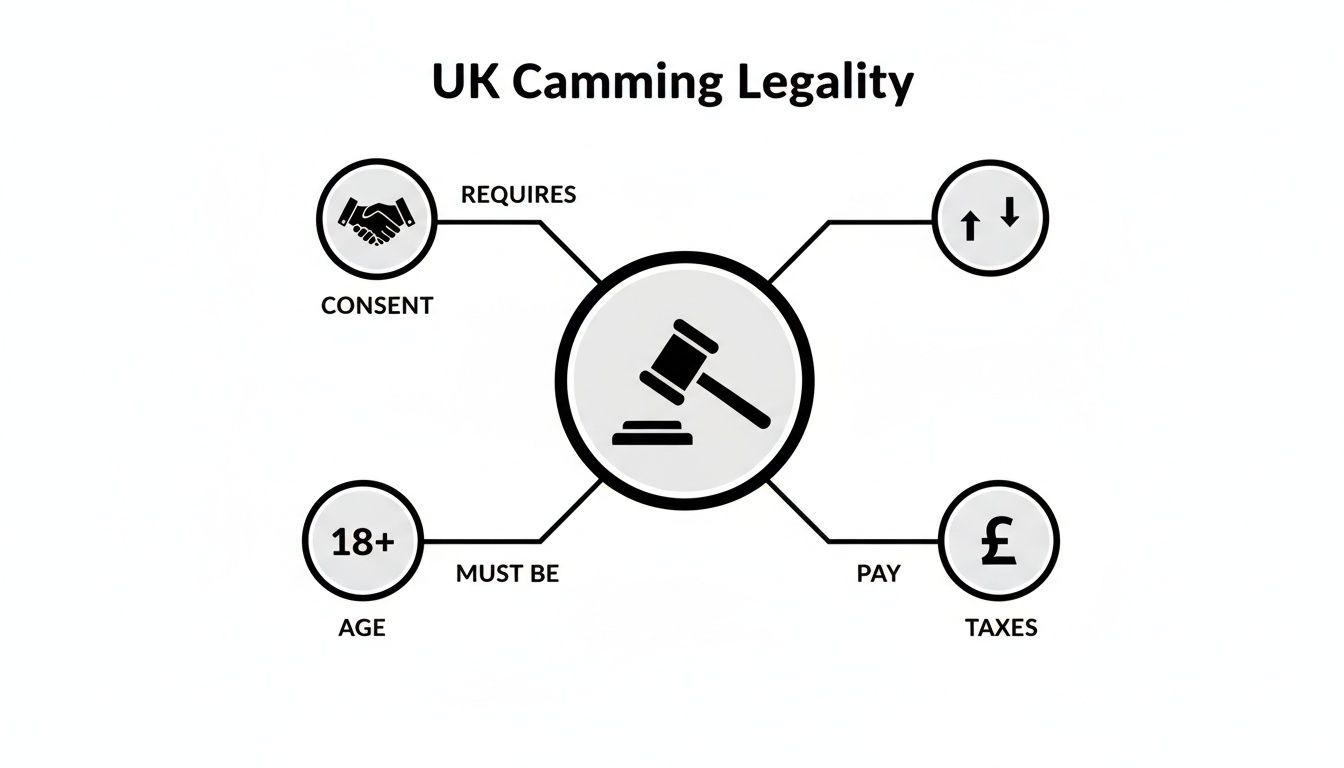
As the infographic shows, staying legal isn't about one single rule but a mix of interconnected responsibilities that ensure the industry is safe and compliant for everyone involved.
The Online Safety Act: A New Era of Responsibility
The biggest legal shake-up in recent years is the Online Safety Act. In short, this law puts a strict legal duty on platforms to protect their users, especially children, from seeing harmful content. For the adult industry, its most direct impact is on age verification.
Under the Act, any platform hosting adult content must now have robust age verification systems to stop minors from getting access. This isn't just a recommendation; it's a legal requirement. The regulator, Ofcom, has the power to issue massive fines—up to 10% of a company's global turnover—for failing to comply.
So, what does this actually mean for you as a creator?
- You must work on platforms that take age verification seriously.
- You will need to provide official ID to the platform to prove you are over 18.
- Viewers from the UK will also need to pass these checks to see your content.
This legislation marks the end of any casual attitudes towards age checks. It puts the legal responsibility squarely on the platforms, protecting both creators and the public by making sure everyone in the adult creator space is a verified adult.
Why You Cannot Ignore Age Verification
If there’s one area where the law on camming is crystal clear, it’s age verification. For a long time, age checks on adult websites were little more than a box-ticking exercise—a simple "Are you over 18?" button that pretty much anyone could click.
Those days are well and truly gone.
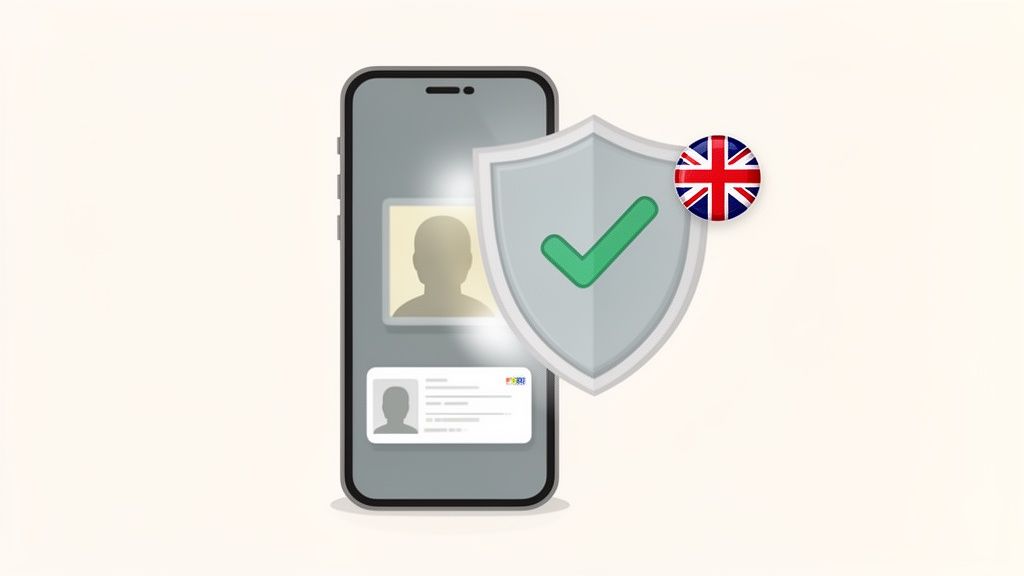
The game-changer here is the Online Safety Act. This isn't some vague bit of guidance; it’s a hefty piece of legislation that places the burden of protecting minors squarely on the shoulders of the platforms themselves. It has completely transformed the landscape for any cam site operating in the UK.
The regulator with the power to enforce this, Ofcom, has been given some serious clout. Platforms that don't get their age verification systems in order can be hit with eye-watering fines of up to £18 million or 10% of their global turnover, whichever is higher. That’s not a slap on the wrist; it’s a penalty that could shut a business down, and it's why every legitimate platform is now taking this so seriously.
What This Means For Creators
As a creator, this new legal reality impacts you from day one. To broadcast on any compliant site, you must prove you're over 18. This is a formal, non-negotiable step.
You should expect a proper verification process that usually involves:
- Providing official ID: You’ll almost certainly be asked to upload a clear image of a government-issued ID, like your passport or driving licence.
- Liveness checks: Many platforms use tech that matches a live selfie or a short video clip of you to the photo on your ID, confirming you are who you say you are.
It’s completely understandable to feel a bit wary about sharing this sort of personal information. The trick is to stick with reputable platforms that are transparent about their privacy policies and how they protect your data. This information is purely for legal compliance and is never shared with viewers. If you want a deeper dive, our guide on the modern UK cam site verification process breaks it all down.
Why Viewers Are Now Being Asked For ID
This isn't just a one-way street; the rules apply to viewers too. If you’re in the UK, you’ve likely seen more and more sites requiring you to verify your age before you can even get through the digital door. This is a direct result of the Online Safety Act.
This groundbreaking legislation makes it a legal requirement for any website hosting adult content, cam sites included, to implement these checks. The rules are so stringent that Ofcom even has the authority to go after senior managers personally if their companies fail to comply. It's made age verification an unavoidable part of the experience for everyone.
The bottom line is simple: robust age verification is now the price of admission for legal camming in the UK. It’s a non-negotiable legal requirement designed to protect minors, and it holds platforms accountable in a way that has never happened before. While it may feel like a hassle, it’s the single biggest sign that a platform is operating legally and responsibly within the UK.
Managing Your Money and Keeping HMRC Happy
Right, let’s get into the part of the job that's less about performance and more about paperwork: your money. Earning an income from camming is perfectly legal here in the UK, but it does mean you’re running a business. And when you’re running a business, you have to keep His Majesty's Revenue and Customs (HMRC) in the picture.
Trust me on this one – ignoring your taxes is a recipe for disaster. The problem doesn’t vanish; it just grows, and the eventual bill comes with a hefty side of stress. Getting your financial house in order from day one is one of the most professional things you can do.
Think of it like this: your on-screen persona is the creative director of your brand. Your off-screen self? You’re the Chief Financial Officer. You need both to build a career that lasts.
You're Officially Self-Employed Now
The moment you earn your first pound from camming—whether it’s a token tip or a payout for a private show—the law sees you as a sole trader. It's the most straightforward business structure in the UK, simply meaning you're self-employed.
You don't need to set up a limited company or navigate complex corporate structures. Your only real obligation is to tell HMRC you've started trading. The deadline for this is 5 October in your business’s second tax year, but honestly, the best advice is to register as soon as you start earning so it doesn’t get forgotten.
Once you're registered, you'll have to file a Self Assessment tax return every year. This is your chance to tell HMRC about your income and your business expenses, which they'll use to work out how much tax and National Insurance you owe.
Let’s be clear: your earnings aren't "cash in hand" or a casual hobby in the eyes of the law. This is taxable income. HMRC expects you to declare it, just like a freelance writer, a plumber, or any other self-employed professional.
What Counts as Taxable Income?
When you calculate your income, you can’t just look at what lands in your bank account after the cam site has taken its cut. You need to declare your gross earnings—that's the total amount you made before any platform fees or other deductions were taken out.
This includes every single penny you earn on the platform:
- Token Sales and Tips: The full value of every token spent in your public room.
- Private Show Payments: All money generated from your one-on-one sessions.
- Fan Club Subscriptions: Any recurring monthly payments from your followers.
- Content Sales: Revenue from selling pre-recorded videos, photo sets, or other media.
It is absolutely vital that you keep meticulous records from every platform you work on. Most sites have a detailed earnings dashboard that makes this easier. For a deeper dive into how the money flows, our guide on how cam models get paid breaks down the different revenue streams.
Claiming Legitimate Business Expenses
Now for the good bit. As a sole trader, you don’t pay tax on your total income; you pay it on your profit. And your profit is what’s left after you subtract all your allowable business expenses. This is where being organised can literally save you hundreds, if not thousands, of pounds.
The rule of thumb is that you can claim for anything you buy "wholly and exclusively" for your camming business. Just ask yourself: what do I need to spend money on to do my job effectively?
Common expenses that UK cam models can claim for include:
- Tech and Equipment: Laptops, high-quality webcams, lighting rigs, microphones.
- Internet and Phone Bills: You can claim a portion of your household internet and mobile phone bills, calculated based on how much you use them for work.
- Props and Outfits: Lingerie, costumes, toys, and anything else you purchase specifically for your shows.
- Website and Software: Fees for video editing software, a good VPN, or hosting for your own promotional website.
- Training and Development: Any courses you take to improve your streaming, business, or marketing skills.
- Accountancy Fees: If you hire an accountant to help with your tax return, their fee is a deductible expense.
Keeping every receipt and invoice is non-negotiable. Set up a simple spreadsheet or use accounting software to track your income and outgoings from the start. It will make filing your tax return infinitely less painful. Being diligent with your finances is a core part of making sure your camming career isn't just legal, but also profitable and sustainable for the long haul.
Protecting Your Privacy and Anonymity Online
Knowing the formal laws is one thing, but it’s only half the battle. The other, arguably more important half, involves mastering the unwritten rules of staying safe and protecting your personal life when your job is so public. This is where operational security, or OpSec, becomes your best friend.
Think of OpSec less as paranoia and more as professionalism. It’s all the practical, day-to-day things you do to build a solid wall between your performer persona and your real-world identity. Getting this right from day one is the secret to a long, low-stress career in camming.
Building Your Digital Fortress
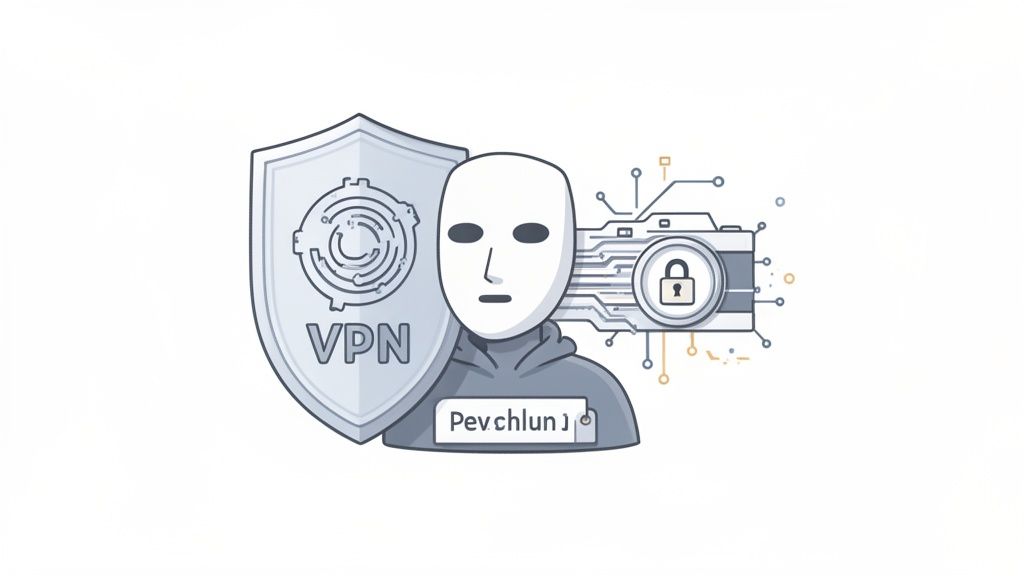
Your first line of defence is technology. You wouldn't leave your front door unlocked, and you need to apply that same level of caution to your digital life. A few simple tools can make a world of difference.
- Use a VPN (Virtual Private Network): A VPN is non-negotiable. It hides your IP address—the unique code for your internet connection that can give away your general location. Make it a habit to switch it on every single time you go online for work.
- Create a Separate Persona: Never, ever use your real name or personal email for anything connected to your cam work. Set up brand-new, anonymous accounts for everything, from social media profiles to the email you use to sign up for platforms.
- Scrub Your Background: Your streaming space can leak more information than you realise. Scan for anything that could identify you: family photos, a stray piece of mail with your address, or even a window view that someone could pinpoint on Google Street View. A plain background or a green screen is always the safest option.
Dealing With the Human Element
Tech can only get you so far. Often, the biggest risks pop up during your interactions with viewers, which can range from mildly irritating to genuinely threatening. Knowing how to handle these situations is vital for your wellbeing.
One of the most common threats is doxxing—when someone maliciously digs up and publishes your private information online. This is precisely why that wall between your real identity and your work persona is so critical. If there's no link for them to follow, there's nothing for them to find.
Harassment is another unfortunate reality. You'll encounter viewers who push boundaries, make unreasonable demands, or become abusive.
Your most powerful tool is the 'block' button. You are in complete control of your room and your stream. You are never obligated to tolerate abuse or harassment, no matter how much someone is paying. Reputable platforms have moderation teams and reporting tools for a reason—use them.
It's worth remembering that the UK has a long history of tightening controls on adult content. This began with physical places like sex shops, which the Indecent Displays Act 1981 required to have clear warning signs. That same instinct to regulate access has simply evolved for the internet, leading directly to the modern age and identity verification systems we see on platforms today.
A Practical Safety Checklist
Here’s a straightforward checklist to help you keep control of your privacy and maintain that all-important separation between work and life.
- Never Share Personal Details: This means your real name, where you live, details about your day job, or any information about your friends and family. No exceptions.
- Use a Stage Name: Pick a unique name that has zero connection to your real identity.
- Watermark Your Content: If you create and sell videos, add a watermark with your stage name. It makes it much harder for people to steal your work and pass it off as their own.
- Manage Your Socials Carefully: Keep your personal and work social media accounts completely separate. Be extremely selective about who you add to your private profiles.
- Trust Your Gut: If a viewer or situation makes you feel uneasy, don't hesitate. Block them immediately. Your safety always comes first.
- Understand Platform Rules: Get to know the platform's terms of service inside and out, especially their policies on harassment and the tools they offer to protect you.
Ultimately, while camming is legal in the UK, staying safe is about more than just following the letter of the law. It demands a proactive and professional approach to managing your privacy at every turn. For a closer look at the verification process itself, take a look at our guide on navigating the modern age verification app systems.
Your Questions Answered: The Practical Side of UK Camming
We’ve navigated the big legal landscapes together, from the Obscene Publications Acts to the joys of a Self Assessment tax return. But I know that often, it's the smaller, practical questions that keep you up at night.
So, let's get straight to it. This is where we tackle some of the most common "what if" scenarios that pop up when people ask if camming is legal in the UK.
Do I Have to Show My Face to Cam in the UK?
Not at all. There’s absolutely no law that says you have to show your face. In fact, a huge number of successful creators build their entire brand around anonymity. For many, it's the secret to keeping their work and private life separate and healthy.
But here’s the crucial part: while you can be anonymous to your audience, you can’t be anonymous to the platform. To comply with the Online Safety Act, you must verify your real identity and age using official ID. This is a non-negotiable legal requirement for any reputable site.
Think of it this way: the platform needs to know who you are for legal and safety reasons, but your viewers don't. That verification data is locked down, kept secure, and is never shared with your audience. Being anonymous on camera is your choice; being verified behind it is the law.
Can I Get in Trouble For Camming From a Rented Flat?
From a legal standpoint, you're in the clear. The laws we've talked about are concerned with what you create and how you handle your taxes, not the specific room you're creating it in.
The potential hiccup isn't with the police, but with your landlord. The issue is contractual. Your tenancy agreement might include clauses that prohibit running a business from the property or causing a nuisance. While it's a real stretch to call camming a "nuisance," a landlord could technically argue it breaches a "no business use" rule.
To keep things smooth:
- Check your tenancy agreement: Get familiar with any clauses about commercial activities.
- Be discreet: Honestly, the easiest way to avoid any drama is to make sure your landlord and neighbours have no reason to know what you do for work.
- Don't be a nuisance: This is just good sense. Keep noise levels down and be a considerate neighbour.
The bottom line? Camming from a rented property isn't against the law. However, it could potentially put you in breach of your lease, which might lead to eviction if you have a particularly difficult landlord.
What Happens If a Viewer Lies About Being Underage?
This is a worry that I hear from creators all the time, and it's completely understandable. The good news is that the legal weight of this issue doesn't fall on your shoulders. Under the Online Safety Act, the responsibility for robust age verification sits firmly with the platform itself.
As long as you’re working with a legitimate, compliant platform that has its age-checking systems in place, you've done your part. The law is designed to hold the multi-million-pound companies that run the sites accountable, not the self-employed performers using them.
Your job is much simpler: if you ever genuinely suspect a user might be underage, act immediately. Block them from your room and report them to the platform's moderation team straight away. It's the right thing to do, it protects you, and it helps keep the entire community safer.
Is It Legal to Take Payments Directly From Viewers?
Accepting direct payments through services like PayPal or a bank transfer isn't technically illegal, but it's a massive professional and personal risk. It’s one of those things that, while possible, is just a terrible idea in practice.
First off, it completely destroys your privacy. Handing out your payment details connects your performer persona directly to your real-life financial identity. This opens a huge security hole that could lead to doxxing, harassment, or worse. Secondly, it leaves you defenceless against scams and chargebacks.
And crucially, it turns your tax affairs into a complicated mess. When you use the platform's official payment system, you get a clean, verifiable record of all your earnings, which makes filling out your Self Assessment return so much easier. Don't forget, all income, no matter how you receive it, has to be declared to HMRC.
Sticking to the platform’s payment system is simply the safest, most secure, and most professional way to handle your money. It maintains a vital protective barrier between you and your audience.