Getting your money is the whole point, right? When it comes to payment methods for cam models in the UK, the most common routes are direct bank transfers (like BACS) and specialised e-wallets built to handle adult industry earnings without any fuss. Choosing the right one is always a balancing act between speed, privacy, and fees.
How Cam Model Payouts Actually Work
Let's cut through the noise. The financial side of camming isn't some kind of magic; it's a very specific business process with a few key steps. At its heart, it’s a simple loop: a viewer buys on-site currency (tokens), you perform and earn those tokens, the platform takes its cut, and then you need a way to turn your digital balance into actual cash.
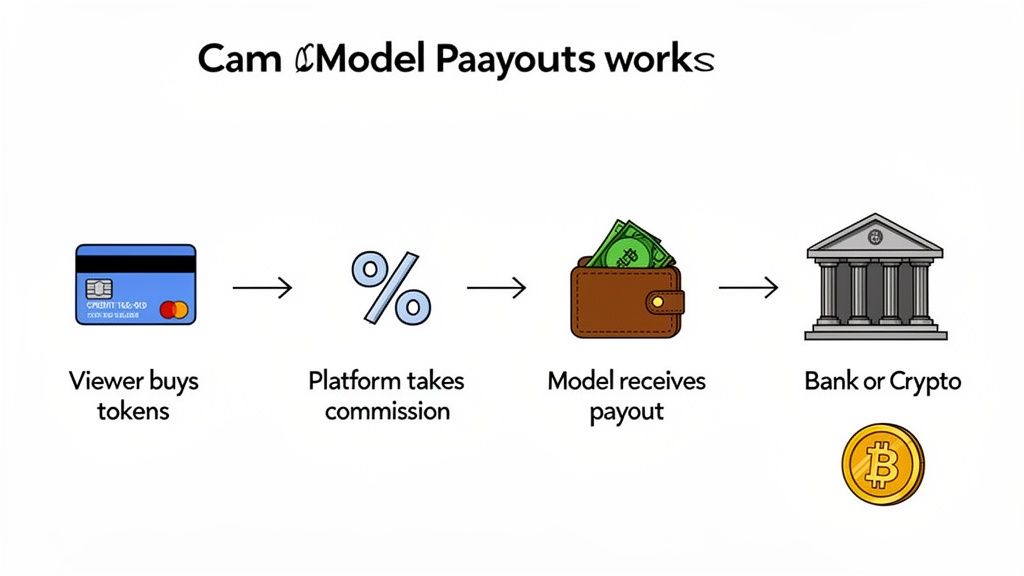
This final step—getting paid—is where things can get complicated. It's not just about clicking a "withdraw" button. Every choice you make here has a real impact on your bottom line and your personal security.
The Basic Financial Flow
Think of the cam site as the middleman who handles all the messy bits of payment processing. They’re the ones dealing with the viewer's credit card, which is great because it shields you from the headache of direct chargebacks and fraud. For providing this service, they take a hefty commission.
What you earn is a percentage of what the viewer actually spends. After the platform takes its share, which can often be 50% or more, the remainder is added to your creator account. From there, it’s up to you to pick a payout method to move it into your own hands.
The entire system is built on this conversion: real money becomes platform tokens, and then your token earnings must be converted back into real money. Your choice of payout method is the final, crucial link in that chain.
Why Your Payout Method Matters
Choosing how to get paid isn't a minor detail; it’s a core part of running your business professionally and safely. For most UK cam models, bank transfers (BACS/wire) and digital wallets like Payoneer are the go-to options, offering secure and relatively cheap ways to withdraw earnings. While a few creators turn to crypto for discretion, the vast majority stick with these established methods after the platform's commission is taken.
Your decision affects everything:
- Privacy: Does this method create a direct paper trail to your personal bank account?
- Speed: How long will you be waiting for your money after you request a payout?
- Fees: How much of your hard-earned cash is going to get eaten up by transfer or conversion fees?
- Security: How secure is the processor, and what happens if something goes wrong?
Getting a handle on these factors is essential. Getting this right from the start can save you a world of headaches, and you can learn more about how to avoid payout delays on cam sites in our detailed guide.
From Viewer Tokens to Your Earnings
So, how does a viewer's tip actually turn into money in your bank account? It's a journey, and it all begins the moment a fan buys a batch of the website's digital currency, most often called 'tokens'. These aren't just for show; they're the engine that drives the entire payment system.
When a fan sends you a tip, pays for a private show, or buys one of your videos, they're spending those tokens. The tokens pop up in your creator account, but let's be crystal clear: they aren't cash. Not yet, anyway.
Think of them like casino chips. You’ve had a great run at the tables and your pockets are full, but you still need to head to the cashier's cage to exchange them for real money you can spend.
The Great Platform Commission
Before you can even think about cashing out, the platform takes its cut. This is the non-negotiable cost of using their service, covering everything from their payment processing fees and website hosting to marketing and, of course, their profit margin. For many new creators, this is the biggest eye-opener.
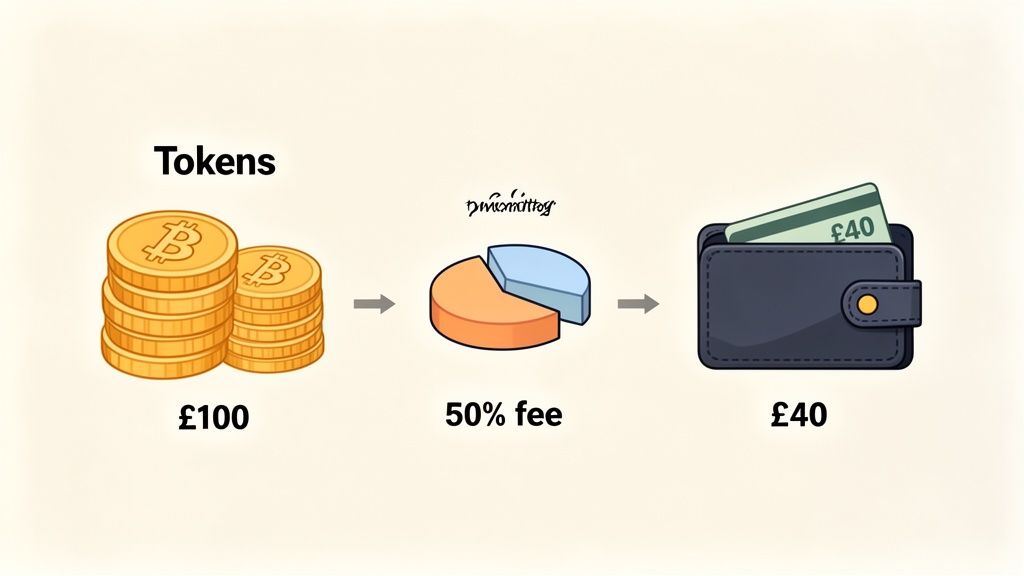
It's pretty standard for platforms to take a 50% commission, and some might even take a bit more. This rate can sometimes change based on how much you earn or if you're exclusive to their site, but you should always budget for a 50/50 split as a starting point.
This means if a fan spends £100 on tokens for a private show with you, the platform could instantly take £50. Your account gets credited with the other £50, which is still in the form of their site-specific tokens. That initial £100 has already been cut in half before it even counts as "your" earnings.
Payout Thresholds and Schedules
Right, you've got a balance of digital earnings sitting in your account. The catch is, you can't just withdraw a few pounds whenever you fancy. Every platform has a minimum payout threshold—a specific amount you need to earn before they'll let you cash out. This can be anything from £20 to over £100.
If the site's threshold is £50, you simply can't request a payment until your share of the earnings hits that mark. This can be a real hurdle when you're just starting out or working part-time, as it might take a while to build up enough of a balance to actually get paid.
On top of that, platforms run on fixed payout schedules. You don't just click and get your money instantly. The most common timetables are:
- Daily: This is quite rare but some sites offer it for top-earning, established models.
- Weekly: A very popular option, with payments often processed on the same day each week.
- Bi-weekly (Fortnightly): Probably the most common schedule, paying out every two weeks.
- Net-15/Net-30: This means you get paid 15 or 30 days after the earning period closes.
Getting your head around these schedules is crucial for managing your own finances. You need to know when your money will actually land so you can plan your bills accordingly.
The journey from a viewer's wallet to your bank account is a multi-step process involving currency conversion, platform commissions, and administrative delays. What a fan spends is never what you receive.
A Real-World Example of the Financial Funnel
Let’s walk through a quick example. A fan is loving your show and decides to spend £100 on tokens for you.
- Platform Commission: The cam site takes its 50% cut straight away. Your account is credited with £50.
- Payout Method Fees: You request your money. Let's say your payout method charges a 2% processing fee plus a flat £1 currency conversion fee. That’s another £2 skimmed off the top of your £50.
- Your Take-Home Pay: When all is said and done, the £47 that finally arrives in your bank account is what you've actually earned from that initial £100 spend.
This isn't meant to put you off, but to give you a realistic picture. Understanding the numbers from day one helps you set your rates properly, manage your expectations, and treat your camming as the serious business it truly is. For a more detailed breakdown of the mechanics, you can learn more about how cam models get paid in our dedicated guide.
Choosing the Right Payout Method for You
Right, you’ve done the hard work, earned your tokens, and the platform has taken its cut. Now you’ve got a balance sitting in your account, and the final—and let’s be honest, most important—step is getting that money into your hands.
This isn’t just about clicking a button. It’s a real strategic decision. The world of payment methods for cam models is a maze of trade-offs between speed, privacy, fees, and simple convenience. What works perfectly for one creator might be a total headache for another.
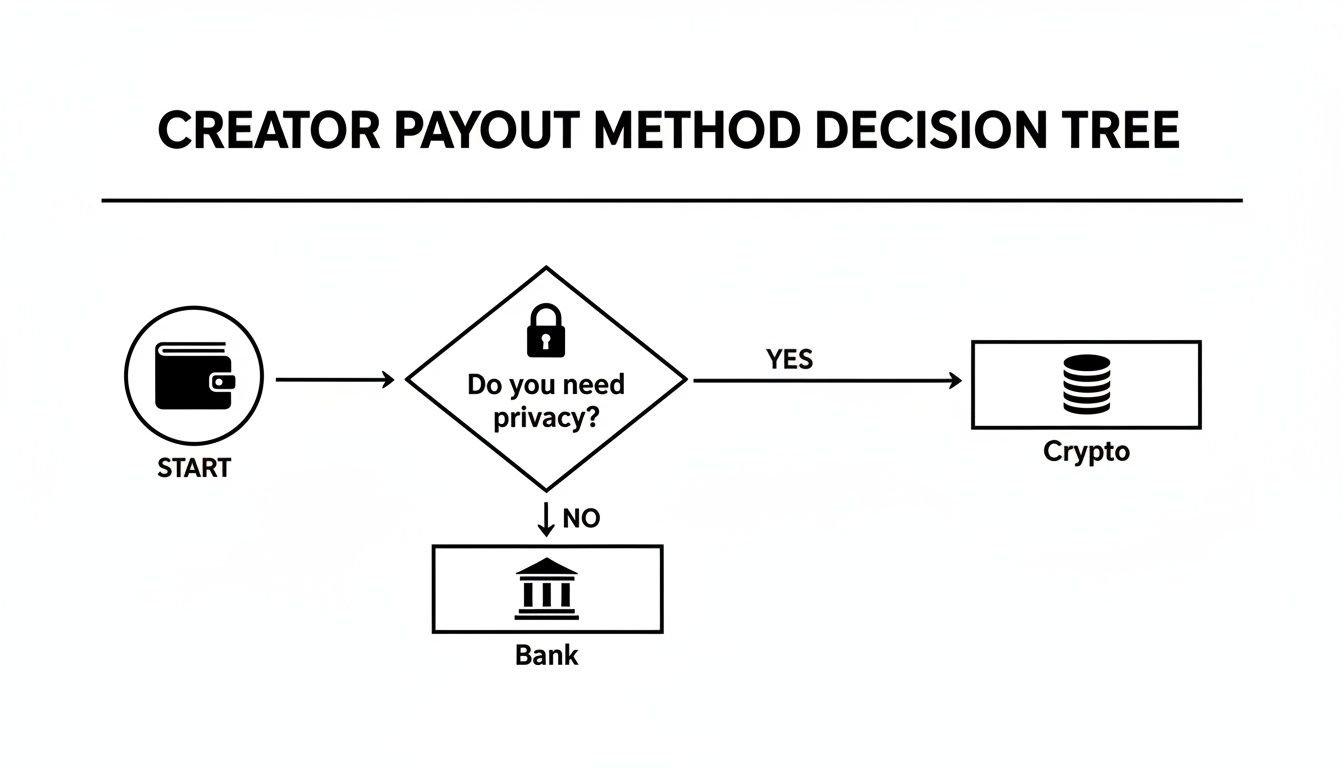
The central conflict nearly always boils down to privacy versus simplicity. A direct bank transfer is wonderfully straightforward, but it leaves a clear paper trail. On the flip side, the more anonymous methods often come with higher fees and a bit of a learning curve. There’s no single "best" option—only the one that’s best for your specific situation.
The Main Contenders
Let’s get into the most common payout options you’ll come across on UK-based or UK-friendly cam sites. Think of each one as having its own personality; understanding them is the key to making a smart choice.
Direct Bank Transfer (BACS/SEPA): This is the old reliable. The platform sends your earnings straight to your high-street bank account. It’s simple, familiar, and the fees are usually quite low. The major catch? The transaction description could be a dead giveaway about where the money came from. That’s not ideal if you need to keep your work and personal finances separate or if your bank is a bit judgemental about the adult industry.
Third-Party E-Wallets: These have become the industry standard for good reason. Services like Paxum or Payoneer act as a crucial buffer between the cam site and your personal bank account. You withdraw your earnings to the e-wallet first, and then you can move them to your bank. This creates a valuable layer of privacy, as your bank statement will show a transfer from "Paxum," not "SuperHotCamz."
Cryptocurrency: Once seen as a niche, tech-heavy option, crypto is slowly becoming more common. Getting paid in currencies like Bitcoin (BTC) or a stablecoin like Tether (USDT) offers the highest level of privacy you can get. This comes at a price, though: volatility. The value of your earnings can swing wildly between the moment you’re paid and the moment you cash out. It also requires you to get comfortable with how crypto wallets and exchanges actually work.
Choosing your payout method is a bit like picking a getaway driver. Do you go for the reliable one who obeys every traffic law (bank transfer), the fast and discreet professional (e-wallet), or the unpredictable maverick who might crash but promises zero traceability (crypto)?
Weighing the Pros and Cons
Making a good decision means looking at the cold, hard numbers. Fees can nibble away at your profits, and waiting weeks for a payout can seriously disrupt your cash flow. Let's put these methods side-by-side to see how they stack up.
Comparison of Payout Methods for UK Cam Models
To make things clearer, here’s a quick comparison of what you can generally expect from each option. This table breaks down the key factors that will likely influence your decision.
| Method | Typical Speed | Average Fees | Privacy Level | Best For |
|---|---|---|---|---|
| Bank Transfer (BACS) | 2-5 business days | Low (often £0-£5) | Low | Creators comfortable with their bank who prioritise low fees over privacy. |
| E-Wallets (Paxum, etc.) | 1-3 business days | Medium (variable % + fixed fees) | Medium | The majority of models wanting a balance of speed, reasonable fees, and financial separation. |
| Cryptocurrency | Minutes to hours | High (network & exchange fees) | High | Tech-savvy creators who prioritise maximum anonymity and are willing to manage price volatility. |
As you can see, there’s a clear give-and-take with every choice. The convenience and low cost of a bank transfer come at the expense of your privacy. The high privacy of crypto comes with complexity and potentially higher, less predictable fees.
For most UK models, e-wallets hit that sweet spot, providing a necessary financial buffer without being overly complicated. As you branch out, you'll find that understanding these financial tools is just as important as knowing about the various OnlyFans alternatives and how their payment systems differ.
Making Your Decision
So, how do you actually choose? Start by asking yourself a few honest questions:
- What’s my privacy threshold? Am I genuinely okay with my bank seeing where my income is from, or do I need absolute separation between my work and personal life?
- How tech-savvy am I? Am I comfortable setting up and managing a crypto wallet, or do I just need something that works without any fuss?
- How quickly do I need my money? Can I afford to wait a few business days for a bank transfer, or is faster access a priority for paying my bills?
- How much am I willing to lose to fees? Am I focused on maximising every single penny, or is paying a small fee worth it for the convenience and peace of mind?
Your answers will naturally guide you to the right solution. A new model might stick with a simple bank transfer just to keep things easy at the start. In contrast, a veteran creator with a significant income will almost certainly use an e-wallet to manage their finances like a professional business.
Ultimately, the best payment method is the one that lets you sleep at night, knowing your money is secure, accessible, and handled in a way that truly fits your life.
Using Third-Party Processors and E-Wallets
While sending your earnings straight to your high-street bank is an option, it's not always the smartest move. For many creators, it feels a bit like inviting your bank manager to look over your shoulder while you work. This is exactly why third-party processors and e-wallets have become the industry standard—they create a vital buffer between the platform and your personal bank account.
Think of it like having a business mailbox. Instead of giving everyone your home address (your personal bank account), you have all your payments sent to a secure, neutral location first. From that central hub, you can then decide when and how to move the money into your own finances.
Why You Need an Adult-Friendly Processor
Let's be direct: mainstream banks can be incredibly nervous about the adult entertainment industry. They often classify it as 'high-risk', which is financial-speak for "we might panic and freeze your account." It’s a real and devastating risk. One day you could wake up to find your account has been flagged, frozen, or even closed just for receiving regular payments from a known camming site.
This is precisely the problem that services like Paxum, Payoneer, and CosmoPayment were created to solve. They specialise in handling payments for high-risk sectors and fully understand the needs of creators.
- Financial Privacy: Your bank statement will just show a transaction from "Paxum" or "Payoneer," not a company name that broadcasts the nature of your work. That separation is crucial.
- Massively Reduced Risk: These processors are built to handle funds from adult sources, so the risk of them shutting you down for doing your job is practically zero.
- A Central Hub: If you stream on multiple sites, an e-wallet is the perfect way to gather all your earnings in one place. You can then make a single, larger transfer to your bank, which looks a lot less suspicious than lots of smaller, frequent payments.
Especially in the UK, where creators often depend on private pay-per-minute shows, having a reliable payout channel is non-negotiable. As regulations have tightened, CosmoPayment and Paxum have become the go-to payment methods for cam models who want to avoid any drama with their banks. You can learn more about how this works in practice by reading this analysis of the British online adult market.
Getting Yourself Set Up and Verified
Signing up for one of these services is a bit more involved than creating a social media profile. You're opening a proper financial account, so you have to go through a verification process. It's a legal requirement to comply with anti-money laundering (AML) and know-your-customer (KYC) regulations.
Think of verification as your first professional hurdle. It's a bit of a faff, but it proves you're a serious business owner and it’s what keeps the whole system secure for everyone.
You'll almost certainly need to provide:
- Government-Issued Photo ID: A clear copy of your passport or driving licence.
- Proof of Address: A recent utility bill or bank statement (usually dated within the last three months) that clearly shows your full name and address.
My advice? Get these documents scanned and ready before you start the sign-up process. It’ll make everything go a whole lot faster. Approval usually takes anywhere from a few hours to a couple of business days.
Keep an Eye on the Fee Structure
This level of convenience and privacy isn't free. E-wallets and processors make their money from fees, and it’s essential to understand exactly what you'll be paying before you commit. The fee structures can sometimes feel like a maze, so take the time to read the fine print.
Here are the most common fees you'll run into:
- Receiving Fees: Some charge a small fee just for a payment from a platform to land in your account.
- Withdrawal Fees: You'll almost always pay a fee to move money from the e-wallet to your bank account. This can be a flat rate, a percentage, or sometimes both.
- Currency Conversion Fees: If you're paid in USD but your bank account is in GBP, they'll charge you to convert it. Be aware that their exchange rate won't be as good as the market rate.
- Dormancy Fees: If you don't use your account for a while, some services will start charging a monthly inactivity fee.
These little charges can add up surprisingly quickly, so make sure you factor them into your business expenses. For the security and peace of mind they offer, using an e-wallet is nearly always worth it. Just go in with your eyes open to avoid any nasty surprises down the line.
Protecting Your Earnings from Scams and Chargebacks
Getting paid is one thing; keeping it is another. Once the money finally lands in your account, it's easy to think the job is done, but that's where you need to be most vigilant. Think of this as your financial self-defence guide, because online, there are always people looking for an easy mark. The good news? A little bit of awareness goes a very long way.
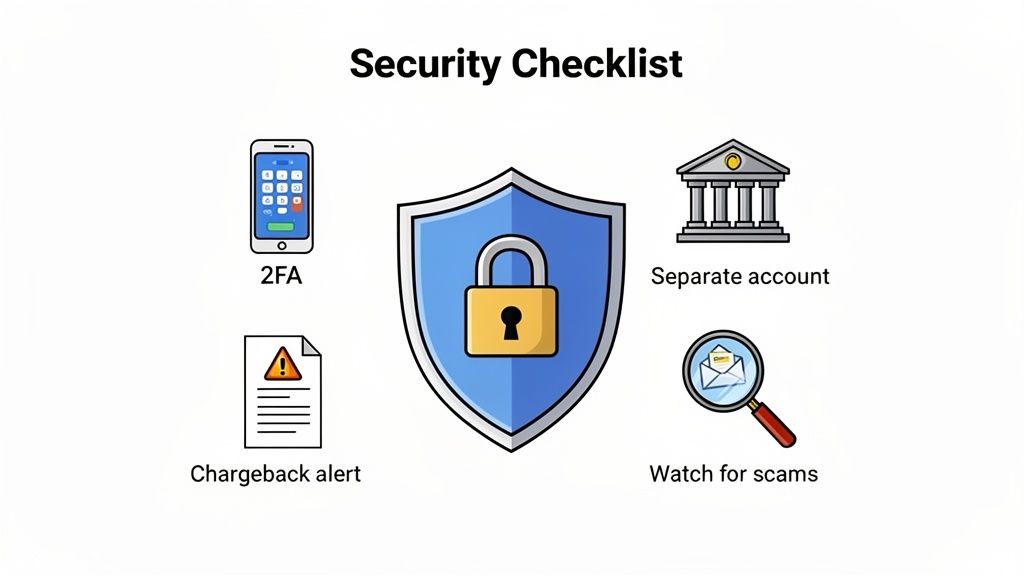
The two biggest threats to your hard-earned cash are chargebacks and scams. While the platforms you work on handle the direct risk of credit card fraud, the fallout can still hammer your balance. Understanding how these threats work is the first step to building a solid defence.
The Dreaded Chargeback
A chargeback is the bane of anyone selling anything online. It's what happens when a customer disputes a transaction with their credit card company, claiming it was fraudulent or not what they paid for. The bank then forcefully reverses the payment, clawing the money back from the platform.
When that happens, the platform loses money, and you can bet they’ll pass that loss straight on to you by deducting the same amount from your earnings. It feels incredibly unfair, especially when it happens weeks or even months after a session. You did the work, but the money just vanishes into thin air.
Platforms do have systems to fight fraudulent chargebacks, but they don't win every battle. For many, it's just treated as a cost of doing business—a cost you're the one who ultimately pays.
Common Scams to Watch Out For
Scammers are endlessly creative, but most of their tricks are just new spins on old tactics that exploit trust or create a sense of panic. Their goal is always the same: get your money or your personal information.
Here are a few classic scams that frequently target creators:
- Phishing Emails: You get an official-looking email that seems to be from your payment processor or cam site. It’ll warn you of a "security issue" and urge you to click a link to verify your account. That link leads to a fake login page designed purely to steal your password.
- Off-Platform Payment Promises: A "generous" fan offers to send you a huge sum directly through a service like PayPal or Cash App to avoid platform fees. This is almost always a trap. These services aren't friendly to adult work, and the payment often comes from a stolen account. It will eventually be reversed, leaving you with nothing.
- The "Manager" or "Agent" Scam: Someone contacts you promising to boost your earnings or get you on better platforms, but they need an upfront fee. Legitimate agents take a commission from your earnings; they don't ask you for money first.
The golden rule is simple: If it sounds too good to be true, it absolutely is. Never, ever agree to take payments off-platform, and treat any unsolicited email about your financial accounts with extreme suspicion.
Your Financial Security Checklist
Protecting your money is an active, ongoing process, not a one-time setup. A few simple, consistent habits can make you a much harder target for scammers and help you weather the occasional chargeback.
Here's your essential checklist:
- Enable Two-Factor Authentication (2FA): Turn this on for everything—your email, your cam site accounts, and especially any e-wallets you use. A password alone is no longer enough.
- Keep Finances Separate: Use a dedicated business bank account and a separate email address for all your camming work. This walls off any potential damage and makes your bookkeeping much cleaner.
- Check URLs Religiously: Before you log in to any financial service, double-check that the website address is correct. Look for the little padlock icon and make sure the URL starts with
https, not justhttp. - Document Everything: Keep your own basic records of your payouts and any significant private sessions. If a dispute ever comes up, having your own notes can be a massive help.
- Never Share Login Details: No legitimate platform, agent, or payment processor will ever ask for your password. Anyone who does is a scammer. Full stop.
By treating your financial security as a core part of your business, you can minimise the risks and make sure the money you work so hard for stays exactly where it belongs: with you.
Taxes and Bookkeeping for UK Creators
Right, let's get into the topic that’s about as exciting as filling out paperwork: your taxes. It might not be the most thrilling part of being a creator, but trust me, getting a handle on it from day one will save you a world of headaches down the line.
Think of this as a friendly chat to get you pointed in the right direction, not as official financial advice. For the specifics of your situation, you’ll always want to speak with a qualified accountant. Consider this your starter guide to keeping everything above board and avoiding any nasty letters from HMRC.
Welcome to the World of Self-Employment
As soon as you earn that first pound from your content, HMRC views you as a sole trader. It's the simplest business structure, but it means you're now personally responsible for declaring your earnings and paying the right amount of tax and National Insurance. Don't fall into the trap of thinking it will just go unnoticed.
Your first official step is to register for Self Assessment. The deadline for this is the 5th of October following the end of the tax year you started earning. Remember, the UK tax year is a bit quirky, running from the 6th of April to the 5th of April. Miss that October deadline, and you could face penalties right out of the gate.
There's a myth that online income is somehow off-the-books or untraceable. In reality, every digital payment creates a crystal-clear electronic footprint. The professional approach is to own it and manage it properly from the start.
Good Records Are Your Best Friend
You don’t need to become an accounting whiz overnight, but you absolutely must keep track of your income and outgoings. A simple spreadsheet is all you need to get started.
Every time a payout lands in your bank account, note down the date and the exact GBP amount. This total is your turnover.
Just as crucial is tracking your allowable expenses. These are the costs you pay out wholly and exclusively for your work. By subtracting these from your income, you lower your taxable profit, which means you pay less tax. It’s that simple. Common expenses for creators usually include:
- Your Gear: That new webcam, lighting ring, laptop, or microphone.
- Bills: A portion of your home internet and electricity costs.
- Work Wardrobe & Props: Lingerie, outfits, toys, and makeup used only for your streams.
- Software & Services: Any subscriptions for editing tools or other professional services.
- Professional Fees: The money you pay your accountant is also a tax-deductible expense!
Make a habit of saving every single receipt and invoice, whether it's a paper copy or a digital file. If you can't prove you spent the money, you can't claim it as an expense. A little organisation now will turn tax season into a straightforward task instead of a mad panic.
Your Top Questions About Cam Model Payments, Answered
Getting your head around the money side of things can feel a bit daunting at first. Let's tackle some of the most common questions that come up, so you can feel confident about how you get paid.
Is It Safe to Use My Real Bank Account?
Technically, yes, but it’s often not the smartest move. A direct bank transfer is straightforward, but it creates a clear link between the platform and your personal finances. Many creators in the UK opt for a bit of a buffer.
Using an adult-friendly e-wallet like Paxum is a popular strategy. It acts as an intermediary, keeping your cam income separate from your everyday banking and helping you sidestep any potential fuss from high-street banks who might be a bit funny about where the money is coming from.
How Often Will I Actually Get Paid?
Honestly, it's all over the place and depends entirely on the platform. Most sites pay out either weekly or fortnightly. You might see some platforms advertising daily payouts, but that's usually a perk reserved for top-earning, established models who consistently bring in big numbers.
Before you even think about going live, dig into the platform's payment policy. Knowing the schedule upfront saves a lot of frustration down the line.
What's This "Payout Threshold" I Keep Hearing About?
Think of a payout threshold as a minimum balance you need to hit before you can cash out your earnings. This figure is usually somewhere between £20 and £100.
It's a crucial detail because if your earnings are sitting below that magic number, your money is effectively locked on the site. For anyone just starting out or working part-time, this could mean a longer wait than you'd expect to actually get your hands on your first payment.
Your earnings aren't really yours until they're sitting in an account you control. Getting to grips with the payout schedule and threshold is just as vital as knowing the commission rate—it's what determines your real-world cash flow.
In the UK, the whole system is pretty much built on tokens. Fans use their cards to buy tokens, you earn those tokens during your shows, and then the platform pays you out—minus their 50-70% cut—via a BACS transfer or an e-wallet. These payouts are usually pretty quick, often weekly or even daily once you're over the minimum threshold.
For a lot of UK models, a simple, reliable bank transfer is still the preferred method. For new creators putting in the work, earnings often start in the range of £500-£1,000 a week. If you're curious about the numbers, you can discover more insights about UK webcam statistics.
Do I Really Have to Pay Tax on My Cam Earnings in the UK?
Yes, one hundred percent. The moment you earn your first pound, HMRC considers you self-employed. You have a legal duty to register for Self Assessment, declare all of your income, and pay your income tax and National Insurance contributions.
Our best advice? Start keeping meticulous records of every penny you earn and every business-related expense from day one. It’s not the most glamorous part of the job, but it will save you from a world of stress when the tax deadline rolls around.