

So you’re an online adult creator in the UK, or thinking about becoming one. Let's get one thing straight from the jump: you’re running a business. That’s not a bad thing—it’s a powerful thing. But it comes with rules you absolutely cannot afford to wing. The legal side of things has had a massive shake-up, especially with the new Online Safety Act, which is changing the game for everyone.
This isn't a lecture full of legal gibberish. It's a practical, no-BS guide to help you build your creator career on solid ground, so you can focus on the fun stuff without constantly looking over your shoulder.
What UK Adult Creators Actually Need to Know
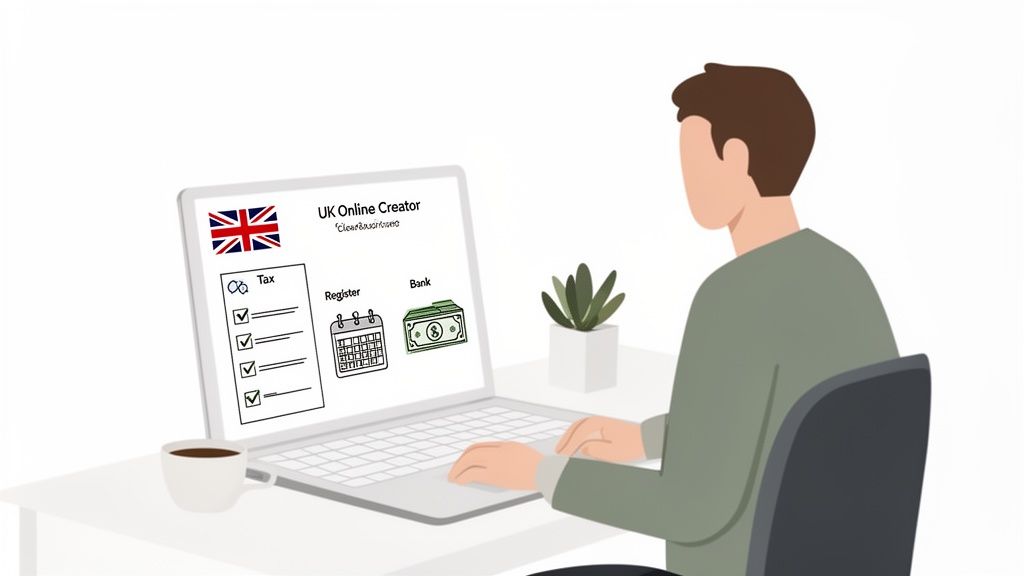
Turning this from a side-hustle into a full-time gig takes more than killer content. The moment money hits your account, HMRC sees you as self-employed. It sounds intimidating, but it’s just the admin that lets you operate like a pro. Think of it as the boring-but-essential backend to your creative front end.
Nailing this stuff from day one saves you a world of pain later. It lets you focus on creating, connecting with fans, and growing your brand, minus the dread of a surprise letter from the taxman or a legal notice. We can break down your key responsibilities into a few manageable areas.
The Big Three: Your Core Legal Duties
To operate legally and safely in the UK, you need to get your head around three main things. Sort these out, and you’re already ahead of the curve.
- Tax and National Insurance: You’re in charge of telling HMRC about your income. That means every last penny from subs, tips, tokens, private shows, and custom content. You’ll need to pay your tax and National Insurance, just like any other freelancer or small business owner.
- Content Legality and Consent: This is the absolute, non-negotiable heart of it all. Everything you create must be 100% legal, and everyone involved must give their full, enthusiastic, and provable consent. If you collaborate, keeping meticulous records of their consent and age verification is your legal shield.
- Data Protection (GDPR): Got a mailing list? A private fan group? Store any of your fans' personal details? Then you’re handling personal data and must comply with GDPR. This means keeping that info secure, being transparent about how you use it, and respecting your followers' privacy.
The Online Safety Act 2023 has completely rewritten the rulebook. By July 2025, the regulator Ofcom will require all platforms that host adult content to use proper, robust age verification—think facial age estimation or checking official ID—to stop anyone under 18 from seeing it.
This is a massive deal for creators. Platforms that don't play ball face colossal fines of up to £18 million or 10% of their global turnover. Trust us, they’re taking this very seriously, which in turn shapes how you’ll upload and share your work. To go deeper, you can learn more about the specifics of this new age verification law.
Key Legal Obligations at a Glance
It can feel like a lot to juggle. This table breaks down your main duties into simple, digestible points so you can see what actually matters.
| Legal Area | What It Means for You | The Bottom Line |
|---|---|---|
| Age Verification | You must prove you're over 18, and platforms must verify your audience is too. | Keep your ID handy. The "click here if you're 18" days are dead. |
| Record-Keeping | Keep detailed records of all income, business expenses, and consent forms. | Good records are your best friend at tax time and your best defence in a dispute. |
| Consent & Model Releases | Get explicit, documented consent from anyone who appears in your content. | If it's not in writing (or on video), it didn't happen. Get proof. |
| Criminal Offences | Your content must not break UK laws on obscenity, extreme porn, or exploitation. | Know where the legal red lines are drawn and stay firmly behind them. |
| Data Protection (GDPR) | If you collect fan data (like emails), you must protect it and be transparent. | Don’t be creepy with data. Treat your fans' info like you'd want yours treated. |
| Tax & Employment Status | You are self-employed. You must register with HMRC and file a tax return. | Don't wait for HMRC to find you. Register as soon as you start earning. |
Ultimately, treating your creative work like a professional business is the smartest way to build a long-term career. Staying on top of these rules isn't just about avoiding trouble; it’s about building a sustainable, resilient brand you can be proud of.
A Creator's Guide to the Online Safety Act
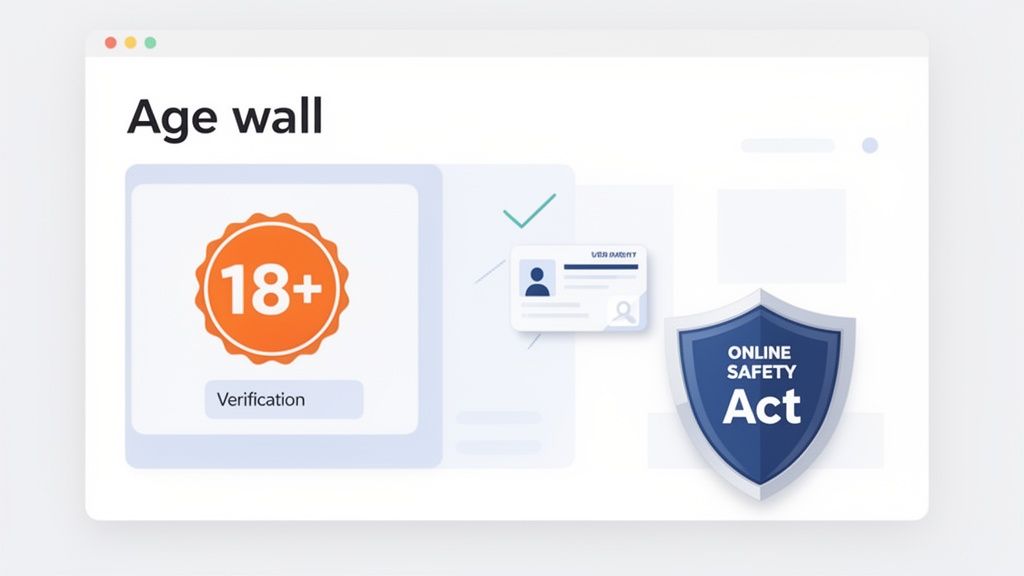
Alright, let's talk about the big one: the Online Safety Act. If you’ve heard panicked whispers about it, you’re right to pay attention. It’s a huge change, but here’s the good news up front: the direct legal heat is on the platforms, not individual creators like you.
Think of OnlyFans, your camming site, or any other platform as the landlord of your digital studio. The Online Safety Act makes the landlord legally responsible for keeping the building secure and, crucially, for keeping anyone under 18 out. For you, this means your day-to-day will be shaped by the new, much stricter rules these platforms now have to enforce.
The Platform Is Now the Bouncer
At its core, the Act forces platforms to stop kids from seeing adult content. This new reality changes things for you in a couple of key ways.
First, your own sign-up process is getting tougher. If you thought uploading a selfie with your passport was a pain before, expect platforms to get even more rigorous about checking you are who you say you are and that you’re over 18. They now have to prove to the regulator, Ofcom, that they know exactly who is creating content on their site.
Second—and this is the big one for your audience—they have to do the same for every single viewer. This is the "age wall." Platforms are now legally required to use proper age assurance technology to verify a user is over 18 before they can see your stuff. The old "click here to confirm you're 18" honour system is officially extinct.
The Act basically forces the industry to grow up. By making platforms invest in serious tech and compliance, it adds a layer of legitimacy to the space. This can actually be a good thing, creating a more stable, regulated environment for you to build a real business in.
So, What Does ‘Robust Age Verification’ Actually Mean?
This isn't just about ticking a box. Ofcom expects platforms to use real, effective methods to check a user's age. This could include:
- Digital ID Checks: A user uploads a photo of their driving licence or passport, which is then scanned and verified by a third-party service.
- Facial Age Estimation: Some systems use AI to analyse a user's face via their webcam to estimate their age (it sounds sci-fi, but it’s here).
- Bank or Credit Card Verification: Using financial details that are already age-verified to confirm a user is an adult.
This will absolutely have an impact. Some casual browsers will be put off by the extra steps, and you might see a dip in traffic at first. But here’s the upside: the fans who get through the age wall are far more likely to be genuine, paying customers. It filters out the time-wasters. For a closer look at how this works, check out our guide on the UK cam site verification process.
Proactive Moderation of Illegal Content
Beyond age checks, the Act puts a massive duty on platforms to actively hunt down and remove illegal content. They are now on the hook for policing anything related to non-consensual material, exploitation, or extreme pornography. Under the Online Safety Act 2023, they can't just wait for reports; they must proactively look for this stuff.
Ofcom is the watchdog here, and they have very sharp teeth. Platforms face those enormous fines of up to £18 million or 10% of their global annual revenue if they fail. You can read the official Online Safety Act explainer for the government's full breakdown.
This means platforms will be leaning heavily on AI scanning tools and human moderators. For creators, it just reinforces how critical it is to know exactly where the legal lines are. Make sure everything you produce is 100% legal and fully consensual. In the end, the Online Safety Act makes your platform your first line of compliance.
Managing Your Money and Paying Your Taxes
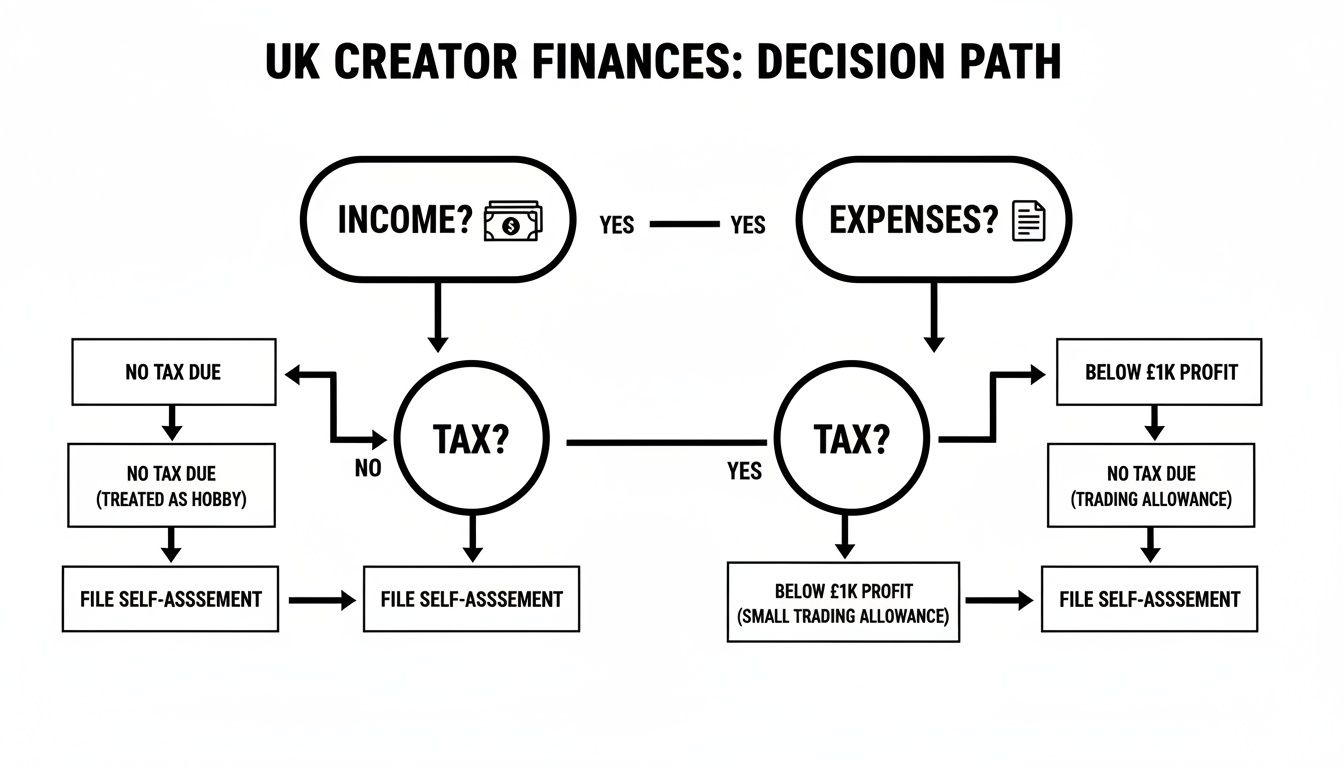
Okay, let’s talk about the good part: getting paid. While the creative side is what gets you started, managing your money is what turns it into a career. For pretty much every online creator in the UK, the law sees you as self-employed.
This means you’re the boss of your own tax and National Insurance. It’s not as scary as it sounds, but you absolutely cannot stick your head in the sand. HMRC doesn't care if your income comes from tokens, private shows, subs, or direct tips – it's all taxable earnings.
Making It Official with HMRC
Your first move as a business owner is to register as self-employed with HMRC. Once you do, they’ll give you a Unique Taxpayer Reference (UTR). This ten-digit number is your ID for everything tax-related, so keep it safe.
Being self-employed means filing a Self Assessment tax return each year. This is just a big form where you tell HMRC what you’ve earned and claim your business expenses. This is how they figure out how much tax you owe. The deadline is usually 31st January for the previous tax year, and missing it means automatic fines.
Think of your UTR as your business passport. Without it, you can't file your taxes, and you're effectively operating off-grid—a terrible idea when the taxman eventually comes knocking.
So, What Can You Actually Claim as an Expense?
One of the perks of being your own boss is deducting business costs from your total income, which lowers your tax bill. The key rule is that an expense must be “wholly and exclusively” for your work. You can’t claim your weekly food shop, but you can definitely claim for stuff you genuinely need for your job.
Common expenses for online creators include:
- Your Kit: Laptops, webcams, lighting, mics, and even a percentage of your phone bill.
- Work Wardrobe: Any outfits, lingerie, costumes, or props bought specifically for creating content.
- Fees and Subscriptions: The cut your platform takes is a business expense. So are subscriptions to video editing software, a VPN, or cloud storage.
- Home Office Costs: If you have a dedicated workspace at home, you can claim a portion of your household bills like internet, heating, and electricity. Just be sure to calculate this properly.
Keeping good records is non-negotiable. Get into the habit of tracking every penny in and out using a spreadsheet or simple accounting software, and save all your receipts. When it comes to your money, being organised is your superpower. For a deeper dive into the money trail, we explain how cam models get paid and the role platforms play.
The Gritty Reality of Payment Processors and Chargebacks
Platforms don't pay you directly. They use third-party payment processors (like Stripe or Paxum) to handle card transactions, and these companies are notoriously strict with adult content. This is a big reason platforms have such intense ID checks – they have to comply with strict Anti-Money Laundering (AML) rules imposed by these processors.
You also need to know about chargebacks. This is when a customer complains to their bank about a payment, often claiming fraud. If the bank sides with them, the money is yanked back from you, and you usually get hit with an extra fee. It’s a hugely frustrating part of the job, and there’s often little you can do. This is another reason to stick with reputable platforms that have systems for fighting dodgy chargebacks on your behalf.
Getting Consent and Content Legality Right
This is where things get serious. All the tax returns and platform rules in the world won’t save you if the content you create is on the wrong side of UK law. We're not talking about your creative niche here; we're talking about hard legal lines you cannot cross.
The foundation of all adult content is consent. It has to be clear, enthusiastic, and—most importantly—provable. If you're a solo creator, this is straightforward; you're consenting for yourself. The moment another person enters the frame, the game changes completely.
Model Releases: Your Non-Negotiable Legal Shield
A verbal "yeah, sounds good" means nothing in the eyes of the law. For every single person who appears in your content—even if they're just in the background for a second—you need a signed and dated model release form. This isn’t just good practice; it’s your legal body armour.
Think of a model release as a contract. It proves the other person is over 18, participated willingly, and knows exactly how the content will be used. Without it, you're exposed to massive legal and financial risk down the road.
Make sure the release is accompanied by a clear copy of their government-issued photo ID, like a passport or driving licence. This verifies their age and identity. File these documents securely and keep them forever. They are the most important pieces of paper (or digital files) in your business.
Navigating the Minefield of Obscenity and Extreme Content Laws
Now, let's talk about the content itself. UK law is very specific about what is criminally illegal to produce or share. The words "obscene" and "extreme" aren't just about taste; they are legal definitions with serious consequences.
Breaking these laws isn't a slap on the wrist. It can lead to criminal charges and prison time. It’s vital you understand what these terms mean in the real world.
What Does "Obscene" Actually Mean?
The legal test for obscenity comes from the ancient Obscene Publications Act 1959. It’s about whether the material has a tendency to "deprave and corrupt" those likely to see it. It’s a high bar and notoriously vague.
Honestly, for most mainstream adult content between consenting adults, this is rarely an issue. The bigger hurdle is usually the platforms themselves, which have their own, much stricter rules that ban certain fetishes or acts they feel are too risky for their brand.
The Hard Red Lines: Extreme Pornography
The Criminal Justice and Immigration Act 2008 is much more black-and-white. It creates absolute red lines. It is a criminal offence to possess, let alone create or distribute, content that the law defines as "extreme pornography."
This isn't about what's kinky; it's about depicting serious, life-threatening harm. You must avoid creating any content that realistically portrays:
- Acts that threaten a person's life.
- Acts that result in, or are likely to result in, serious injury to a person's genitals.
- Non-consensual sexual penetration.
- Bestiality or necrophilia.
There are no grey areas here. The law is designed to stop content depicting severe violence and non-consensual acts. Critically, even if the acts are consensual and simulated for a fetish video, realistically depicting them could still put you on the wrong side of the law.
When it comes down to it, your guiding principles should always be: consent, safety, and legality. Get documented proof of consent, know your platform's rules inside out, and steer well clear of anything that even sniffs of the legal definitions of obscene or extreme content.
Navigating Data Privacy and GDPR
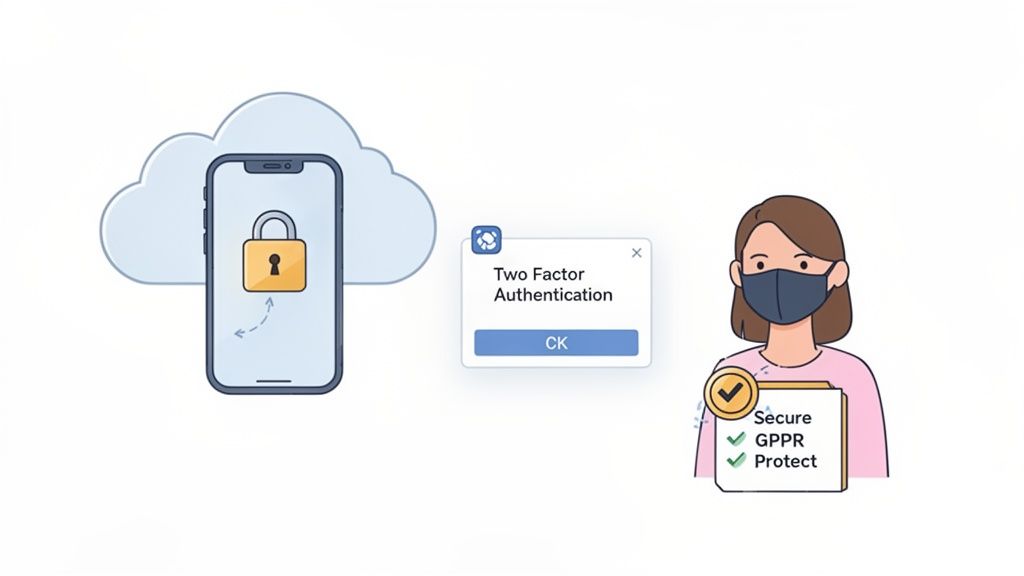
Let's tackle something that sounds dry as toast but is crucial for your safety: data privacy. The moment you handle any personal info—a fan’s email, their real name from a payment—you’ve entered the world of the General Data Protection Regulation, or GDPR.
Don't let the acronym freak you out. GDPR is basically about respect and security. It means you have to treat other people’s private information carefully, which in turn gives you a solid framework for protecting your own. The uk laws for online adult creators are clear: if you handle data, you have responsibilities.
Why GDPR Matters to You as a Creator
You are what GDPR calls a "data controller" for any personal info you collect yourself. This usually happens if you run an email newsletter, a private Discord server, or sell merch from your own website.
If a fan trusts you with their details, you have a legal duty to keep them safe and be straight with them about how you’re using it. That means no sharing your email list or leaving a spreadsheet of customer names on an unsecured laptop.
At the same time, the platforms you work on are massive data controllers. They hold your legal name, bank details, and ID. Reading their privacy policies isn’t just a box-ticking exercise; it’s about understanding how the company you’ve partnered with is protecting your most sensitive info.
Think of it like this: your content is your public brand, but your data—and your fans' data—is the private stuff that keeps the business running. Protecting it isn't just a legal chore; it's fundamental to building trust and ensuring your own safety.
Protecting Your Audience’s Data
If you collect any user data, you need a basic game plan. It’s simpler than it sounds and boils down to a few key ideas.
- Be Transparent: Have a simple privacy notice. If you have a mailing list sign-up, explain what people are getting into.
- Get Clear Consent: Don't just add people to a marketing list. They need to actively opt-in.
- Keep It Secure: Use strong, unique passwords for every service. If you store information yourself, make sure it’s encrypted.
- Only Collect What You Need: Don’t ask for a fan's home address if you're only sending an email newsletter. The less data you hold, the lower your risk.
Following these steps shows your audience you respect them and take your professional role seriously.
Fortifying Your Own Digital Footprint
While you're protecting your fans' data, don't forget about your own. Your privacy is your most valuable asset. The line between your creator persona and your real-world identity can get dangerously blurry if you're not careful. This is where you build your own digital fortress.
Your first line of defence is solid operational security, or "opsec." It's a fancy term for the practical habits you use to keep your private life private.
Your Personal Security Checklist:
- Two-Factor Authentication (2FA) Everywhere: Enable 2FA on your email, social media, banking, and every platform you use. This is non-negotiable.
- Separate Your Worlds: Use a different email address and browser profile for your creator work. Never cross the streams.
- Scrub Your Metadata: Photos and videos can contain hidden GPS data. Use a tool to strip this "EXIF data" before you upload anything.
- Use a VPN: A Virtual Private Network (VPN) masks your computer's IP address, making it much harder to trace your physical location.
- Review Platform Privacy Settings: Really dig into the settings on each platform. Who can see your info? What data are they sharing? Lock it all down.
Good data management is a cornerstone of a sustainable career. By respecting your audience's privacy and fiercely guarding your own, you create a secure foundation that lets you create with confidence.
Your UK Creator Compliance Checklist
Feeling a bit overwhelmed? Let's cut through the noise. This isn’t a legal textbook; it's a practical to-do list to professionalise your operation and build a resilient, long-term career.
This isn't about dodging trouble; it's about taking control. By treating your work like the legitimate business it is, you create a solid foundation that lets you focus on your content and community.
Financial and Business Admin
First, get your money sorted. HMRC doesn't care if you earn in tokens or pounds; it all needs declaring.
- Register with HMRC: If you're earning, you must register as self-employed. Get your Unique Taxpayer Reference (UTR). This is non-negotiable.
- Open a Business Bank Account: Stop mixing your personal and pro finances now. A dedicated account makes tax returns infinitely easier.
- Create a Tracking System: Use a spreadsheet or simple accounting software from day one. Log every payment received and every business purchase. Keep all digital receipts.
Content and Legal Safeguards
This is your legal armour. These steps protect you, your collaborators, and your business from serious headaches. Skipping this is not an option.
A common misconception is that a quick DM is enough to confirm consent. Legally, it's practically worthless. Proper, documented proof is the only thing that will stand up if a dispute arises.
- Confirm Model Releases: If you work with anyone else, you must have a signed and dated model release form. Store it securely with a clear copy of their government-issued photo ID. No release, no shoot.
- Verify Your Age and Identity: All reputable platforms will require an ID check. This is standard practice. For an in-depth look, learn more about the UK cam site verification process and how it works.
- Review Your Content Archive: Do a quick audit of older content. Make sure nothing could fall foul of UK laws on extreme or obscene material.
Digital Security and Privacy
Finally, lock down your digital life. Your privacy is a business asset.
- Enable Two-Factor Authentication (2FA): Switch it on for every single account – email, social media, banking, creator platforms. This is your single most effective security measure.
- Use a Secure VPN: A reputable Virtual Private Network is essential for masking your real IP address and protecting your location data.
- Scrub Your Metadata: Before uploading any photos or videos, use a tool to remove hidden data (EXIF) that can reveal your location and device details.
Creator Compliance Action Plan
Use this table as a quick reference to make sure you have all your bases covered.
| Task Category | Action Item | Why It's Important |
|---|---|---|
| Financial Admin | Register as self-employed with HMRC. | It’s a legal requirement and avoids future tax penalties. |
| Financial Admin | Open a separate business bank account. | Simplifies tax returns and creates a professional financial boundary. |
| Legal Safeguards | Obtain and store signed model releases for all collaborators. | Provides undeniable proof of consent, protecting you from legal claims. |
| Legal Safeguards | Complete age and identity verification on all platforms. | Establishes your legitimacy and is a core requirement on reputable sites. |
| Digital Security | Enable Two-Factor Authentication (2FA) on all accounts. | The strongest single defence against your accounts being hacked. |
| Digital Security | Routinely scrub metadata from all uploaded content. | Prevents the accidental leak of sensitive personal data like your location. |
Treating these tasks as standard business practice is the difference between a short-term hobby and a long-term, profitable career. It might seem like a lot of admin, but each step adds another layer of protection, allowing you to create with confidence.
Common Questions About UK Creator Laws
Stepping into this world can feel like navigating a legal minefield. Let's tackle some of the most common questions from UK-based creators with some straight-talking answers.
Do I Really Need to Tell HMRC About My Earnings?
Yes. 100%. Every single pound you earn from content—subscriptions, tips, tokens, private DMs—is taxable income in the UK. This isn't a grey area. You have a legal duty to register as self-employed with HMRC and file a Self Assessment tax return each year.
Trying to fly under the radar is a recipe for disaster. It can lead to seriously painful penalties and a back-tax bill you do not want. Treat it like a proper business from day one.
What About Content I Made Before the Online Safety Act? Am I in Trouble?
Smart question. The Online Safety Act is mainly about forcing platforms to clean up their act. But the laws that actually make certain content illegal—like obscene material or non-consensual images—have been around for a long time.
So, if any of your older content was already breaking existing laws, it's still illegal today. The big difference now is that platforms are under immense pressure from Ofcom to find and remove that material proactively, or face eye-watering fines.
What's the Best Way to Prove I Have Consent?
A verbal "yes" or a quick message won't cut it in a legal dispute. The gold standard is a signed and dated model release form for every single person you create content with, for every single shoot.
Think of a model release as your legal shield. It’s a formal document confirming your collaborator is over 18, they willingly consented to being filmed, and they know exactly how and where the content will be used. You must also keep a clear copy of their photo ID, with sensitive details like the address blacked out, filed safely with the release form.
Can My UK Fans Just Use a VPN to Get Around Age Checks?
Some will definitely try, but building a business on an audience using loopholes is a bad strategy. Under the Online Safety Act, platforms have a duty to take "reasonable measures" to verify age, and that includes actively blocking traffic from known VPNs.
Compliant platforms have multi-million-pound incentives to close these gaps. The smarter move is to build your brand on platforms taking these new laws seriously. It creates a more professional, stable, and sustainable environment for you to work in.