

Live cam platforms are much more than just websites. At their core, they’re specialised digital marketplaces connecting creators with an audience, handling all the tricky bits in between. From broadcasting high-definition video and running a real-time chat to processing thousands of tiny payments from all over the world, the platform does the heavy lifting so creators can focus on their performance.
You can also see live cam girls online now to get a feel for how these platforms present active rooms to viewers.
The Engine Room: Unpacking the Platform's Core Machinery
If your main concern is risk rather than technology, our guide to cam site safety covers the viewer and creator side.
Ever wondered what’s really going on behind the screen? It’s easy to dismiss a live cam site as a simple webpage, but that’s like calling a theatre just a building. It's actually a complex engine, finely tuned to do one thing exceptionally well: connect a performer with an audience, in real-time, no matter where they are, and handle the flow of money between them.
Think of the platform as a high-tech digital venue. It builds the stage, sells the tickets, manages the crowd, and even provides the security. This frees up the creator to concentrate purely on their broadcast, without getting bogged down in the technical details. Understanding how this engine room works is the first step to making sense of the entire ecosystem.
Let's quickly break down the essential tech that makes these platforms tick.
Key Components of a Live Cam Platform
| Component | What It Does | Why It Matters |
|---|---|---|
| Video Hosting & Streaming | Receives a creator's video feed and broadcasts it instantly to viewers around the world. | This requires massive server power to handle thousands of simultaneous streams without crashing. It's the 'live' in live cam. |
| Content Delivery Network (CDN) | A global network of servers that delivers the video stream from a location physically closer to the viewer. | This is crucial for preventing lag and buffering. A smooth stream means a better experience for everyone. |
| Interactive Software Layer | Powers all the on-screen features: chat rooms, tipping functions, private show requests, and on-screen buttons. | This is what turns a passive broadcast into an interactive, engaging experience where viewers can participate. |
Each of these three components is a massive technical and financial undertaking, which is precisely why creators pay a platform fee rather than attempting to build this intricate setup themselves.
These systems are built on an infrastructure that's become surprisingly mainstream. In the UK, the mechanics of live chat, tipping, and subscriptions are already second nature to millions. Recent data shows that mainstream video-sharing platforms now account for 18.08% of the average UK adult’s daily screen time—that's about 49 minutes a day. A huge chunk of UK viewing time already runs on the same fundamental technology that powers modern live cam platforms. You can explore more about UK live streaming habits and the platforms people use.
A common misconception is that platforms just host videos. In reality, they are sophisticated financial and technological intermediaries. They solve the immense challenges of global payment processing, fraud prevention, and high-bandwidth video delivery so that individual creators don't have to.
Following the Money: From Viewer Tokens to Creator Payouts
Okay, the tech side is interesting, but let's get down to brass tacks: the money. How does a viewer spending a few quid on tokens actually translate into real cash in a creator’s bank account? The whole financial engine of these platforms is built around a slick, virtual system designed to make spending easy and payouts (relatively) straightforward.
The magic ingredient is the token. Rather than fumbling with credit cards for every single tip, viewers buy the platform’s own digital currency. This isn't just a fun gimmick; it’s a smart business move. Tokens remove the friction from spending – it’s psychologically much easier to tip 100 tokens than it is to think about the real-world cost. It also neatly solves the headache of international currency conversions and fluctuating payment processing fees.
For the creator, this token-based economy opens up a few different ways to earn.
How Creators Actually Get Paid
Think of the performance as the product and tokens as the way people pay for it. Viewers spend them in several key ways:
- Public Tips: This is the bread and butter for many. In the main, free-to-watch chat room, viewers tip tokens to show appreciation, ask for something specific, or just to get noticed.
- Private Shows: Often the most profitable part of the job. A viewer pays a set rate of tokens per minute for an exclusive, one-on-one video chat, taking the interaction away from the public gaze.
- Fan Clubs & Subscriptions: Many platforms now let creators offer a subscription. Fans pay a recurring monthly fee for special perks like access to private group chats, exclusive content, and direct messaging.
- Selling Content: Creators can also sell pre-made photo sets or videos directly from their profile page. This gives fans another avenue to support them and get something in return.
This flow is pretty simple when you visualise it. The viewer buys tokens from the platform, and the platform facilitates the show with the creator.
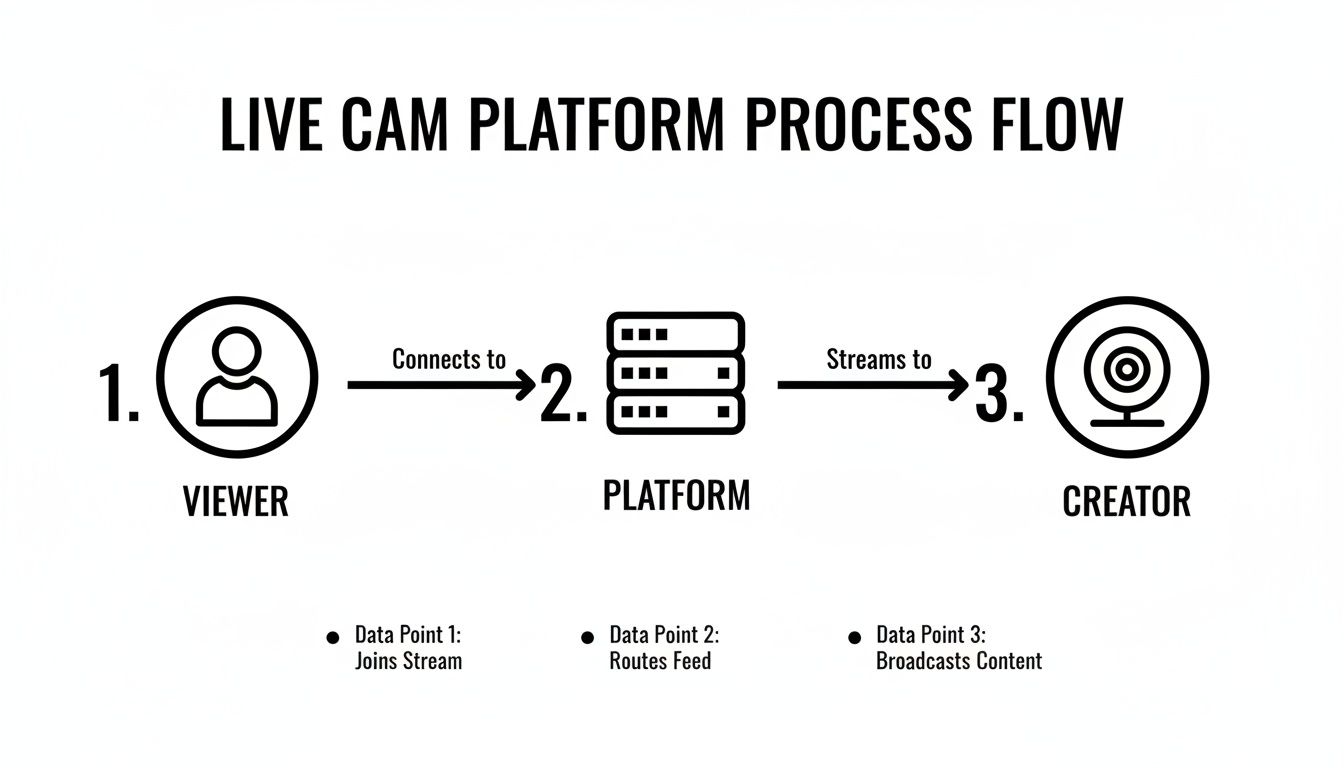
As the diagram shows, the platform sits right in the middle, acting as the broker for both the video stream and, crucially, every single financial transaction. It's this gatekeeper role that justifies them taking a piece of the pie.
The Platform's Cut and Payout Realities
Now for the part that often comes as a shock. These platforms are businesses, and they take a hefty slice of every token spent. This commission, or "cut," can be anywhere from 30% to over 50%, depending on the platform's policies and sometimes the creator's popularity or traffic.
It's vital to remember that gross earnings and take-home pay are two very different things. A creator’s dashboard might show £1,000 in token earnings, but after the platform takes its percentage, the actual amount hitting their account could be closer to £500 or £600.
This fee isn't just pure profit. It covers all the things we talked about earlier: the incredibly expensive server and bandwidth costs for streaming video globally, international payment processing, teams of moderators, and marketing to bring new viewers to the site. Having a clear idea of how cam platforms make money helps put these high fees into perspective.
Finally, getting your hands on the cash isn't always instant. Most sites operate on a payout schedule, like once a week or every two weeks, and have a minimum payout threshold. This means you might need to have earned at least £50 or £100 before you can even request a withdrawal. It’s a standard practice in the creator economy that simply cuts down on the admin of processing thousands of tiny payments.
Getting Past the Digital Bouncer: Verification and Moderation
Before any creator goes live or a single token changes hands, everyone has to get past the digital bouncer. Think of it like a nightclub with a very strict, legally required door policy. You can’t just stroll in; you have to prove you are who you say you are and, crucially, that you’re old enough to be there. This isn’t just some fussy platform rule—it's a non-negotiable legal and safety requirement that underpins the entire industry.
For creators, this means providing some serious proof of identity. Platforms will ask for a clear photo of a government-issued ID, like a passport or driving licence, usually accompanied by a selfie of you holding that exact document. It can feel a bit invasive, but it’s the only reliable method for the platform to carry out age verification, which is a strict legal mandate in the UK and most other countries. This process is designed to protect everyone involved—the creator, the viewers, and the platform itself—from illegal activity.
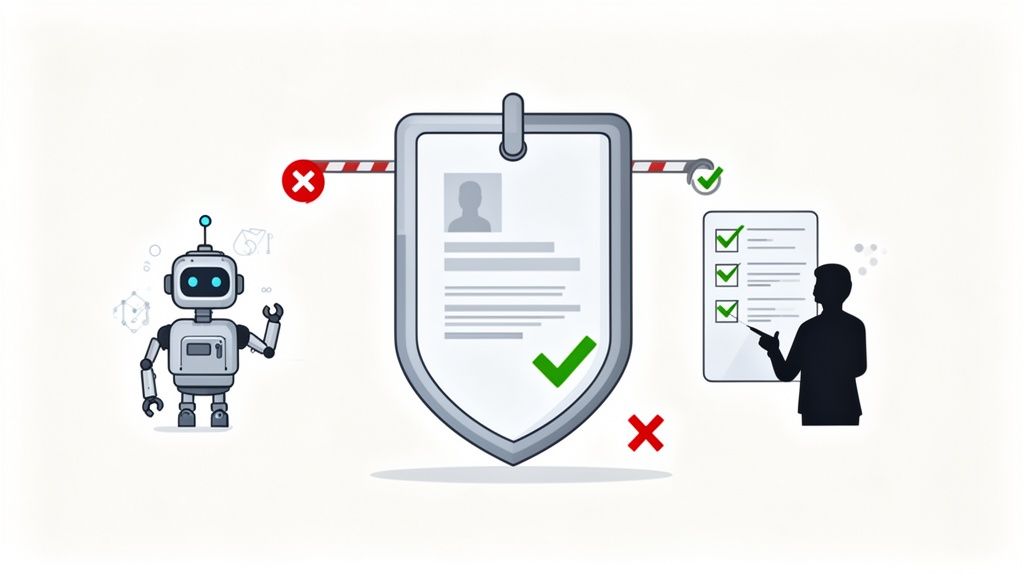
Thankfully, this sensitive information isn't just tossed into a random digital folder. Reputable platforms use encrypted storage, keeping your verification documents completely separate from your public-facing profile. No viewer will ever see it. For viewers, the checks are generally less intense but still exist, often involving a credit card age check during the sign-up process.
Enforcing the House Rules
Once you’re verified and inside, you’re playing by the house rules. Every platform has its own detailed Terms of Service (ToS)—the official rulebook that governs the entire community. These documents dictate everything, from what’s allowed in a public broadcast versus a private show, to what you can wear, say, or even hint at. Breaking these rules comes with real consequences.
To enforce this, platforms use a two-pronged approach:
- AI Algorithms: These automated systems are the first line of defence. They’re constantly scanning for banned keywords in chat, flagging potentially problematic visuals, and monitoring for behaviour that breaks the rules, such as an unattended stream.
- Human Moderation Teams: When the AI flags something, or a user files a report, the issue gets passed up to a real person. These teams review the evidence and decide on the appropriate action, which can range from a simple warning to a permanent ban.
This system is always running in the background, shaping the on-site culture and ensuring a baseline level of safety and compliance.
The Consequences of Crossing the Line
So, what actually happens if you break a rule, whether by accident or on purpose? Platforms have a clear escalation path for dealing with violations.
- A Gentle Nudge (Warning): For a minor, first-time offence, you’ll likely just get an official warning sent to your account’s inbox.
- The Timeout (Temporary Suspension): For something more serious or a repeat offence, you could find yourself with a temporary ban. This might last 24 hours, a week, or longer, during which time you won’t be able to log in or broadcast.
- The Permanent Ban (Account Termination): This is the nuclear option. For severe violations—such as anything involving minors, extreme violence, or financial fraud—the platform will permanently terminate the account, often forfeiting any outstanding earnings.
While the moderation process can sometimes feel like a mysterious black box, it’s a core operational necessity. It's the system that allows these platforms to function within legal boundaries and manage the inherent risks of live, user-generated adult content. It’s less about making moral judgements and more about managing business liability.
Each platform has its own flavour of enforcement; some are famously stricter than others. For a deeper dive into the mechanics of it all, you can explore our detailed guide on how cam platforms moderate content to get a better sense of the day-to-day realities. Ultimately, verification and moderation are the serious, unglamorous machinery that keeps the entire ecosystem running.
Building Your Digital Fortress: Privacy and Security
Let’s get straight to what is arguably the most critical part of the entire live-cam world: keeping yourself safe. In an industry built on digital connection, your privacy and security are not just nice-to-haves; they are the bedrock of a sustainable career or a safe viewing experience.
This isn’t about being paranoid. It’s about being professional and smart. A little bit of what’s known as operational security (OpSec) goes a very long way in making sure your real life and your online persona remain completely separate.
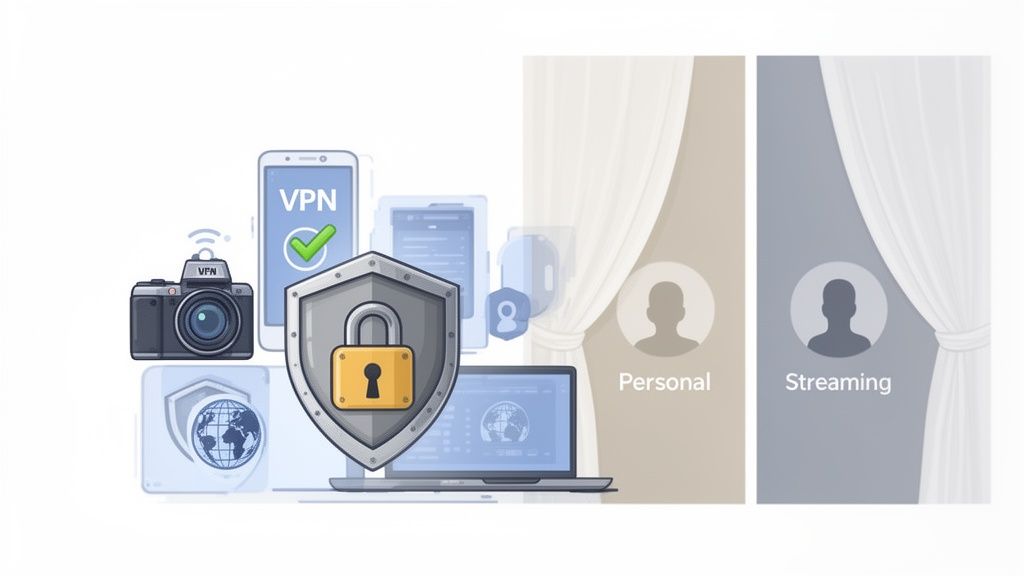
Whether you're broadcasting or just watching, understanding the risks and knowing how to build your own digital fortress is non-negotiable. The stakes are naturally higher for creators, but viewers also need to shield their anonymity and financial details from scammers and prying eyes.
A Practical Security Checklist for Creators
As a creator, you are the business, which makes your privacy your most valuable asset. The entire goal is to construct an impenetrable digital firewall between your camming persona and your personal identity. These are the absolute must-dos:
- Use a VPN (Virtual Private Network): This is your first and most important line of defence. A VPN masks your real IP address, making it look like you're connecting from somewhere else entirely. This simple step is crucial for preventing anyone from tracing your stream back to your actual city or region.
- Build a Persona Firewall: Your streaming name, the email address you use, and any associated social media accounts must be completely separate from your personal life. Never, ever reuse usernames or passwords. Before you go live, scrub your background clean—no post on the side table, no family photos, and no recognisable landmarks visible out the window.
- Activate Two-Factor Authentication (2FA): Every single account connected to your work needs 2FA enabled. That means the streaming platform itself, your payout method (like PayPal or Paxum), and the email account tied to it all. It adds a powerful extra layer of security that stops most unauthorised access attempts in their tracks.
These steps aren't just good ideas; they represent the baseline for operating safely. The UK webcam market, valued at USD 346.2 million in 2023, is a massive industry built on this technology. But with that growth comes serious cybersecurity risks, as every internet-connected device is a potential target for data breaches.
Think of your digital security like locking your front door. You wouldn't leave it wide open for just anyone to wander in, so why would you do the digital equivalent? Good OpSec quickly becomes a habit, not a chore.
Viewer Privacy and How to Spot Scams
Viewers, you're not off the hook either. While your risks might look different, protecting your anonymity and financial data is just as vital. The platform is designed to act as a secure middleman for payments, meaning creators never see your real name or credit card info. Still, you should take extra steps to lock things down.
- Use Safer Payment Methods: Think about using prepaid cards or digital wallets that aren't directly linked to your main bank account. This seriously limits your exposure if a platform ever suffers a data breach.
- Choose a Unique Username: Your username is your only identity on the site. Make sure it can't be traced back to your real name or your profiles on other social media platforms.
- Stay Alert for Scams: Be deeply suspicious of any creator or user asking for money off-platform. If they request personal information or try to lure you to another website, those are classic red flags for a scam.
Creator vs Viewer Security Checklist
Security is a shared responsibility. While the platform provides the infrastructure, it's up to you to use it wisely. Here's a quick comparison of the key safety steps both creators and viewers should take to protect themselves.
| Security Action | Why It's Critical for Creators | Why It's Critical for Viewers |
|---|---|---|
| Use a VPN | Masks your real-world location to prevent doxing or stalking. | Hides your IP address from the platform and internet provider, enhancing anonymity. |
| Separate Persona | Prevents viewers from finding your personal social media, family, or real name. | Ensures your activity on the site remains private and separate from your public identity. |
| Two-Factor (2FA) | Secures your account and, more importantly, your earnings from being stolen. | Protects your account and any stored payment methods from unauthorised access. |
| Scam Awareness | Protects you from phishing attempts or users trying to manipulate you for free content. | Keeps you safe from financial scams or attempts to steal your personal information. |
| Secure Payments | Ensures your payout details are protected and you receive your earnings safely. | Limits financial risk by using payment methods not tied to your primary bank account. |
In the end, everyone has a part to play. The platform handles the heavy lifting with things like encrypted data storage, secure payment gateways, and essential compliance measures, like those we explore in our guide on the Girls on Cam age verification app. But true safety comes from each person taking responsibility for their own digital fortress.
The Human Side: Platform Power, Algorithms, and Creator Life
Beneath all the tech, the flashing lights, and the scrolling chat windows, live cam platforms are intricate social ecosystems. Each one has its own culture, its own unwritten rules, and its own unique power dynamics. It's a mistake to see them as just neutral pieces of technology; they actively shape who gets seen, who succeeds, and what kind of content ultimately thrives. If you want to understand this world, you have to get to grips with the human element just as much as the tech.
The whole system is built on a delicate, and often tense, relationship between the creator, their audience, and the platform itself. Creators provide the content and personality, viewers bring the money, but it's the platform that holds all the cards. They set the rules, they control how the cash flows, and most importantly, they manage who gets the spotlight.
The Algorithm Is King
For most creators, the real boss isn't a person—it's the platform's algorithm. This is the invisible code that dictates who gets featured on the homepage, who pops up in search results, and who gets recommended to new users. Landing a prime spot on that front page can be the difference between a painfully slow night and earning hundreds of pounds in a single hour.
This creates a powerful kingmaker effect. The system is designed to give popular streamers even more visibility, which in turn makes them more popular. It’s a classic feedback loop. For anyone just starting out, this means the initial grind can be absolutely brutal. You might spend long hours online with just a handful of viewers and next to no income, all while hoping the algorithm eventually throws you a bone.
A common misconception is that just going online is enough to build an audience. The reality is that creating a community requires a huge amount of emotional labour—the constant work of managing your own feelings while influencing those of others to keep the atmosphere positive, engaging, and ultimately, profitable.
Parasocial Bonds and the Viewer's World
Looking at it from the other side of the screen, the dynamic is just as layered. Viewers often form what are known as parasocial relationships with the creators they follow. This is that one-sided feeling of friendship or even intimacy with a public figure who, in reality, doesn't know you personally. It’s the same dynamic you might have with a favourite podcaster or YouTuber, but it’s turbocharged by the live, direct interaction of camming.
This powerful sense of connection is what drives the entire economy. It’s what motivates a viewer to become a regular, to tip generously, and to feel a real sense of loyalty and investment in a creator's journey. These relationships can be genuinely supportive and form the backbone of positive online communities. But they always exist within a transactional framework, and that can create a jarring disconnect when a viewer's feeling of personal connection bumps up against the creator's need to run a business.
This model taps into a much bigger trend. Here in the UK, live-streaming is completely mainstream. Data shows that 1 in 3 UK internet users watched a live stream in 2023, with platforms like YouTube and Facebook Live pulling in massive audiences. The interactive, personality-led format is no longer a niche interest, which goes a long way to explaining the steady growth of live cam sites. You can discover more insights about UK livestreaming stats on Thunderbit.com to see the bigger picture.
In the end, success in this world really comes down to navigating these complex human dynamics. It’s a constant balancing act—juggling authenticity with performance, managing audience expectations, and never forgetting that the platform always has the final say.
Got Questions? Here Are Some Straight Answers
We’ve pulled back the curtain on the tech, the cash flow, and the safety measures, but you probably still have a few things on your mind. Let's get straight to it and tackle some of the most common questions people have.
As a Creator, How Safe Are My Personal Details?
This is a big one, and for good reason. When you sign up, you’re handing over sensitive ID documents for verification. Reputable platforms store this information in heavily encrypted systems, completely separate from your public-facing profile. It’s a legal necessity for them to check your age and identity, and that data is never visible to viewers.
But let's be realistic—no digital fortress is 100% impenetrable. That’s why it’s so important to pick platforms known for solid security. You also have a part to play. Always use a strong, unique password and switch on two-factor authentication (2FA) wherever you can.
Think of it like a bank. They have strong vaults and security guards, but you still need to keep your PIN a secret. It’s a partnership between you and the platform.
Can I Be Totally Anonymous as a Viewer?
For the most part, yes, but "total" anonymity is a myth online. Your username and avatar are all anyone else sees. Creators never get a glimpse of your real name or credit card number; the platform acts as a middleman, processing the payment and just telling the creator that 'Username123' tipped them.
Behind the scenes, though, the platform logs your payment details and IP address. This is standard stuff for security and preventing fraud. If you want an extra layer of privacy, consider using a prepaid card. And a word of advice: never use a username that you’ve used anywhere else, especially on your social media. A VPN can hide your IP address, but be warned, some platforms block them to stop potential fraudsters.
What Happens When a Creator Breaks the Rules?
Every platform has a thick rulebook—the Terms of Service—that creators have to follow. Breaking these rules can range from something minor, like streaming in the wrong category, to something incredibly serious, like any involvement with underage individuals. That last one isn't just a rule break; it's a crime, and platforms will report it immediately.
The punishment really depends on what happened.
- A Small Slip-Up: This usually earns a warning or maybe a 24-hour time-out from streaming.
- A Major Foul: If a creator keeps breaking the rules or does something more serious, they could face a longer suspension or even a permanent ban. A ban means they lose their account and any money they haven't cashed out.
- Illegal Activity: Anything illegal gets reported straight to the police. No exceptions.
This is all managed by a mix of AI systems, which flag potential problems, and human moderators, who review the footage and make the final call. It's a non-stop job, but it’s what keeps the platform running legally.
Why Do Platforms Take Such a Big Cut of the Money?
It can be a shock to see that platforms often take anywhere from 30% to over 50% of a creator's earnings. It feels like a massive chunk, but that fee covers the colossal costs of running a global, high-traffic website.
Here’s what that cut actually pays for:
- Streaming & Hosting: Pushing high-definition video to thousands of people around the world at the same time is eye-wateringly expensive.
- Payment Processing: Securely managing millions of international transactions comes with hefty bank fees and requires sophisticated anti-fraud systems.
- People Power: You need large teams of moderators and customer support staff working 24/7 in different time zones.
- Marketing & Tech: The platform needs to find new viewers and constantly improve its features to stay competitive.
Essentially, creators are paying for instant access to a worldwide audience, a secure way to get paid, and all the complicated technology that makes it work. It frees them up to focus on what they do best. It’s a classic trade-off: you get a smaller slice, but it’s from a much, much bigger pie.